.webp&w=384&q=75)

Loading, please wait...
Loading, please wait...

Indoor transmission of respiratory pathogens represents a major infection control challenge across modern healthcare facilities. Recent advances in biophysics and aerobiology demonstrate that continuous Far-UVC disinfection offers a transformative approach to mitigating airborne transmission. By deploying 222-nanometer ultraviolet light, medical facilities can actively sanitize ambient air without endangering human tissues. Consequently, clinicians and hospital epidemiologists now have access to a validated, continuous environmental decontamination strategy that functions safely within occupied clinical areas.
Traditional germicidal ultraviolet systems utilize 254-nanometer wavelengths to disrupt microbial genetic material. However, conventional ultraviolet irradiation induces photokeratitis and cutaneous erythema. Therefore, facilities can operate standard fixtures only in unoccupied rooms or within upper-room baffles. In contrast, Far-UVC disinfection utilizes krypton-chloride excimer lamps emitting primarily at 222 nanometers. This precise wavelength possesses an exceptionally short penetration depth in biological matter. As a result, the light cannot penetrate the non-living stratum corneum of human skin. Similarly, the tear film and outer corneal epithelium absorb these photons before they reach sensitive ocular cells. In contrast, unicellular bacteria and microscopic aerosolized viruses lack protective outer cellular structures. The energetic photons penetrate microbial envelopes and denature critical proteins and nucleic acids. Thus, filtered excimer devices permit safe, continuous disinfection during active patient examinations, bedside procedures, and routine clinical operations.
Evaluating germicidal efficacy across real-world three-dimensional volumes historically presented substantial technical challenges. Investigators recently addressed this problem by coupling Monte Carlo radiation transfer models with computational fluid dynamics. In this framework, the physics engine accurately tracks millions of discrete photon trajectories across complex geometries. Simultaneously, fluid dynamics simulations characterize air velocities, convective thermal currents, and bioaerosol distributions. The researchers validated their mathematical architecture against empirical observations gathered inside room-scale bioaerosol testing chambers. Specifically, the simulation replicated the steady-state inactivation of aerosolized Staphylococcus aureus under regulated air turnover conditions. Because the simulated pathogen trajectories matched physical chamber measurements, the mathematical framework earned robust scientific validation. Consequently, hospital engineers can now reliably predict airborne microbial clearance within complex anatomical theaters, intensive care units, and outpatient clinics before installing physical hardware.
The validated mathematical model yields striking insights regarding airborne human coronaviruses and bacterial bioaerosols. When investigators simulated clinical rooms with low baseline ventilation, Far-UVC lamps decreased steady-state coronavirus concentrations by over 90%. Moreover, this dramatic clearance occurred rapidly across the entire breathing zone. Airborne microorganisms encounter continuous ultraviolet flux as room air currents circulate particles through the illuminated volume. Consequently, pathogens suffer lethal photochemical damage before reaching susceptible occupants. Furthermore, the model revealed that microbial susceptibility varies substantially across diverse phylogenetic classes. Non-enveloped virions, encapsulated bacteria, and lipid-enveloped respiratory viruses exhibit unique ultraviolet absorption cross-sections. Nonetheless, continuous whole-room irradiation achieves profound biocidal activity even against robust organisms like methicillin-resistant Staphylococcus aureus. This uniform spatial reduction directly decreases cross-transmission hazards for attending healthcare personnel.
Ventilation performance in infection control is typically quantified using equivalent air changes per hour. Traditional mechanical heating, ventilation, and air conditioning systems often struggle to maintain six to twelve changes per hour. Upgrading existing physical ductwork frequently requires disruptive capital investments and extensive architectural modifications. In stark contrast, Far-UVC lamps generate equivalent ventilation rates surpassing 100 equivalent air changes per hour. This massive throughput occurs without producing noisy drafts or disturbing climate control settings. Furthermore, standard high-efficiency particulate air filters capture microorganisms only after ambient air slowly migrates into intake vents. Far-UVC systems neutralize virulent particles directly within the breathing zone where individuals release and inhale aerosols. Therefore, whole-room optical irradiation accomplishes disinfection kinetics that physical filtration cannot match. This rapid inactivation neutralizes shared air contaminants within seconds rather than hours.
Hospital-acquired respiratory infections create immense financial and clinical burdens across modern health systems. Nosocomial transmission of influenza, coronavirus variants, and multidrug-resistant bacteria poses severe risks for immunocompromised hosts. Implementing continuous germicidal light provides an indispensable safety layer in intensive care units and emergency triage zones. Similarly, procedural suites such as dental operatories and bronchoscopy units generate heavy aerosol loads during routine interventions. By deploying optical decontamination overhead, clinical teams neutralize infectious particles near the source. Additionally, the technology does not demand compliance with personal protective gear or behavioral interventions. Healthcare personnel can direct their entire attention toward acute patient stabilization while overhead lamps maintain microbiological hygiene. Consequently, passive photonic disinfection establishes a persistent barrier against superspreading events in enclosed healthcare settings.
Hospitals across India frequently operate under heavy patient volumes and varied infrastructural conditions. Crowded outpatient departments and poorly ventilated general wards create ideal conduits for aerosol dissemination. Therefore, installing supplemental air decontamination represents a critical public health priority. Far-UVC luminaires offer an attractive retrofit option because contractors can mount them directly into existing electrical fixtures. However, biomedical engineers must ensure optical fixtures incorporate narrow bandpass optical filters. Unfiltered lamps emit trace wavelengths above 230 nanometers, which could violate regulatory threshold limit values. Furthermore, high ambient humidity in tropical regions influences bioaerosol particle sizes and radiative scattering. Healthcare administrators must tailor fixture density to room architecture and local climatic factors. By embracing scientifically validated computational modeling, Indian healthcare institutions can optimize luminaire placement to protect patients and staff cost-effectively.
Standard 254-nanometer ultraviolet light penetrates living human tissues, causing acute corneal inflammation and DNA damage in epidermal cells. In contrast, 222-nanometer Far-UVC light is absorbed almost entirely by proteins in the non-living stratum corneum and tear film. Because it cannot reach living human nuclei, Far-UVC permits safe, continuous operation in fully occupied clinical spaces while rapidly inactivating microbial nucleic acids.
Far-UVC systems cannot fully replace mechanical ventilation because indoor environments still require fresh air exchanges to control carbon dioxide, humidity, and volatile chemicals. However, Far-UVC dramatically supplements mechanical systems by adding more than 100 equivalent air changes per hour. It inactivates airborne pathogens directly within the breathing zone long before building ventilation can dilute or filter the air.
Properly engineered Far-UVC luminaires utilize narrow bandpass optical filters to restrict emissions to 222 nanometers. While ultraviolet light below 240 nanometers can theoretically photolyze oxygen molecules, high-quality filtered krypton-chloride fixtures produce minimal ozone well below international occupational exposure limits. Adequate baseline air exchange easily dissipates these negligible trace concentrations in typical hospital environments, ensuring safety.
Disclaimer: This content is for informational and educational purposes only. It is not intended to provide medical advice, diagnosis, or treatment. Always seek the advice of your physician or other qualified health provider with any questions you may have regarding a medical condition or healthcare decision. Refer to the latest local and national guidelines for clinical practice.
References
Peñaloza CH et al. Validated computational modeling to evaluate spatial inactivation of airborne pathogens by Far-UVC irradiation. Photochem Photobiol. 2026 Oct 10. doi: 10.1111/php.70151. PMID: 42856065.
Eadie E et al. Far-UVC (222 nm) efficiently inactivates an airborne pathogen in a room-sized chamber. Sci Rep. 2022;12(1):4373. doi: 10.1038/s41598-022-08462-0.
Buonanno M et al. Far-UVC light efficiently and safely inactivates airborne human coronaviruses. Sci Rep. 2020;10(1):10285. doi: 10.1038/s41598-020-67211-2.

Read summarized clinical updates, watch expert medical content, and earn CME certifications right from your smartphone.
Open your smartphone camera to scan and install.





Groundbreaking computational fluid dynamics and Monte Carlo simulations demonstrate that 222 nm Far-UVC disinfection safely neutralizes airborne coronaviruses and bacteria, delivering upwards of 100 equivalent air changes per hour in poorly ventilated healthcare spaces.
Today

Maternal anaemia contributes to nearly half of pregnancy-related fatalities across India. To prevent complications, Uttar Pradesh has added single-dose parenteral iron to its essential medicines list. This clinical transition aims to restore haemoglobin rapidly and protect high-risk mothers across rural facilities.
Today
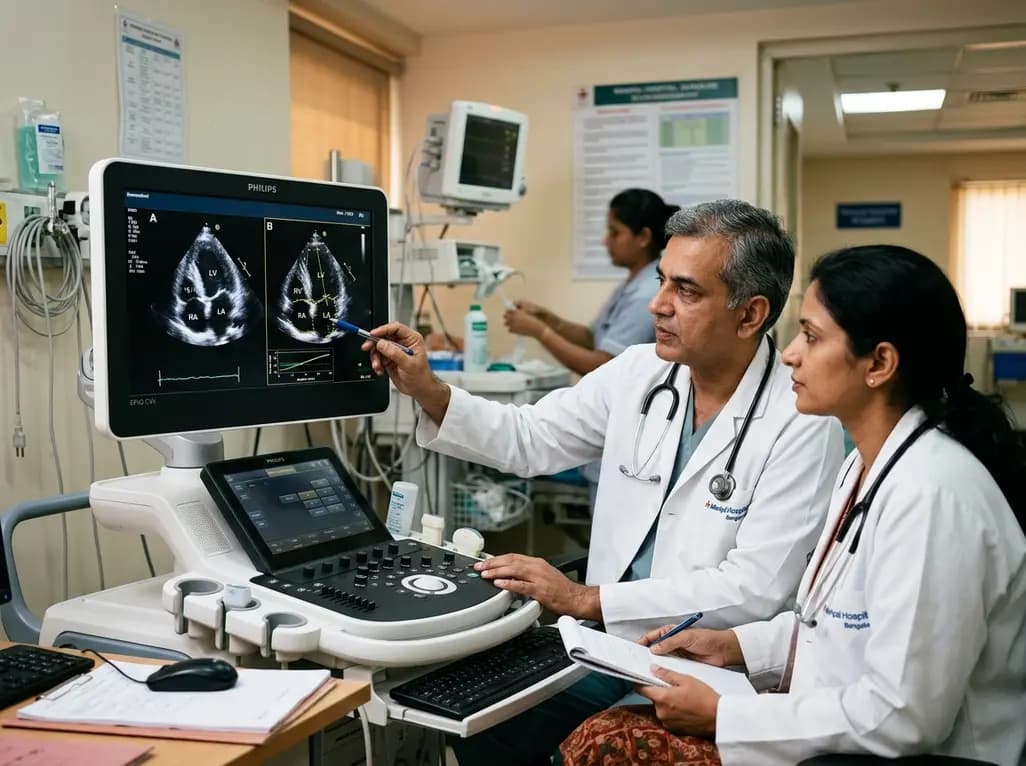
A multi-expert study shows pairwise deep learning accurately assesses echocardiographic rotational alignment in apical four-chamber views, outperforming pointwise regression. This technique improves automated image quality control and standardizes functional cardiac assessment.
Today

A longitudinal study of 1,055 chronic low back pain patients reveals that higher patient activation fosters constructive pain medication attitudes, reduces disability, and decreases short- and long-term opioid use through collaborative, multimodal care.
Today

A landmark cross-sectional study in Asian adults with type 2 diabetes identifies novel urinary metabolites linked to mild cognitive impairment. Elevated urinary sucrose and altered metabolites highlight non-invasive pathways for early cognitive risk stratification and targeted metabolic management.
Yesterday
