

Loading, please wait...
Loading, please wait...

When acute illness strikes, emergency departments turn into high-stakes environments characterized by urgency, severe clinical distress, and intense psychological vulnerability. Family members who accompany acutely triaged patients face profound uncertainty and disorientation. Recent multicentre clinical evidence highlights that delivering effective emergency medicine requires advancing beyond disease stabilization to implement comprehensive family-centred emergency care. By analyzing both quantitative survey metrics and qualitative lived experiences, emergency physicians can better understand the unique operational, emotional, and communication challenges that families encounter during sudden hospital admissions.
Family members of patients presenting with severe conditions—such as those categorized under Emergency Severity Index levels 1 through 3—exhibit exceptionally high support requirements. Clinical investigations using the Critical Care Family Needs Inventory modified for Emergency Departments demonstrate that families rate almost all supportive interventions as highly important. Interestingly, domain analysis reveals that families prioritize emotional support and personal comfort alongside technical clinical updates.
Surrogate decision-makers require immediate psychological reassurance, physical proximity to the patient, and dedicated spaces to cope with acute distress. Consequently, healthcare providers must recognize that comfort and emotional stabilization are not secondary amenities. Rather, they represent fundamental prerequisites for constructive family engagement during medical crises. When emergency teams systematically assess these priorities, they can alleviate family panic, foster trust, and lay the foundation for collaborative care throughout the patient journey.
Qualitative evaluations reveal that interpersonal dialogue serves as the unifying bridge connecting all aspects of family-centred emergency care. When clinicians provide transparent, continuous, and empathetic information, families experience heightened emotional security and improved resilience. Conversely, prolonged clinical silence frequently breeds suspicion, escalating caregiver anxiety and precipitating interpersonal conflicts between relatives and healthcare staff.
Moreover, structured updates allow relatives to process complex medical information without feeling overwhelmed by technical jargon. Clinicians who deliver predictable status briefings help family members understand diagnostic pathways, prognostic uncertainties, and immediate therapeutic targets. Therefore, effective communication is not merely an administrative courtesy. Instead, it serves as an indispensable therapeutic intervention that directly mitigates psychological distress, clarifies clinical expectations, and facilitates informed surrogate consent during time-sensitive emergencies.
Acutely ill patients frequently arrive in emergency facilities amidst severe social and operational turbulence. In-depth interviews illuminate several non-clinical challenges that heavily impact caregivers. Specifically, family members frequently struggle with complex hospital administrative admission procedures, financial billing uncertainties, and chaotic physical environments. The lack of private consultation areas often forces difficult prognosis discussions into busy corridors, stripping families of dignity during profound vulnerability.
Furthermore, acute medical crises evoke urgent spiritual and existential distress. Relatives often seek solace in prayer, faith traditions, or quiet reflection while awaiting diagnostic outcomes. In resource-constrained or crowded hospital settings, physical congestion and constant noise compound this psychological burden. Healthcare organizations must therefore address these environmental and operational barriers. Providing clear administrative navigation, designated quiet spaces, and sensitive accommodation of cultural and spiritual practices significantly softens the trauma of sudden emergency hospitalization.
Emergency departments across India and similar developing healthcare landscapes face unprecedented patient volumes, limited bed capacity, and intense caregiver density. In these high-pressure settings, multiple family members routinely accompany a single patient, often serving as immediate financial guarantors and informal bedside caregivers. However, crowded waiting areas and rapid triage workflows create severe friction, occasionally contributing to workplace violence against medical personnel.
To mitigate these challenges, Indian emergency centres must operationalize structured family engagement models. Designating a single family spokesperson streamlines critical dialogue and prevents conflicting messages among large kinship groups. Additionally, integrating medical social workers and patient liaisons into the primary triage area offers immediate administrative guidance. By proactively managing billing queries and orienting relatives to department workflows, hospitals decouple logistical burdens from direct physician-patient resuscitation efforts, substantially improving overall clinical efficiency and workplace safety.
Transforming emergency departments into supportive, family-responsive spaces requires deliberate institutional changes and standardized clinical workflows. Healthcare administrators should prioritize clear, written orientation materials for families at triage, detailing expected waiting timelines and treatment trajectories. Furthermore, hospitals must institute clinician training focused on delivering rapid, compassionate status reports during resuscitations, ensuring that updates occur at predictable operational intervals.
Equally important is establishing clear, safe boundaries for bedside presence. While unrestricted access may impede emergency resuscitation, selective, clinically appropriate family presence can offer immense emotional comfort to both the patient and their loved ones. Prospective clinical trials are now needed to rigorously measure the impact of these structured communication pathways on caregiver anxiety, post-traumatic stress, and clinical throughput. Ultimately, integrating structured communication, administrative navigation, and dignified family support establishes a resilient framework that benefits patients, relatives, and healthcare teams alike.
The primary objective is to integrate the psychological, informational, and emotional needs of family members into acute clinical management. By treating the family as an essential unit of care, emergency teams enhance diagnostic history collection, alleviate severe caregiver distress, and facilitate collaborative, timely decision-making during life-threatening crises.
Structured communication provides predictable, transparent updates that eliminate ambiguity during treatment delays. By establishing designated meeting times and clear explanations of ongoing medical evaluations, clinicians prevent caregiver panic, build mutual trust, and substantially reduce the friction that frequently leads to disputes in high-pressure emergency environments.
Yes, family presence can occur safely when guided by structured institutional protocols and a dedicated staff chaperone. Chaperones explain medical procedures in real time, offer immediate emotional reassurance, and ensure relatives do not obstruct resuscitation efforts, thereby reducing long-term psychological trauma and complicated grief for surviving loved ones.
Disclaimer: This content is for informational and educational purposes only. It is not intended to substitute for professional medical advice, diagnosis, or treatment. Always seek the advice of your physician or other qualified health provider with any questions you may have regarding a medical condition or clinical practice guidelines. Refer to the latest local and national guidelines for clinical practice.
References
Rukhama RA et al. Needs and challenges of family members of acutely ill patients admitted from Indonesian emergency departments: A multicentre explanatory sequential mixed methods study. Australas Emerg Care. 2026 Nov 12. doi: undefined. PMID: 43015206.
Renthlei L, Ramesh RS, Thulasingam M, Kumari MJ. A study to assess the psychosocial needs of patient family members in the intensive care unit in India. Acute Crit Care. 2024;39(3):450-458.
Redley B, Beanland C, Botti M. Accompanying critically ill relatives in emergency departments. J Adv Nurs. 2003;44(1):25-34.

Read summarized clinical updates, watch expert medical content, and earn CME certifications right from your smartphone.
Open your smartphone camera to scan and install.





A multicentre mixed-methods study highlights the multidimensional needs of families of acutely ill emergency patients, emphasizing communication, emotional support, and structured involvement to elevate clinical outcomes and acute care delivery.
Today
Researchers have identified novel vulnerable epitopes on the Plasmodium vivax circumsporozoite protein (PvCSP). These findings provide a structural roadmap for developing an effective vivax malaria vaccine that blocks hepatocyte invasion and prevents dormant liver hypnozoite relapses.
Today
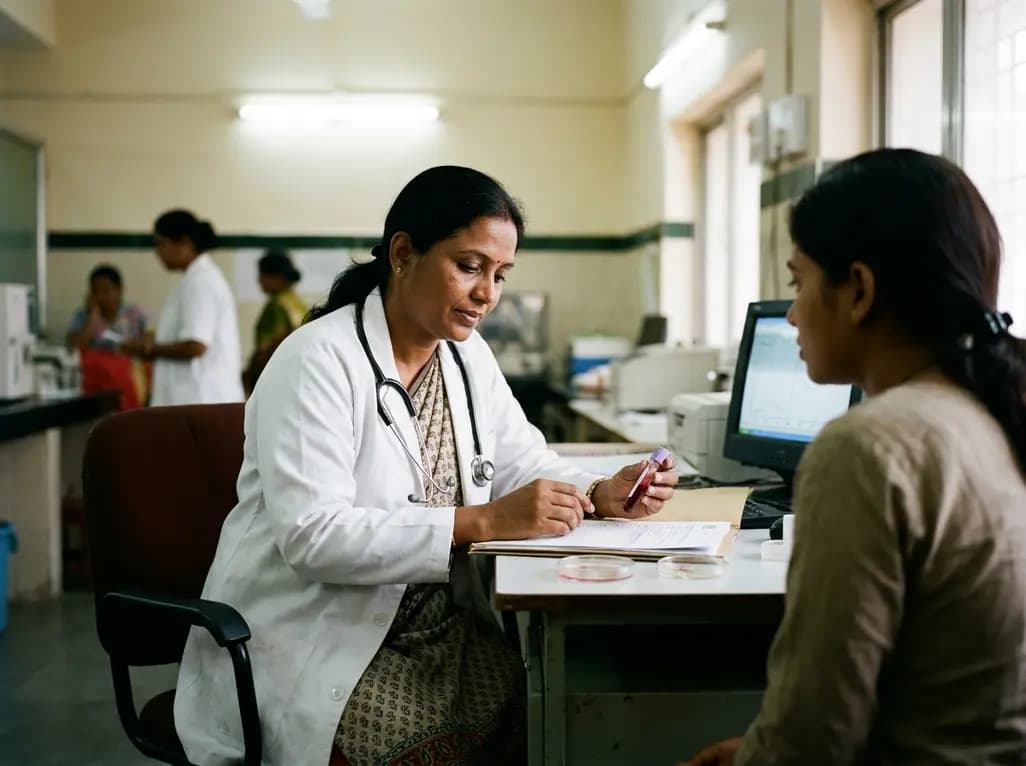
A breakthrough blood test measuring the RNA biomarker Tu-Stroma detects microscopic serous tubal intraepithelial carcinoma (STIC) lesions with remarkable accuracy. This non-invasive diagnostic tool offers crucial biological insight to guide prophylactic surgery decisions for women carrying high-risk genetic mutations.
Today
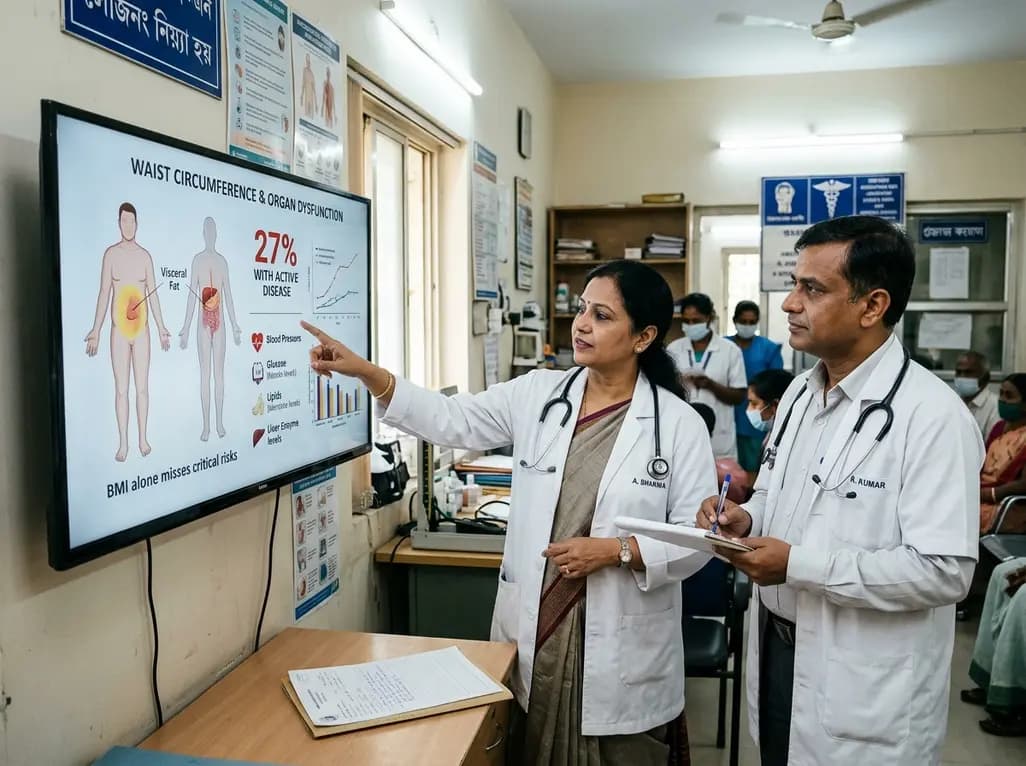
A landmark Nature study reveals that only 27% of individuals with obesity have active clinical disease. By incorporating waist circumference and organ dysfunction, this new diagnostic framework moves beyond BMI to prevent widespread misclassification and guide personalized metabolic intervention.
Today
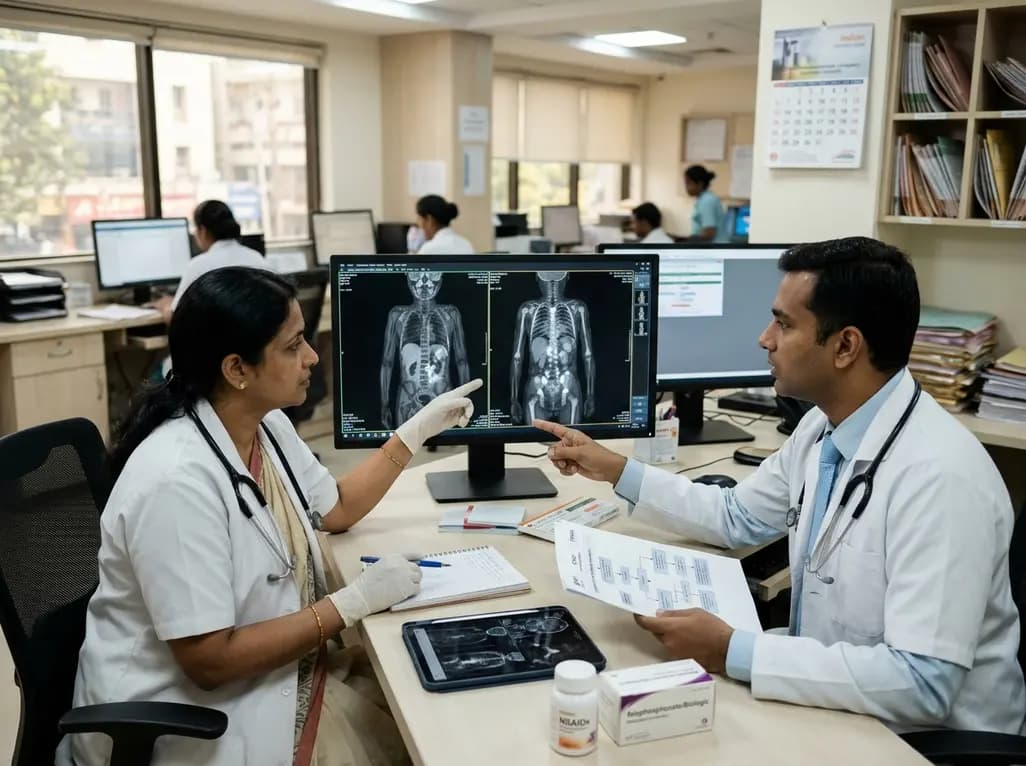
Chronic nonbacterial osteomyelitis (CNO) is a pediatric autoinflammatory bone disorder. This review covers the French protocol, emphasizing whole-body MRI as the diagnostic gold standard, prudent biopsy avoidance, first-line NSAID treatment, and second-line biologic or bisphosphonate therapies for spinal lesions.
Today

A real-world retrospective study demonstrates that combining intravitreal ranibizumab with focal/grid macular laser significantly improves visual acuity and central macular thickness compared to laser monotherapy in patients with center-involved diabetic macular edema.
Today
