

Loading, please wait...
Loading, please wait...

Familial intellectual disability represents a significant neurodevelopmental challenge that touches multiple generations within affected households. Consequently, clinicians must recognize that this condition impacts not only individual health but also the psychosocial well-being of entire families. Recent landmark health economics research highlights the substantial toll borne by primary caregivers and domestic partners. Therefore, understanding health-related quality of life and health utility metrics is essential for shaping comprehensive multidisciplinary interventions.
Recent investigations offer vital empirical insights into how familial intellectual disability diminishes measurable health-related quality of life. Specifically, researchers utilized standardized multi-attribute utility instruments, including the Health Utilities Index Mark 2 and Mark 3, to evaluate affected individuals. Furthermore, the findings establish that individuals with intellectual disability experience marked reductions in functional capacity and daily autonomy. Because cognitive and adaptive limitations persist across the lifespan, these scores reflect substantial lifelong impairment across sensory, motor, and emotional domains. In addition, health economic evaluations depend on these cardinal utility values to assess the cost-effectiveness of targeted medical therapies and social services. Consequently, having precise utility data allows health authorities to allocate healthcare resources more equitably. Furthermore, the documented utility scores underscore the extensive gap between affected individuals and standard population norms. Therefore, healthcare providers must interpret these metrics as clear signals of profound unmet functional need. By measuring these decrements systematically, clinicians can better advocate for tailored habilitative therapies that target self-care, communication, and emotional resilience.
Caring for individuals with neurodevelopmental conditions generates heavy emotional, financial, and physical strain. In this recent cohort study, health utility values for primary carers dropped to an alarming mean of 0.58. Similarly, spouses of affected individuals recorded a mean utility value of only 0.63. In contrast, age- and gender-adjusted population norms typically hover around 0.80. Thus, this pronounced deficit reveals a secondary health crisis within caregiving households. Caregivers frequently sacrifice personal career advancement and preventive healthcare to provide round-the-clock home assistance. Consequently, many carers experience chronic sleep deprivation, anxiety, depression, and social isolation. Moreover, spousal partners must balance demanding marital dynamics with extensive caretaking duties for extended relatives. When multiple generations live with intellectual disability, informal care networks face compounded emotional exhaustion. Therefore, physicians must proactively screen primary carers for caregiver burnout and psychiatric morbidity. Providing targeted psychological counseling, respite care, and social support services can meaningfully mitigate this debilitating secondary burden.
Quantifying health-related quality of life requires rigorous psychometric tools capable of calculating quality-adjusted life years. To measure carer and spousal outcomes, researchers administered the Assessment of Quality of Life 8D questionnaire. Meanwhile, investigators evaluated affected relatives using the Health Utilities Index to capture multidimensional physical and cognitive attributes. These standardized instruments capture nuanced facets of well-being, such as pain, mental health, relationships, and independent living. Furthermore, health utility scores provide the essential mathematical foundation for formal cost-utility analyses. When policy analysts evaluate novel therapies or community programs, they require reliable utility data to justify public funding. Without robust baseline metrics, economic models undervalue the societal benefits of supportive disability interventions. In addition, recognizing spousal and caregiver utility loss broadens the scope of economic evaluations beyond individual patient outcomes. Consequently, health economists can capture the full societal return on investment when funding family-centered programs. Clinicians who understand these economic models can better advocate for vital local resource planning.
Primary care physicians, psychiatrists, and pediatricians operate on the frontlines of developmental disability management. Because familial cases involve complex hereditary patterns, clinicians must adopt a comprehensive family-systems framework. First, medical teams should coordinate early genetic testing, neurodevelopmental evaluations, and habilitative therapy for affected relatives. However, medical intervention must not stop with the patient alone. Clinicians should routinely evaluate the mental and physical health of primary caregivers during clinical encounters. For example, simple screening tools for depressive symptoms and sleep disorders can identify distressed caregivers before severe decompensation occurs. Additionally, clinical teams should connect vulnerable families with existing disability pensions and respite services. Multidisciplinary case conferences can also resolve conflicting treatment priorities between spouses and extended relatives. Consequently, structured collaborative care reduces emergency visits and prevents premature institutionalization. Ultimately, supporting the caregiver directly enhances the clinical stability and overall well-being of the patient living with intellectual disability.
Bridging the quality-of-life gap requires sustained structural reforms alongside traditional clinical care. First, governments must expand publicly funded respite care programs to offer family caregivers scheduled, recurring relief. Such operational breaks preserve caregiver physical health and dramatically lower psychological distress. Furthermore, healthcare authorities should implement community-based day centers and vocational training initiatives tailored to adults with cognitive impairments. These specialized programs promote social inclusion for patients while enabling family members to pursue gainful employment. In addition, financial safety nets must address the severe economic hardship common among caregiving households. Subsidized home nursing, accessible transportation, and tax relief for dependent care can alleviate substantial financial strain. Meanwhile, healthcare institutions should train community health workers to navigate disability support paperwork for disadvantaged families. When policy interventions actively address the entire family ecosystem, society achieves more equitable public health outcomes. Therefore, investing in holistic disability services yields transformative long-term benefits across healthcare and community domains.
The pronounced decline in caregiver health utility stems from severe physical, psychological, and financial demands. Caregivers frequently manage relentless supervisory duties, disrupted sleep schedules, and intense emotional strain while coordinating daily medical appointments. Consequently, they experience high rates of depression, anxiety, and social isolation. Furthermore, sacrificing personal employment and preventive healthcare routines deepens their vulnerability. These compounding lifestyle disruptions substantially reduce overall quality of life across standardized physical and mental health dimensions.
Standardized multi-attribute instruments convert subjective health statuses into cardinal preference-based utility weights ranging from zero to one. Specifically, instruments like the Health Utilities Index assess sensory, cognitive, and functional domains in affected individuals. In contrast, the Assessment of Quality of Life 8D captures intricate psychosocial dimensions, including relationships and mental health among caregivers. Economists use these utility values to calculate quality-adjusted life years, enabling objective cost-effectiveness evaluations of healthcare and social interventions.
Physicians can adopt a proactive family-centered care model during routine consultations. First, clinicians should perform structured periodic screenings for depression, caregiver burden, and sleep disturbances among primary caregiving relatives. Second, healthcare teams should establish direct referral pathways to local respite care, social welfare benefits, and counseling services. Additionally, providing coordinated multidisciplinary appointments minimizes travel fatigue. By actively validating caregiver contributions and addressing their medical needs, clinicians preserve the resilience of the entire domestic unit.
Disclaimer: This content is for informational and educational purposes only... Refer to the latest local and national guidelines for clinical practice.
References

Read summarized clinical updates, watch expert medical content, and earn CME certifications right from your smartphone.
Open your smartphone camera to scan and install.





A landmark study evaluates health-related quality of life in familial intellectual disability, revealing marked decrements in health utility for individuals, carers, and spouses.
Today
A secondary analysis of the TRIANGLE trial reveals that patients undergoing compulsory admission for anorexia nervosa achieve substantial clinical improvements over 12 months, despite presenting with lower motivation, obsessive-compulsive comorbidity, and enduring body mass index deficits.
Today
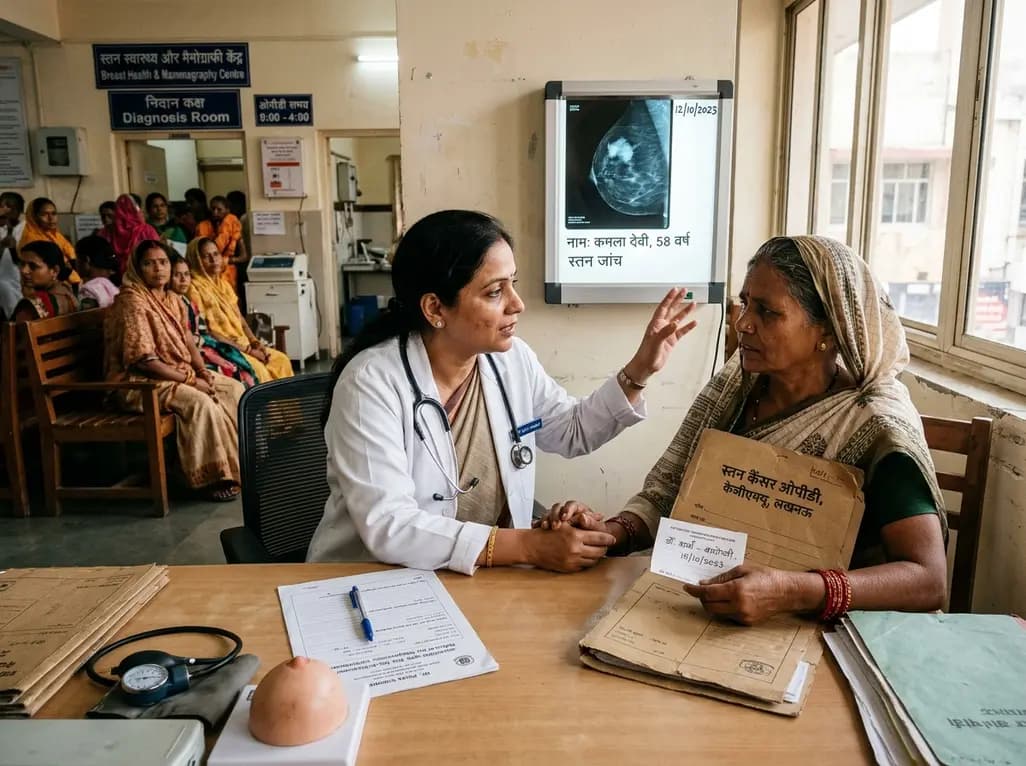
A KGMU study reveals over half of women with breast abnormalities fail to undergo diagnostic confirmation, leading to advanced-stage detection. Discover the socio-cultural barriers, clinical risks of incomplete resection, and community-level solutions needed to bridge the critical screening-to-diagnosis gap in India.
Today

A comparative non-contact study reveals that high-power radiofrequency delivery with the QDOT MICRO catheter induces an artifactual contact force rise. Electrophysiologists must understand this power-dependent thermal and electrical phenomenon to avoid inadvertent catheter withdrawal and ineffective ablation.
Today

Healthium Medtech has transitioned its arthroscopy vertical into SIRONIX Orthopedics, aiming to capture key segments of the global joint care market. The strategic shift introduces dedicated portfolios in sports medicine, joint regeneration, surgical reconstruction, and digital operating technologies.
Today

Preclinical research demonstrates that BMI1 overexpression alleviates metabolic syndrome-related liver injury. By triggering ubiquitin-mediated METTL3 degradation, BMI1 prevents AHNAK m6A methylation and suppresses fibrogenic TGF-β/SMAD signaling, significantly improving hepatic steatosis and insulin resistance.
Today
