.webp&w=384&q=75)

Loading, please wait...
Loading, please wait...

Primary care physicians frequently encounter patients who experience lingering psychological trauma following public health emergencies and severe life stressors. Implementing rapid and reliable PC-PTSD-5 screening allows clinicians to identify trauma-related symptoms before they progress into debilitating mental health conditions. Recent research evaluated the factor structure and measurement properties of this tool during widespread crisis conditions. The findings confirm that the measure operates with high precision across diverse community groups.
The Primary Care PTSD Screen for DSM-5 represents a critical refinement of trauma assessment instruments. Originally structured around DSM-IV criteria, the updated five-item tool reflects current diagnostic frameworks. The assessment begins with an initial inquiry regarding lifetime exposure to traumatic events. When a patient reports trauma exposure, the clinician administers five dichotomous questions evaluating intrusion, avoidance, hyperarousal, emotional detachment, and trauma-related guilt. Consequently, this brief format minimizes respondent burden while preserving diagnostic sensitivity in busy outpatient clinics.
Furthermore, general practitioners value concise assessment tools that seamlessly integrate into ambulatory workflows. Many individuals who experience trauma do not actively seek specialized psychiatric services. Instead, they present to outpatient clinics with somatic complaints, persistent insomnia, or vague physical exhaustion. Therefore, utilizing a brief screener provides an essential bridge between initial symptom recognition and timely psychiatric referral. Clinicians can complete the assessment in less than two minutes during routine consultations.
Researchers conducted two extensive population surveys to rigorously evaluate the psychometric architecture of the measure. Factor analysis demonstrated a robust unidimensional structure among community adults. This finding confirms that the five items measure a single, coherent underlying construct of post-traumatic stress. Therefore, calculating a simple cumulative score across all five items remains statistically and clinically sound.
In addition, the researchers confirmed configural and scalar measurement invariance across multiple demographic variables. The instrument demonstrated equivalent measurement properties across different age brackets, genders, and primary languages spoken at home. This structural stability means that observed score variations reflect genuine differences in post-traumatic stress severity rather than measurement bias. Consequently, healthcare providers can confidently apply the tool across diverse patient populations without adjusting scoring criteria for demographic subgroups.
To further examine item performance, investigators implemented modern item response theory models alongside classical test theory. These analyses demonstrated that each individual item exhibits high discriminative capacity. Specifically, the questions effectively distinguish between patients experiencing mild adjustment reactions and those suffering from significant post-traumatic pathology.
Moreover, the investigation demonstrated solid convergent and divergent validity against established psychological markers. The total score correlated strongly with validated measures of psychological distress, anxiety, and depressive symptoms. Conversely, the measure differentiated trauma symptoms from non-specific somatic manifestations. Thus, the item response parameters confirm that the screener maintains psychometric robustness even when applied to broad community populations outside of military or specialized veteran cohorts.
Translating validation findings into everyday outpatient practice requires clear diagnostic pathways. While a cut-off score of 3 offers high sensitivity to detect probable trauma, a cut-off score of 4 achieves optimal diagnostic efficiency. Clinicians who work in high-volume settings often prefer an efficient threshold to reduce unnecessary false-positive referrals. However, practitioners should lower the threshold when evaluating vulnerable individuals who exhibit subtle clinical distress.
Additionally, positive screening results must always prompt comprehensive clinical interviews rather than immediate definitive diagnoses. Clinicians should confirm the duration of symptoms and the degree of functional impairment. Structured interviews, such as the Clinician-Administered PTSD Scale, provide definitive diagnostic verification when resources permit. Alternatively, self-report measures like the PTSD Checklist for DSM-5 offer detailed symptom tracking during longitudinal treatment follow-ups.
Community-wide crises, such as infectious disease outbreaks and environmental disasters, substantially increase the incidence of post-traumatic morbidity. Family physicians and internists remain on the front line of recognizing these pervasive psychological sequelae. By deploying validated screening protocols, practitioners can detect hidden suffering and initiate early supportive interventions.
Furthermore, early identification directly improves therapeutic outcomes. Evidence-based psychotherapies, including trauma-focused cognitive behavioral therapy and prolonged exposure, provide significant symptom relief when clinicians initiate care promptly. Pharmacotherapy, particularly selective serotonin reuptake inhibitors, also serves as an effective adjunct for stabilizing severe hyperarousal and affective symptoms. Therefore, systematic screening transforms routine primary consultations into pivotal opportunities for comprehensive mental healthcare.
A score of 3 or 4 positive responses typically indicates probable post-traumatic stress disorder. A cut-off score of 3 optimizes diagnostic sensitivity, which helps identify early pathology. Conversely, a cut-off score of 4 balances sensitivity and specificity to minimize false positives in busy primary care settings.
The revised instrument incorporates a five-item structure aligned with modern diagnostic guidelines. Unlike its four-item predecessor, the updated version evaluates trauma-related guilt, blame, and negative cognitive alterations. Additionally, it includes an explicit preliminary question confirming criterion-level trauma exposure before assessing active symptoms.
No, the screener serves exclusively as an initial risk identification instrument rather than a definitive diagnostic tool. Patients who obtain positive scores require comprehensive clinical evaluation by a medical doctor or mental health professional. Structured diagnostic interviews confirm whether symptoms satisfy full clinical criteria.
Disclaimer: This content is for informational and educational purposes only and does not constitute medical advice, diagnosis, or treatment. Healthcare professionals should exercise their independent clinical judgment when evaluating and treating patients. Refer to the latest local and national guidelines for clinical practice.
References
Marleau JD et al. Factorial validation of the PC-PTSD-5 in the adult Quebec population. Encephale. 2026 Oct 16. doi: undefined. PMID: 42888161.
Prins A, Bovin MJ, Smolenski DJ, et al. The Primary Care PTSD Screen for DSM-5 (PC-PTSD-5): Development and Evaluation Within a Veteran Primary Care Sample. J Gen Intern Med. 2016;31(10):1206-1211. doi:10.1007/s11606-016-3703-5.
Blevins CA, Weathers FW, Davis MT, Witte TK, Domino JL. The Posttraumatic Stress Disorder Checklist for DSM-5 (PCL-5): Development and Initial Psychometric Evaluation. J Trauma Stress. 2015;28(6):489-498. doi:10.1002/jts.22059.

Read summarized clinical updates, watch expert medical content, and earn CME certifications right from your smartphone.
Open your smartphone camera to scan and install.





A psychometric validation study confirms the unidimensional factor structure and diagnostic robustness of the PC-PTSD-5 screening tool in the general adult population, supporting its clinical reliability across diverse demographics.
Today

The ASAS core set defines mandatory domains and instruments for axial spondyloarthritis across routine and extended clinic visits, optimizing outpatient care and aligning treatment monitoring with international guidelines.
Today

A Belgian study highlights maternal desires and healthcare provider perspectives on breastfeeding in women living with HIV. While viral suppression reduces transmission risk below 1%, significant clinical training and policy gaps remain, highlighting the urgent need for multidisciplinary counseling protocols.
Today

New research reveals that non-ablative radiotherapy suppresses ventricular tachycardia by increasing conduction velocity via NaV1.5 upregulation and action potential prolongation. However, sustained sodium current elevation and depressed calcium handling highlight the need for careful clinical translation.
Today

Diagnostic data shows that nearly one in four spine investigations now involve patients younger than 40 years. This comprehensive overview explores the drivers behind this demographic trend, evaluates ergonomic hazards, clarifies red-flag signs, and highlights clinical indications for judicious diagnostic imaging.
Yesterday
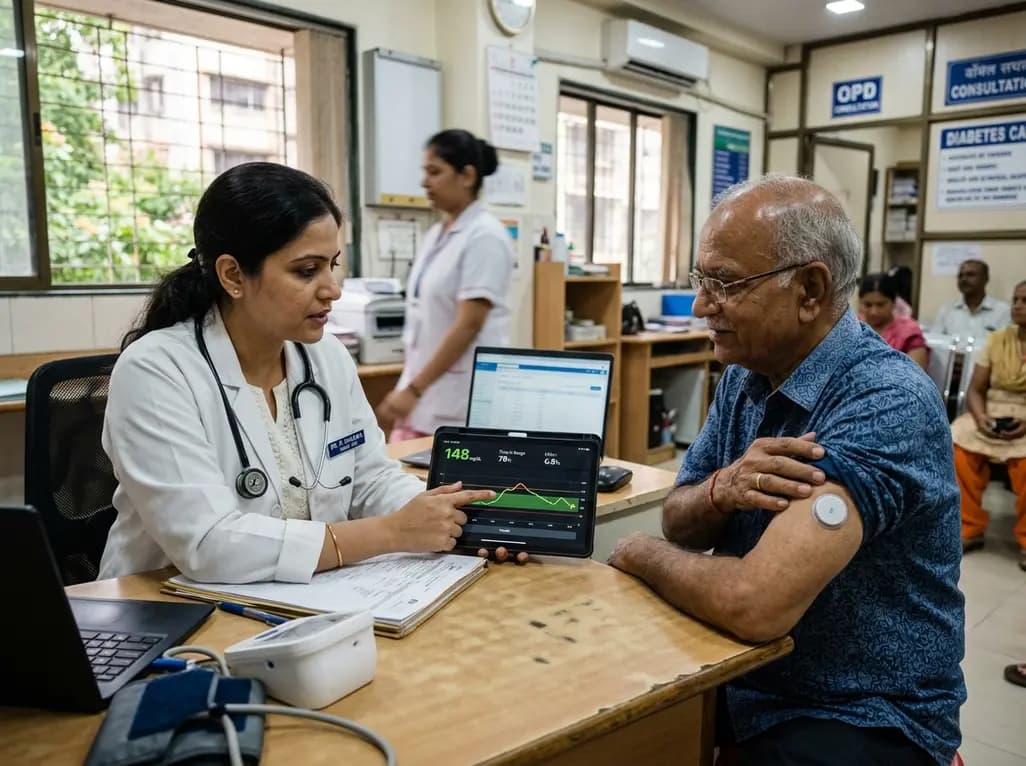
A landmark randomized clinical trial demonstrates that real-time continuous glucose monitoring significantly reduces HbA1c and enhances time in range for individuals with type 2 diabetes who do not take insulin, paving the way for broader clinical adoption and personalized metabolic therapy in primary care.
Today
