.webp&w=384&q=75)

Loading, please wait...
Loading, please wait...

Managing chronic inflammatory back pain requires systematic clinical tools that capture multi-organ involvement while conserving outpatient consultation time. The newly endorsed Assessment of SpondyloArthritis international Society recommendations establish a unified framework for standard axial spondyloarthritis assessment across outpatient care. Historically, clinicians faced considerable variability between clinical trial measures and daily clinical practice. Therefore, international rheumatology experts collaborated with patient stakeholders to identify essential clinical domains and objective instruments. Consequently, this initiative bridges practice gaps by distinguishing rapid routine consultations from comprehensive extended visits, helping clinicians systematically track therapeutic efficacy.
Axial spondyloarthritis encompasses radiographic ankylosing spondylitis alongside non-radiographic variants, presenting complex diagnostic and management challenges. Previously, clinicians adapted extensive trial outcome sets for routine practice, which frequently overwhelmed busy outpatient schedules. However, brief unstructured consultations often missed emerging extra-articular manifestations, structural progression, and persistent peripheral inflammation. Consequently, healthcare providers urgently required an internationally endorsed consensus regarding the essential minimum data elements to collect during patient follow-up.
To address this challenge, international experts conducted rigorous literature reviews and multistakeholder Delphi surveys. ASAS voting members subsequently endorsed two distinct scenarios: routine monitoring and extended evaluations. Specifically, this practical two-tiered structure respects real-world time constraints while ensuring thorough longitudinal disease surveillance. Moreover, standardising assessments reduces unwanted clinical variability and strengthens communication among rheumatologists, orthopedic specialists, and primary care physicians. In busy Indian healthcare settings, where high patient volumes often compress evaluation time, having a structured, uniform blueprint provides immense clinical value. Furthermore, systematic evaluations allow practitioners to identify early treatment non-response and prevent irreversible structural spinal damage promptly.
During routine clinic visits, strict time constraints demand rapid, focused, and validated assessment measures. Therefore, the core set defines five mandatory clinical domains: disease activity, spinal pain, peripheral manifestations, extra-musculoskeletal manifestations, and treatment aspects. Each domain includes one primary recommended tool alongside validated secondary alternatives. For instance, clinicians monitor inflammatory disease activity using either the Ankylosing Spondylitis Disease Activity Score or the Bath Ankylosing Spondylitis Disease Activity Index.
Additionally, clinicians evaluate pain using standardized numerical rating scales that quantify both overall spinal discomfort and nocturnal awakenings. Peripheral manifestations require systematic joint examination, focusing specifically on peripheral arthritis, enthesitis, and dactylitis. Furthermore, physicians must actively screen for extra-musculoskeletal complications at every routine consultation, including acute anterior uveitis, inflammatory bowel disease, and cutaneous psoriasis. Finally, the treatment domain tracks therapeutic tolerance, drug adherence, and potential adverse effects. Hence, this streamlined five-domain checklist ensures that clinicians detect disease flares rapidly without placing an unnecessary administrative burden on clinical healthcare providers. Regular, focused evaluation of these core parameters ensures timely therapeutic adjustments whenever inflammatory activity remains persistently elevated.
While routine visits maintain consistent disease control, clinicians also require periodic comprehensive reviews to evaluate long-term patient outcomes. Consequently, extended consultations incorporate four supplementary domains: structural damage, overall functioning and health, comorbidities, and spinal mobility. These supplementary domains provide crucial prognostic insights that guide long-term therapeutic strategy effectively. For example, clinicians evaluate structural damage every two years using conventional spinal radiographs or magnetic resonance imaging when active sacroiliitis requires re-evaluation.
Moreover, functional capacity and quality of life represent critical dimensions of holistic axial spondyloarthritis care. Physicians quantify overall functioning using validated instruments such as the ASAS Health Index or the Bath Ankylosing Spondylitis Functional Index. In addition, assessing spinal mobility through the Bath Ankylosing Spondylitis Metrology Index identifies mechanical restriction early in disease evolution. Similarly, clinicians must screen systematically for prevalent comorbidities, including osteoporosis, cardiovascular pathology, depression, and metabolic syndrome. Because Indian patients with inflammatory conditions face significant cardiovascular risks, proactive comorbidity screening prevents avoidable secondary complications. Therefore, extended visits guarantee that physicians address systemic health beyond mere musculoskeletal symptoms, optimizing overall patient survival and quality of life.
Translating these consensus recommendations into everyday Indian healthcare requires practical workflow adjustments. Outpatient rheumatology and orthopedic clinics encounter diverse patient demographics, varied digital literacy levels, and substantial daily patient loads. Therefore, clinicians can implement pre-visit patient-reported outcome questionnaires in clinic waiting areas to capture subjective symptoms efficiently. For example, nursing staff or trained triage assistants can assist patients in completing pain scores and disease activity questionnaires before physician review.
Furthermore, integrating these core parameters into electronic health records facilitates rapid documentation and longitudinal tracking over time. When digital records are unavailable, simple paper-based proformas ensure standardized data capture across successive consultations. Additionally, primary care physicians and orthopedic surgeons often serve as the first point of contact for persistent inflammatory back pain. Hence, widespread awareness of these five routine domains accelerates early specialist referral and timely biologic initiation. Multidisciplinary coordination between rheumatologists, ophthalmologists, and gastroenterologists also optimizes the management of complex extra-articular manifestations. Ultimately, institutionalizing these simple core sets creates a dependable quality framework across both public hospitals and private clinical practices throughout India.
Standardized clinical monitoring directly aligns with international treat-to-target principles in spondyloarthritis management. Current therapeutic guidelines emphasize achieving either clinical remission or inactive disease status to prevent progressive spinal ankylosis. However, doctors cannot attain these ambitious therapeutic targets without regular, objective measurements. Consequently, utilizing the routine core set allows clinicians to titrate non-steroidal anti-inflammatory drugs and targeted biologic disease-modifying agents with precision.
Moreover, objective scoring minimizes subjective therapeutic inertia, prompting timely therapy escalation whenever patients demonstrate persistent active inflammation. When patients achieve clinical remission, structured follow-up prevents premature drug discontinuation and detects subclinical disease relapses immediately. In addition, routine monitoring of treatment adherence uncovers financial barriers or logistical hurdles that frequently hinder long-term biologic continuation in resource-constrained environments. By adopting standardized measures, physicians foster transparent shared decision-making with patients, explaining therapeutic milestones through objective numerical changes. Thus, this endorsed core set serves as both a reliable clinical tracking mechanism and an educational bridge that empowers patients to manage their chronic condition proactively over time.
Clinicians generally schedule extended visits annually or biennially, depending on individual disease severity, structural risk factors, and therapeutic stability. While routine visits occur every three to six months to assess acute activity, extended consultations allow doctors to re-evaluate spinal mobility, structural radiographic changes, functional status, and systemic comorbidities. Furthermore, when patients experience significant disease flares or contemplate changing biological therapies, performing an extended evaluation provides the comprehensive baseline necessary for informed clinical decision-making.
The Ankylosing Spondylitis Disease Activity Score with C-reactive protein represents the preferred instrument for routine practice because it integrates objective systemic inflammation with patient-reported symptoms. However, when laboratory results are delayed or unavailable during the clinic encounter, clinicians often utilize the Bath Ankylosing Spondylitis Disease Activity Index. Both tools provide validated cutoff values that reliably define inactive disease, moderate activity, high activity, and very high disease activity, guiding treatment adjustments effectively.
Patients living with axial spondyloarthritis carry an elevated risk of developing serious extra-skeletal comorbidities, including accelerated cardiovascular disease, osteoporosis, and psychiatric mood disorders. Persistent systemic inflammation promotes endothelial dysfunction and early trabecular bone resorption, increasing cardiovascular mortality and vertebral fracture rates. Therefore, extended visits mandate comorbidity assessment to enable early lifestyle interventions, lipid screening, bone densitometry testing, and multidisciplinary specialist referrals, ultimately protecting long-term survival and overall functional independence.
Disclaimer: This content is for informational and educational purposes only... Refer to the latest local and national guidelines for clinical practice.
References

Read summarized clinical updates, watch expert medical content, and earn CME certifications right from your smartphone.
Open your smartphone camera to scan and install.





The ASAS core set defines mandatory domains and instruments for axial spondyloarthritis across routine and extended clinic visits, optimizing outpatient care and aligning treatment monitoring with international guidelines.
Today
A Belgian study highlights maternal desires and healthcare provider perspectives on breastfeeding in women living with HIV. While viral suppression reduces transmission risk below 1%, significant clinical training and policy gaps remain, highlighting the urgent need for multidisciplinary counseling protocols.
Today

India's food safety authority FSSAI has issued show-cause notices to Gemini Edibles, BigBasket, and Flipkart for unpermitted cardiovascular claims regarding Freedom Rice Bran Oil. This regulatory move highlights the strict enforcement of advertising standards and the clinical necessity of evidence-based lipid care.
Today

Diagnostic data shows that nearly one in four spine investigations now involve patients younger than 40 years. This comprehensive overview explores the drivers behind this demographic trend, evaluates ergonomic hazards, clarifies red-flag signs, and highlights clinical indications for judicious diagnostic imaging.
Today
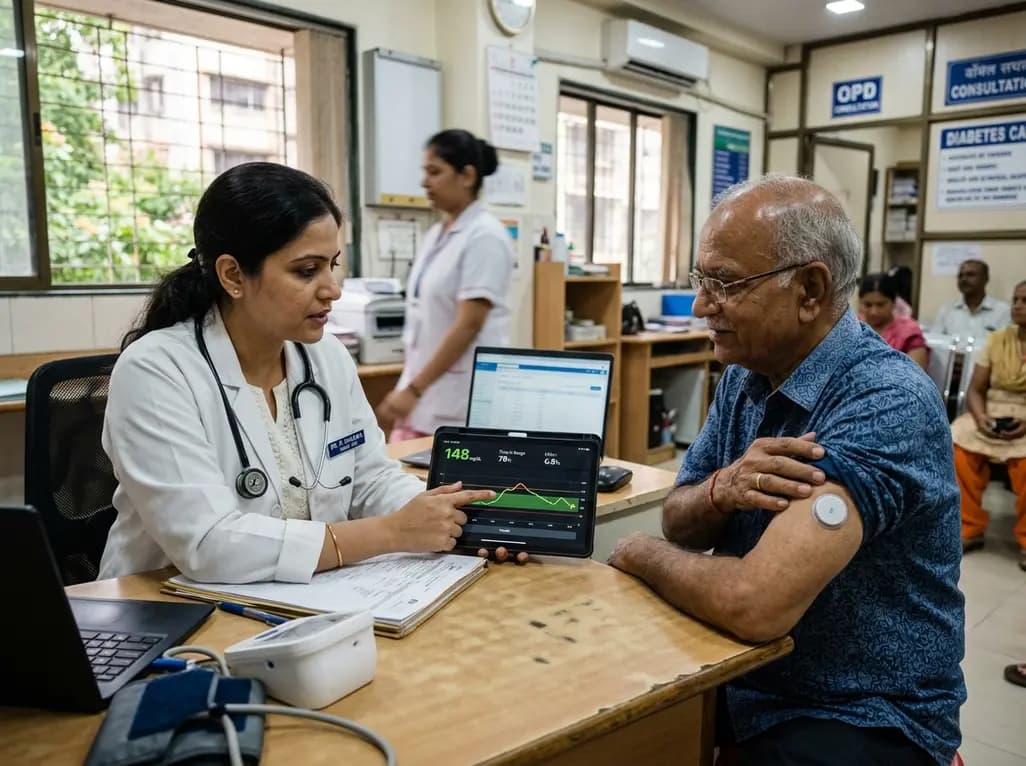
A landmark randomized clinical trial demonstrates that real-time continuous glucose monitoring significantly reduces HbA1c and enhances time in range for individuals with type 2 diabetes who do not take insulin, paving the way for broader clinical adoption and personalized metabolic therapy in primary care.
Today
