

Loading, please wait...
Loading, please wait...

Management of melanoma brain metastases represents one of the most demanding clinical scenarios in modern neuro-oncology. Historically, intracranial dissemination from malignant melanoma carried a devastating prognosis with median survival measured in mere months. However, the therapeutic paradigm shifted dramatically following the introduction of stereotactic body radiation therapy and targeted immune checkpoint inhibitors. In addition, stereotactic techniques deliver ablative radiation doses with millimetric precision, thereby sparing adjacent normal brain parenchyma. Nevertheless, intracranial responses vary widely across patient populations. While certain individuals achieve durable local control, others experience rapid progression or radiation necrosis. Therefore, clinicians urgently require reliable predictive biomarkers to anticipate individual lesion responses two months post-treatment. Traditional clinical scoring systems fail to capture the complex biological and dosimetric interactions governing tumor regression. In response to this pressing challenge, investigators have pioneered machine learning algorithms capable of processing multifaceted clinical covariates. By analyzing patient profiles before therapy, clinicians can effectively anticipate which lesions will achieve complete or partial remission. Consequently, predictive modeling offers an objective foundation for personalized neuro-oncological management. Furthermore, integrating advanced computational decision tools into radiation planning helps clinicians tailor treatment intensity to individual risk profiles.
To address therapeutic unpredictability, researchers conducted a comprehensive evaluation within the Rabbit study cohort. The trial analyzed fifty consecutive patients presenting with one hundred and two oligometastatic brain lesions treated between 2012 and 2018. In addition, all subjects underwent robotic stereotactic body radiation therapy using the CyberKnife platform. Radiologists evaluated local tumor response using brain magnetic resonance imaging at a standardized two-month follow-up interval. Furthermore, investigators applied response evaluation criteria in solid tumors and neuro-oncology assessment metrics to classify intracranial changes. Approximately twenty-four percent of treated lesions demonstrated an objective complete or partial response. The analytical team assessed six distinct supervised machine learning architectures to predict therapeutic outcomes. Specifically, they evaluated logistic regression, k-nearest neighbors, support vector machines, random forests, decision trees, and light gradient boosting machines. The team applied five-fold cross-validation to prevent model overfitting and ensure statistical validity. Among these competing frameworks, the LightGBM algorithm exhibited superior performance, achieving a mean area under the curve of 0.87. Thus, machine learning successfully captures high-dimensional patient characteristics that standard statistical regression models frequently overlook.
Standard artificial intelligence algorithms often face clinical skepticism because practitioners perceive them as opaque black boxes. To overcome this critical limitation, investigators incorporated explainable artificial intelligence using the SHapley Additive exPlanations methodology. SHAP values calculate the individual contribution of each clinical feature toward the final algorithmic prediction. Consequently, this analytical approach illuminates the decision-making process behind complex gradient boosting ensembles. Notably, the SHAP analysis highlighted four paramount variables that dictated lesion response. First, the BRAF mutational status emerged as the single most influential predictive factor. Second, the total prescribed radiation dose heavily governed the likelihood of early tumor shrinkage. Third, the administration of concurrent ipilimumab immunotherapy played an essential role in determining therapeutic efficacy. Fourth, initial lesion dimensions substantially modified individual treatment outcomes. Furthermore, researchers generated an intuitive decision tree to translate these complex mathematical interactions into direct clinical logic. The decision tree revealed that patients harboring BRAF wild-type status exhibited merely a ten percent probability of reaching complete or partial response. Hence, explainability transforms complex mathematical predictions into transparent, actionable clinical insights.
The profound influence of BRAF mutation status underscores the biological intricacies governing radiosensitivity in malignant intracranial deposits. Historically, clinicians regarded melanoma metastases as intrinsically radioresistant lesions that necessitated extreme ablative doses. However, molecular characterization reveals that BRAF-mutated cells exhibit altered cell-cycle kinetics and enhanced susceptibility to ionizing radiation. In contrast, BRAF wild-type tumors display higher radioresistance, achieving lower response rates under conventional radiosurgical doses. The study decision tree demonstrated that BRAF wild-type lesions treated with lower radiation doses achieved minimal regression. Therefore, oncologists must deliver adequate dose escalation when treating lesions that lack BRAF mutations. Additionally, concurrent systemic immunotherapy with ipilimumab reshapes the peritumoral microenvironment. Radiation induces immunogenic cell death, releasing tumor neoantigens and creating an in situ vaccination effect. Concurrently, ipilimumab blocks CTLA-4 signaling, thereby unleashing cytotoxic T-lymphocytes against surviving malignant cells. This biological synergy amplifies systemic and local tumor eradication. Nevertheless, larger lesions present distinct vascular barriers that attenuate immune infiltration. Accordingly, optimizing radiation fractionation and dose intensity becomes imperative when targeting bulkier metastatic disease.
Integrating explainable predictive models into routine oncology workflows provides decisive advantages for multidisciplinary cancer teams. Modern tumor boards frequently debate whether to prescribe single-fraction stereotactic radiosurgery or fractionated regimens. Moreover, clinicians must decide whether to continue systemic targeted therapy or escalate local intracranial radiation. By utilizing LightGBM predictions and SHAP-based interpretations, physicians can rapidly identify patients at high risk for early radiosurgical failure. For example, when a patient presents with a large, BRAF wild-type lesion, clinicians can proactively escalate the total radiation dose. Alternatively, oncologists might integrate early salvage surgery or combined immunotherapeutic regimens to avert local progression. Furthermore, accurate response forecasting minimizes unnecessary toxicities by preventing overtreatment of exquisitely sensitive tumors. In resource-constrained settings like tertiary centers in India, these predictive tools can optimize clinical scheduling and imaging resources. Clinicians can prioritize intensive surveillance for patients predicted to have suboptimal responses. Ultimately, personalized decision tools empower neuro-oncologists to deliver tailored care with greater confidence and therapeutic precision.
Explainable machine learning provides transparent insight into algorithmic decisions through feature attribution methods like SHAP values. Consequently, radiation oncologists can understand exactly why a model predicts local response or treatment failure. This transparency builds clinical confidence, minimizes black-box uncertainty, and enables personalized adjustments to radiation dose and concurrent immunotherapies.
BRAF mutation status significantly influences cellular radiosensitivity and intracranial treatment responses. In clinical investigations, tumors harboring BRAF mutations achieve substantially higher complete or partial response rates after stereotactic body radiation therapy. Conversely, BRAF wild-type status correlates with reduced response rates, indicating that these refractory lesions may require escalated radiation doses or intensified systemic regimens.
Early response assessment at two months identifies patients who achieve prompt radiological control versus those experiencing early treatment failure. Therefore, timely evaluation enables clinicians to rapidly tailor subsequent therapeutic strategies. This proactive approach facilitates prompt second-line systemic treatment, adaptive re-irradiation, or neurosurgical intervention before symptomatic progression causes irreversible neurological morbidity.
Disclaimer: This content is for informational and educational purposes only... Refer to the latest local and national guidelines for clinical practice.
References

Read summarized clinical updates, watch expert medical content, and earn CME certifications right from your smartphone.
Open your smartphone camera to scan and install.





A recent study evaluates explainable machine learning algorithms, specifically LightGBM, to predict treatment response after stereotactic body radiation therapy in patients with melanoma brain metastases, highlighting key predictive roles of BRAF mutation status, radiation dose, and concurrent ipilimumab.
Today

Ambient digital scribes promise effortless medical documentation, but a critical sociotechnical commentary reveals that AI alters rather than eliminates charting work. Discover how shifting cognitive burdens, oversight risks, and workflow redesign impact clinical safety and healthcare practice.
Today

A new comparative study demonstrates that intraoperative imprint cytology achieves 96.6% diagnostic accuracy in ovarian tumours, outperforming frozen section in sensitivity for borderline lesions and offering an accessible, rapid alternative for resource-constrained surgical centres.
Today

Thoracic aortic aneurysm lacks etiologic medical therapy. A new study reveals that targeting specific αV integrins with Cilengitide attenuates TGF-β and mechanotransduction pathways, effectively limiting pro-fibrotic remodeling and aortic bulb dilation in both syndromic and sporadic disease models.
Today
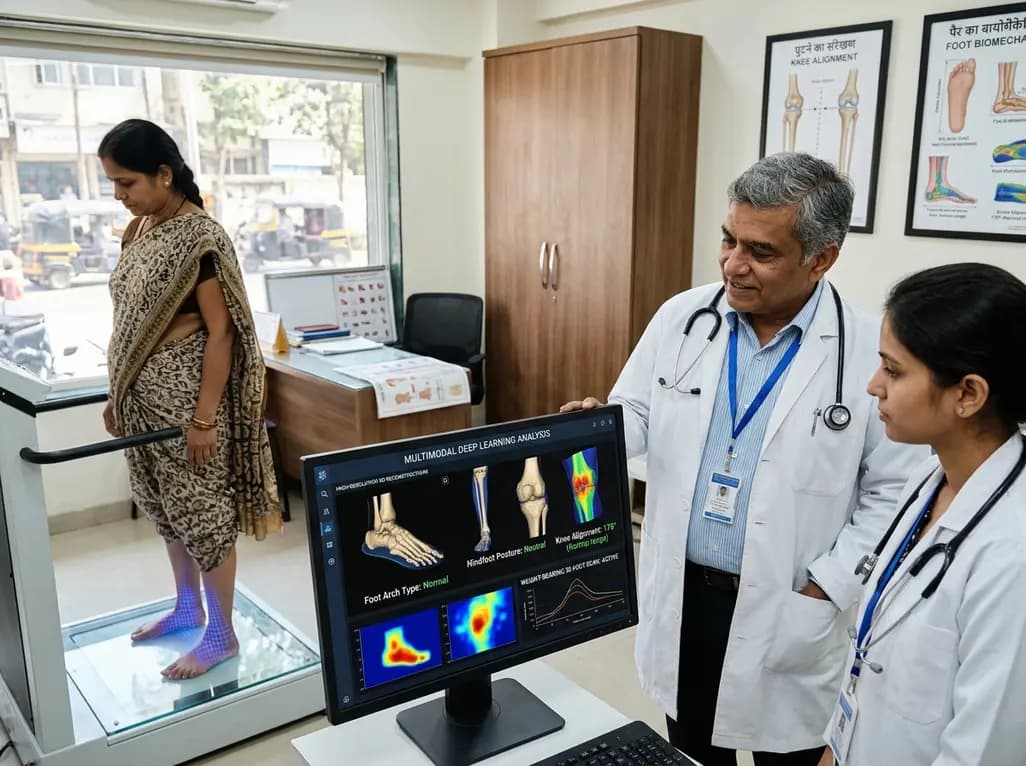
A multimodal deep learning framework utilizing weight-bearing 3D foot scans accurately screens lower-limb alignment, including arch type, hindfoot posture, and knee alignment, offering an accessible, radiation-free alternative to radiography for early biomechanical triage.
Today

A real-world retrospective study demonstrates that combining intravitreal ranibizumab with focal/grid macular laser significantly improves visual acuity and central macular thickness compared to laser monotherapy in patients with center-involved diabetic macular edema.
Today
