.webp&w=384&q=75)

Loading, please wait...
Loading, please wait...

Expert parathyroid localization ultrasonography is currently transforming preoperative planning for primary hyperparathyroidism. Traditionally, surgeons relied on diverse imaging modalities like MIBI or 4D-CT. However, a recent retrospective cohort study highlights that a dedicated neck radiologist provides significantly better diagnostic results. Expert-performed ultrasound achieved a high sensitivity of 89% and a specificity of 98%. Moreover, this specialized approach vastly outperformed community ultrasound, which only reached 50% sensitivity in similar cases.
It even surpassed advanced anatomical and functional modalities like 4D-CT and SPECT-CT in specific clinical settings. Consequently, surgeons should prioritize expert-performed imaging before referring patients for more invasive or high-radiation scans. This strategy ensures a more targeted approach to minimally invasive parathyroidectomy (MIP).
The study specifically evaluated atypical cases, such as ectopic adenomas and multiglandular disease. Expert ultrasound correctly localized 89% of adenomas overall, maintaining its accuracy even in complex presentations. Interestingly, it remained highly effective for ectopic glands, which often present significant challenges for standard community imaging. Therefore, referral to a specialized ultrasonographer can significantly reduce the need for unnecessary bilateral neck explorations.
Furthermore, minimizing patient radiation exposure is a key clinical goal in modern endocrine surgery. While 4D-CT provides excellent anatomical detail, it involves much higher radiation doses than traditional ultrasonography. In addition, expert ultrasound remains a highly cost-effective tool for the healthcare system. Ultimately, this modality should guide minimally invasive parathyroidectomy as the primary tool for surgical planning.
Yes, according to recent data, expert-performed ultrasound showed higher sensitivity (89%) and specificity (98%) compared to 4D-CT (52% and 94% respectively) in a tertiary referral setting.
Surgeons should consider referral in cases of suspected ectopic adenomas, known multiglandular disease, or before opting for high-radiation 4D-CT scans and bilateral neck explorations.
Disclaimer: This content is for informational and educational purposes only. It does not constitute professional medical advice, diagnosis, or treatment. Always seek the advice of your physician or other qualified healthcare provider with any questions regarding a medical condition. Refer to the latest local and national guidelines for clinical practice.
References
Yamin T et al. Optimizing Parathyroid Localization in Real Life: The Role of Expert-Performed Ultrasonography. Clin Endocrinol (Oxf). 2026 May 06. doi: 10.1111/cen.70154. PMID: 42092295.
Pal B et al. Optimizing surgical outcomes through preoperative parathyroid localization. Int J Res Med Sci. 2025;13(3):694-701. doi:10.18203/2320-6012.ijrms20250694.
Aggarwal P et al. Localization in primary hyperparathyroidism. Best Pract Res Clin Endocrinol Metab. 2024 Dec 30. doi: 10.1016/j.beem.2024.101967.

Read summarized clinical updates, watch expert medical content, and earn CME certifications right from your smartphone.
Open your smartphone camera to scan and install.





A study highlights that expert-performed ultrasonography is significantly more accurate than 4D-CT and MIBI for preoperative parathyroid localization....
5 months ago

Explore vital recurrent stroke predictors in lacunar stroke patients managed with intensive blood pressure lowering. This analysis examines trial findings from SPS3 to uncover residual vascular risks, metabolic factors, and targeted secondary prevention strategies for high-risk neurological patients.
Today
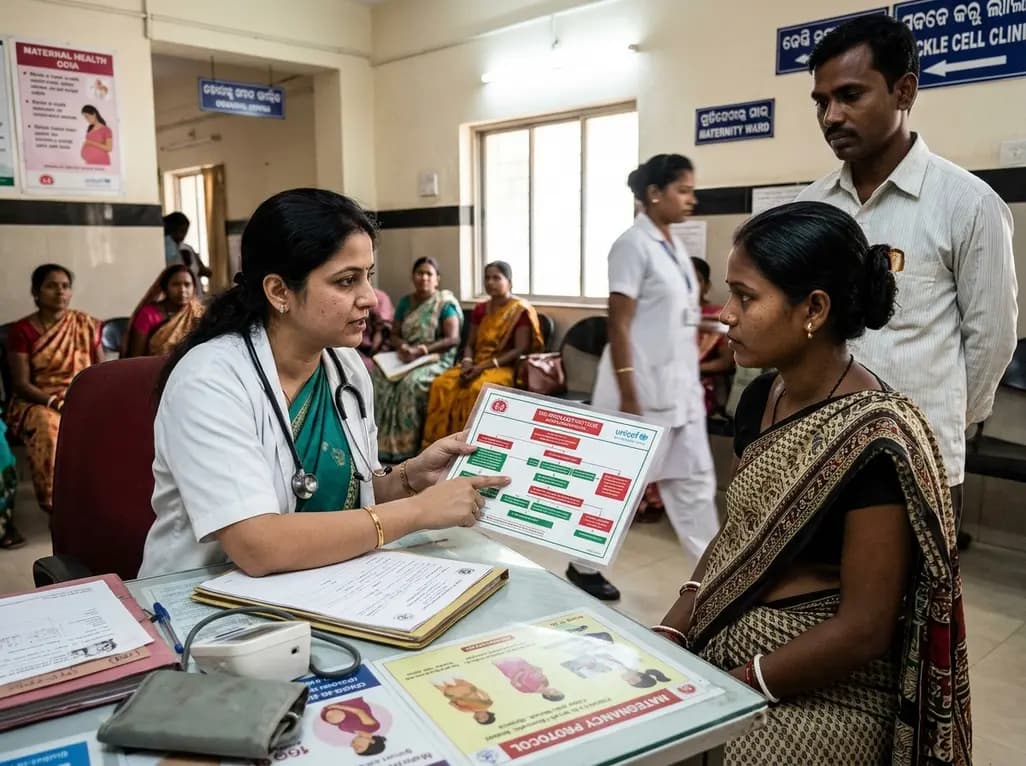
Odisha has established India's first state-level clinical protocol specifically tailored for pregnant women with sickle cell disease. Developed with NHM and UNICEF, the framework provides structured antenatal screening, crisis mitigation, standardized referral pathways, and specialized interdisciplinary care.
Today

India is advancing preventive healthcare by integrating genomics, artificial intelligence, and quantum technologies. With the SANGAM programme sequencing one million Indian genomes, clinicians can unlock personalized therapies, detect cardiometabolic risks early, and curb the burden of diabetes and heart disease.
Today

A randomized controlled trial demonstrates that an eight-week dual-task training intervention significantly improves static and dynamic postural control over standard balance exercises in individuals with chronic ankle instability, addressing critical neurocognitive deficits during athletic and daily activities.
Today

A retrospective cohort study of 7,716 ICU patients from the MIMIC-IV database demonstrates that Gradient Boosting Decision Trees significantly outperform traditional SOFA scores in predicting in-hospital mortality among patients with sepsis and diabetes, with SHAP analysis providing clinical interpretability.
Today
