.webp&w=384&q=75)

Loading, please wait...
Loading, please wait...

Modern physical inactivity remains a major global public health challenge, contributing to cardiovascular disease and functional decline. Traditional exercise prescriptions often require continuous sessions of thirty to sixty minutes. However, busy daily schedules frequently create barriers to consistent participation. Recent physiological research highlights exercise snacks cardiorespiratory fitness interventions as a practical, time-efficient alternative for sedentary individuals seeking measurable health improvements without long workout sessions.
Exercise snacks refer to brief, isolated bursts of physical activity performed intermittently throughout the day. Unlike traditional interval training, which clusters work intervals within a single dedicated workout, exercise snacks spread activity periods across several hours. Consequently, individuals do not require formal warm-ups, specialized equipment, or extended time commitments to complete daily physical activity.
Physiologically, these brief bursts stimulate neuromuscular adaptations and aerobic pathways similar to traditional continuous training. Furthermore, interrupting prolonged sitting with short physical bursts improves glycemic control and vascular reactivity. Consequently, clinicians view this approach as an accessible strategy for sedentary individuals. Understanding these foundational mechanisms provides essential context for evaluating recent systematic evidence regarding health efficacy.
A landmark systematic review evaluated twenty-one randomized controlled trials comprising 921 adult participants across diverse age groups. The investigation revealed that exercise snacks significantly improved maximal oxygen uptake, measured as VO2max. Specifically, the analysis demonstrated a substantial effect size with moderate-certainty evidence, confirming that short activity bursts boost cardiorespiratory capacity.
In addition to aerobic capacity gains, the synthesis showed statistically significant improvements in peak power output across participants. Peak power output reflects neuromuscular recruitment and mechanical muscular performance. Therefore, short exercise bursts enhance both central cardiovascular delivery and peripheral muscular execution. Crucially, these primary cardiorespiratory improvements occurred despite short total daily exercise times, emphasizing the efficiency of brief, intense efforts.
Subgroup analyses revealed crucial age-related nuances that clinicians must consider when interpreting patient outcomes. Improvements in maximal oxygen uptake were primarily observed in studies with mean participant ages of fifty years or younger. Conversely, older cohorts showed less pronounced changes in VO2max, suggesting that vascular stiffness or baseline conditioning might moderate aerobic adaptation rates.
However, peak power output improved consistently across all age strata evaluated in the meta-analysis. Young, middle-aged, and older adults all demonstrated enhanced mechanical power generation following exercise snack protocols. Furthermore, neuromuscular responsiveness appears preserved across the lifespan, allowing older individuals to gain functional strength despite modest aerobic volume. Consequently, exercise snacks offer targeted functional benefits for older adults.
Meta-regression and dose-response analyses provided critical guidance regarding optimal protocol characteristics for maximal physiological gain. Higher numbers of exercise snack bouts distributed throughout the day correlated with greater enhancements in cardiorespiratory fitness. Furthermore, intervention frequencies of four to five days per week consistently yielded superior adaptation compared to less frequent weekly schedules.
Intervention duration also played a vital role in determining overall fitness outcomes. Studies lasting between seven and nine weeks produced more robust cardiorespiratory improvements than shorter four-week interventions. Therefore, consistency over several weeks remains essential for consolidating aerobic and muscular adaptations. Clinicians prescribing exercise snacks should emphasize daily frequency and sustained multi-week adherence to ensure maximum physiological benefit.
While cardiorespiratory fitness parameters showed clear positive responses, cardiometabolic markers demonstrated variable outcomes across trial protocols. The meta-analysis found no statistically significant changes in total cholesterol, high-density lipoprotein cholesterol, low-density lipoprotein cholesterol, or triglyceride levels. Consequently, exercise snacks alone may lack sufficient energetic volume to significantly alter circulating lipid concentrations without dietary modifications.
Interestingly, body fat percentage demonstrated a small overall increase across pooled studies, backed by low-certainty evidence. Researchers hypothesize that brief exercise bouts without calorie restriction might induce subtle compensatory energy intake or reduced non-exercise activity thermogenesis. Therefore, medical professionals should pair exercise snack recommendations with nutritional guidance when targeting lipid management or weight reduction goals in clinical practice.
Translating these meta-analytic findings into primary care requires clear, actionable patient communication. Clinicians should frame exercise snacks as low-barrier entry points for inactive patients who feel overwhelmed by traditional exercise guidelines. Practical examples include sixty-second stair climbs, rapid bodyweight squats, or brisk walking intervals repeated three to five times daily.
Additionally, doctors should counsel patients that exercise snacks complement, rather than replace, comprehensive lifestyle strategies. While exercise snacks reliably improve cardiorespiratory fitness and muscular power output, achieving substantial body fat loss or lipid lowering requires broader behavioral adjustments. Ultimately, recommending brief daily activity snacks gives physicians an evidence-based tool to combat sedentary behavior in diverse adult populations.
Exercise snacks are brief, isolated bouts of moderate-to-vigorous physical activity lasting under two minutes, performed intermittently throughout the day. Unlike structured gym workouts, exercise snacks do not require continuous time commitments or specialized equipment. They work by acutely stimulating cellular oxygen uptake, elevating heart rate, and activating neuromuscular pathways. Consequently, repeating these short physical bursts multiple times daily leads to cumulative cardiovascular and aerobic fitness adaptations equivalent to traditional continuous exercise training.
Exercise snacks serve as an excellent, evidence-based alternative for inactive individuals who lack time for traditional workouts. They effectively boost maximal oxygen uptake and muscular peak power output. However, exercise snacks may not deliver the total caloric expenditure necessary for significant weight loss or comprehensive lipid lowering. Therefore, exercise snacks work best as a stepping stone or practical daily supplement rather than a complete replacement for comprehensive endurance and resistance training programs.
Clinical evidence suggests performing three to five exercise snacks daily on four to five days per week yields optimal improvements in cardiorespiratory fitness. Interventions lasting seven to nine weeks demonstrate the most consistent physiological gains. Patients should space these short bursts across their daily routine, using practical activities like rapid stair climbing, bodyweight squats, or brisk walking to maintain daily frequency and build long-term lifestyle habits safely.
Disclaimer: This content is for informational and educational purposes only and should not be considered professional medical advice. Always consult a qualified healthcare provider for personalized medical recommendations. Refer to the latest local and national guidelines for clinical practice.
References

Read summarized clinical updates, watch expert medical content, and earn CME certifications right from your smartphone.
Open your smartphone camera to scan and install.





A systematic review and meta-analysis of 21 RCTs reveals that exercise snacks significantly improve VO2max and peak power output in adults. While aerobic gains were strongest in adults under 50, power output improved across all ages. Evidence for blood lipids and body fat changes remains inconsistent.
last month

A comprehensive validation study using PPMI cohort data establishes the psychometric reliability, factor structure, and minimal detectable change of the SCOPA-AUT scale across prodromal and established Parkinson's disease, highlighting its longitudinal association with non-motor daily living experiences.
Today

The ClinGen Prenatal Gene Curation Expert Panel evaluated 63 disease relationships across 61 genes, establishing clinical validity for severe fetal phenotypes like hydrops and stillbirth to enhance prenatal genomic interpretation and clinical care.
Today

A cohort study demonstrates that the weight-adjusted waist index predicts all-cause and cardiovascular mortality more accurately than BMI and conventional adiposity metrics, offering clinicians a practical anthropometric tool for superior cardiometabolic risk stratification.
Today

New research reveals that HOXD13 regulates primary cilia signalling and genomic stability in distal synovial fibroblasts, uncovering why conditions like rheumatoid arthritis target specific joints.
Today
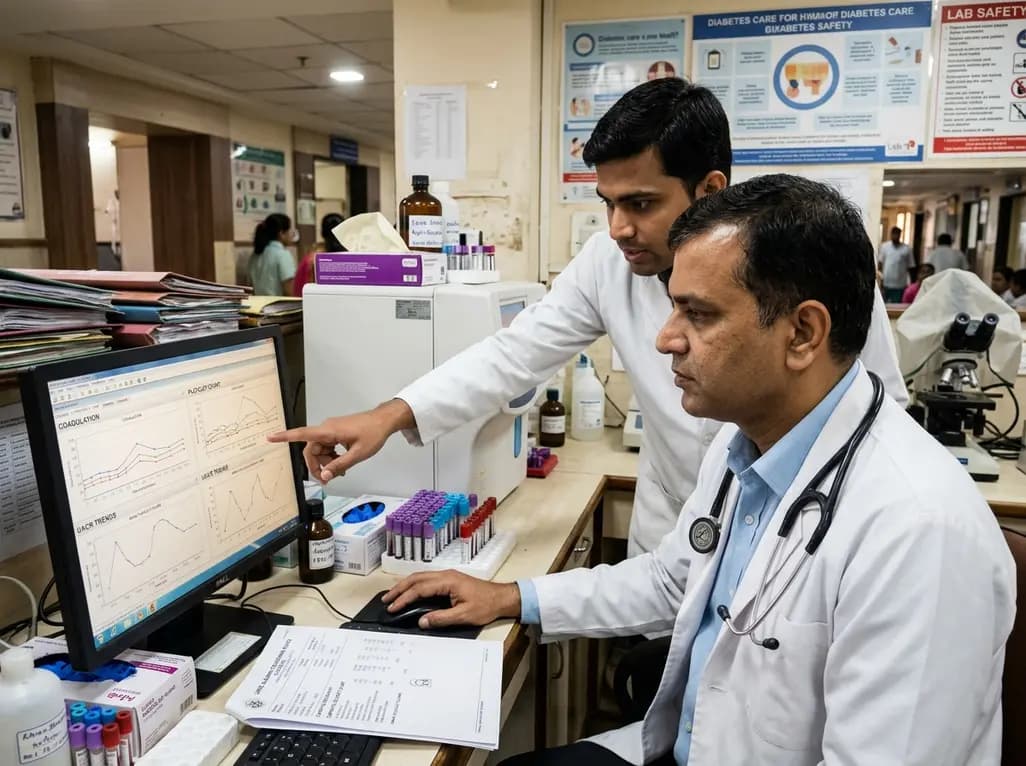
A western India study demonstrates that shortened coagulation times (PT, APTT), elevated mean platelet volume, and increased UACR strongly correlate with type 2 diabetes microvascular complications, highlighting the clinical value of combined hemostatic and renal profiling for early risk stratification.
Today
