.webp&w=384&q=75)

Loading, please wait...
Loading, please wait...
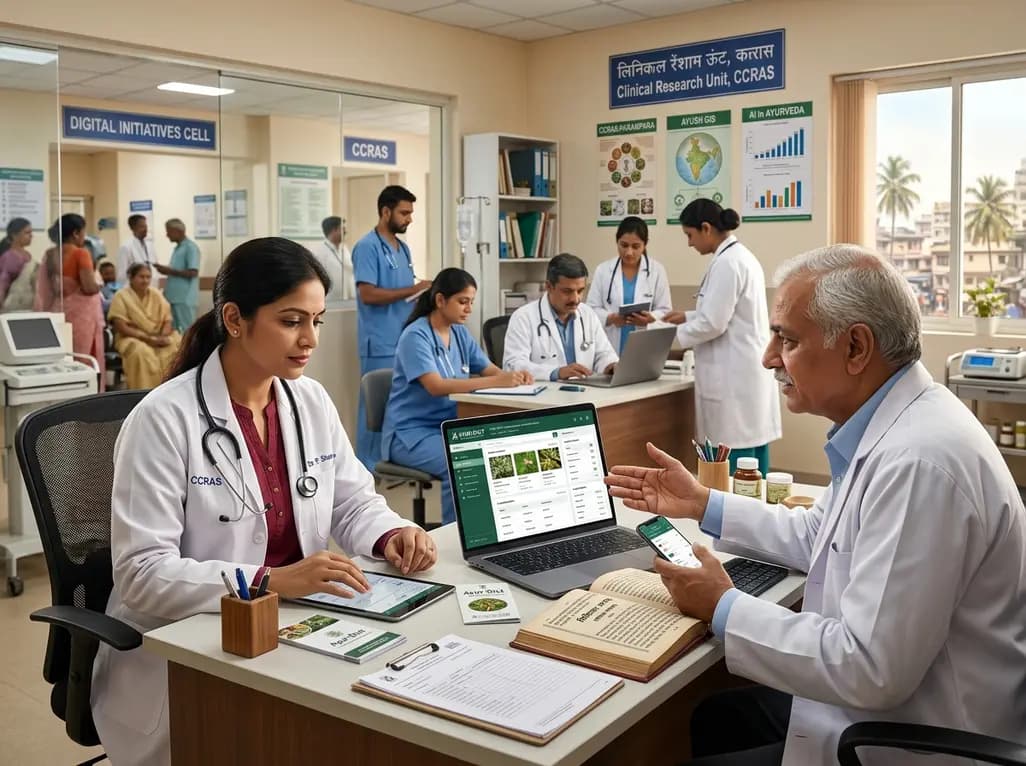
The Ministry of Ayush is driving a monumental shift in traditional medicine by accelerating evidence-based Ayurveda research across India. During the 27th Governing Body Meeting of the Central Council for Research in Ayurvedic Sciences (CCRAS), Union Ayush Minister Prataprao Jadhav emphasized the urgent need to bridge classical medical knowledge with cutting-edge scientific validation. Furthermore, this landmark national assembly highlighted how modern technology, structured youth entrepreneurship, and strategic global collaboration can transform Ayurvedic clinical practice. Consequently, healthcare professionals, academic researchers, and medical clinicians are witnessing a paradigm shift that integrates ancient therapeutic wisdom into contemporary, standardized healthcare frameworks nationwide.
To achieve widespread global recognition, traditional healthcare systems require rigorous clinical trial methodologies, standardized testing protocols, and modernized institutional infrastructure. Consequently, the Ministry of Ayush is prioritizing substantial state investments in advanced research facilities across multiple regional institutes. During the recent governing body assembly, Union Ayush Minister Prataprao Jadhav virtually inaugurated several key operational facilities designed to elevate national research standards. For instance, a state-of-the-art Animal House was launched at the Regional Ayurveda Research Institute in Pune to support pre-clinical pharmacological evaluations. Additionally, a modern staff quarters complex was inaugurated in Ranikhet to support ongoing academic and scientific operations at the regional research facility. Furthermore, the Minister performed the ceremonial Bhoomi Poojan for a new fifty-bed Ayurveda hospital at RARI in Nagpur. This upcoming hospital facility will significantly expand clinical treatment capacity while enabling large-scale observational studies and patient outcomes tracking. Therefore, these physical infrastructure expansions directly enhance the quality and scope of evidence-based Ayurveda research conducted throughout India. Moreover, establishing standardized clinical centers ensures that traditional therapeutic interventions meet stringent scientific benchmarks. As a result, medical practitioners can access verifiable safety and efficacy data, fostering greater professional confidence globally.
Contemporary clinical research increasingly relies on advanced computational tools, data analytics, and digital health technologies to optimize patient therapeutic outcomes. Consequently, Union Minister Jadhav urged CCRAS to actively integrate emerging technologies, particularly Artificial Intelligence, into clinical research methodologies and personalized healthcare delivery. By incorporating artificial intelligence into data management systems, researchers can systematically analyze vast historical datasets of Ayurvedic classical formulations, patient treatments, and real-world clinical outcomes. Furthermore, this technological integration enhances translational research capabilities, allowing promising laboratory discoveries to transition seamlessly into actionable clinical guidelines. However, the Minister specifically emphasized that this rapid technological evolution must strictly preserve the authentic core principles of classical Ayurvedic literature. In addition, promoting active international research collaborations will help establish global standardizations for traditional medicine systems. Therefore, integrating digital tools with ancient knowledge systems equips medical practitioners with modern diagnostic insights while maintaining holistic therapeutic integrity. Ultimately, this synergistic approach strengthens scientific validation, improves clinical decision-making, and positions Ayurveda as a modern, globally competitive healthcare solution. Furthermore, adopting digital data registries facilitates multi-center clinical trials that validate traditional therapies against internationally recognized scientific standards, driving broader clinical integration.
The future growth and global expansion of Ayurvedic medicine heavily depend on empowering young researchers, healthcare startups, and industrial partners. Specifically, Union Minister Jadhav highlighted Prime Minister Narendra Modi’s strategic healthcare vision encompassed by "Heal by Ayurveda, Heal in India, and Make in India." To realize this vision, the Ayush Ministry is establishing a vibrant startup ecosystem backed by dedicated competitive research grants, mentorship, and structured incubation support. For example, key institutional proposals such as a Youth Research Fund, an Ayurveda Startup Accelerator, and a Global Ayurveda Challenge were introduced to incentivize young scientists. Furthermore, these collaborative initiatives aim to take novel Ayurvedic discoveries out of academic laboratories and directly onto the commercial marketplace. Additionally, specialized centers like the Ayurvedic Sciences Incubation Centre at CARI Bengaluru offer comprehensive mentorship, seed funding, and regulatory support to emerging healthcare entrepreneurs. Consequently, creating robust market linkages and commercialization pathways encourages young clinicians to develop standardized, high-quality, and evidence-backed formulations. As a result, India is steadily solidifying its position as an international hub for integrative wellness and biomedical innovation, creating sustainable career pathways for emerging research professionals.
Preserving India's diverse local health traditions while subjecting them to rigorous scientific evaluation remains a paramount national healthcare objective. Therefore, Minister Jadhav officially unveiled CCRAS-PARAMPARA, a flagship national initiative dedicated to the systematic documentation, evaluation, and scientific validation of India's Local Health Traditions. This initiative systematically analyzes ethnomedical practices, indigenous herbal remedies, and traditional veterinary knowledge passed down through generations of local healers. In addition to heritage preservation, digital transparency and academic excellence were advanced through the launch of the CCRAS National Research Recognitions portal. This comprehensive digital platform incorporates three specialized modules: CCRAS PRAKASA, CCRAS NAVONMESA, and CCRAS PRABODH 3MT. Notably, these digital portals specifically recognize, reward, and showcase excellence in postgraduate Ayurveda research, clinical innovation, and concise scientific communication. Furthermore, Vaidya Rajesh Kotecha, Secretary of the Ministry of Ayush, reaffirmed the government's unwavering commitment to building a research-driven ecosystem. Consequently, these digital platforms enhance knowledge accessibility, streamline research documentation, and incentivize high-impact academic publication among postgraduate scholars across medical universities, ensuring that traditional knowledge is rigorously evaluated and digitized.
Navigating dense classical Ayurvedic terminology and historical medical texts often presents significant challenges for modern medical researchers, practitioners, and scholars. To address this language barrier, CCRAS officially launched Ayur-dict, its first dedicated Android application that integrates multiple classical Ayurvedic dictionaries into a single, searchable digital platform. Consequently, this user-friendly mobile utility provides clinicians, academic researchers, and medical students with instant access to standardized medical terminology, authentic textual definitions, and classical concepts. Furthermore, digital applications like Ayur-dict support clinical decision-making by clarifying classical pharmacology, herbal properties, and complex disease classifications. In parallel, expanding physical hospital infrastructure ensures that validated research discoveries translate directly into improved bed-side patient care. For instance, the newly initiated fifty-bed hospital at RARI Nagpur will offer modern inpatient Ayurvedic care while systematically generating real-world clinical evidence. Ultimately, combining easily accessible digital knowledge platforms with expanded clinical treatment facilities ensures that evidence-based Ayurveda research continues to advance patient care, support clinical education, and drive evidence-based practice across the country, creating a seamless bridge between ancient text and modern clinical practice.
Q1: What are the primary objectives of the newly launched CCRAS research initiatives?
The primary objectives focus on advancing evidence-based Ayurveda research through scientific validation, digital innovation, and infrastructure expansion. Specifically, these initiatives aim to modernize pre-clinical research facilities, document local health traditions via CCRAS-PARAMPARA, and digitize postgraduate research recognitions. Consequently, these comprehensive efforts help standardize Ayurvedic therapeutic protocols, expand market linkages, and position India as a competitive global hub for evidence-based integrative healthcare solutions.
Q2: How does the Ayur-dict application benefit Ayurvedic clinicians and medical researchers?
The Ayur-dict application integrates multiple classical Ayurvedic dictionaries into a single, searchable digital interface on Android devices. Consequently, it allows clinicians, academic researchers, and medical students to rapidly look up complex classical terminologies, disease classifications, and pharmacological definitions. By providing instant access to standardized textual references, Ayur-dict simplifies academic literature review, enhances diagnostic accuracy, and supports standardized clinical practice across institutions.
Q3: How is the Ministry of Ayush supporting youth entrepreneurship and startup growth in Ayurveda?
The Ministry of Ayush is actively building a supportive startup ecosystem through specialized incubation centers, research grants, and structured mentorship programs. For example, key initiatives such as the Youth Research Fund, Ayurveda Startup Accelerator, and incubation facilities at CARI Bengaluru provide crucial seed funding and regulatory support. Therefore, these programs empower young researchers to translate lab discoveries into commercially viable, evidence-backed healthcare products.
Disclaimer: This content is for informational and educational purposes only. It does not constitute medical advice or replace professional judgment. Refer to the latest local and national guidelines for clinical practice.
References

Read summarized clinical updates, watch expert medical content, and earn CME certifications right from your smartphone.
Open your smartphone camera to scan and install.





Union Ayush Minister Prataprao Jadhav chaired the 27th CCRAS Governing Body meeting, launching key infrastructure, digital platforms like Ayur-dict, and the CCRAS-PARAMPARA initiative. The Minister emphasized scientific validation, youth entrepreneurship, AI adoption, and global research collaborations.
4 weeks back

Explore the emerging role of Brixadi, an extended-release buprenorphine injection, for managing stimulant use disorder through kappa opioid receptor antagonism and steady plasma levels.
Today
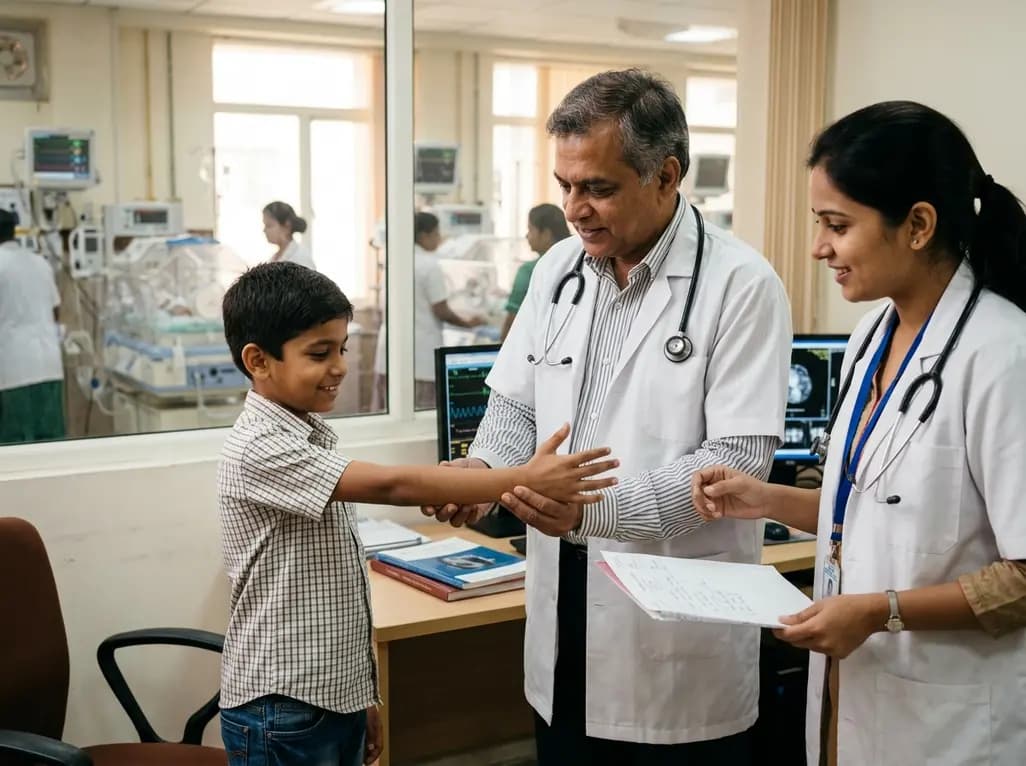
A premature neonate developed upper limb compartment syndrome after uterine rupture extruded the arm through a scar defect. Conservative management with continuous monitoring yielded complete functional recovery and normal limb growth at 10-year follow-up, highlighting non-operative safety in selected cases.
Today
Dendritic cells bridge innate and adaptive immunity in myocardial infarction. This review explores their pathological roles, circulating dynamics, novel tolerogenic interventions, and how standard cardiovascular medications modulate dendritic cells to improve post-infarction myocardial repair and patient outcomes.
Today
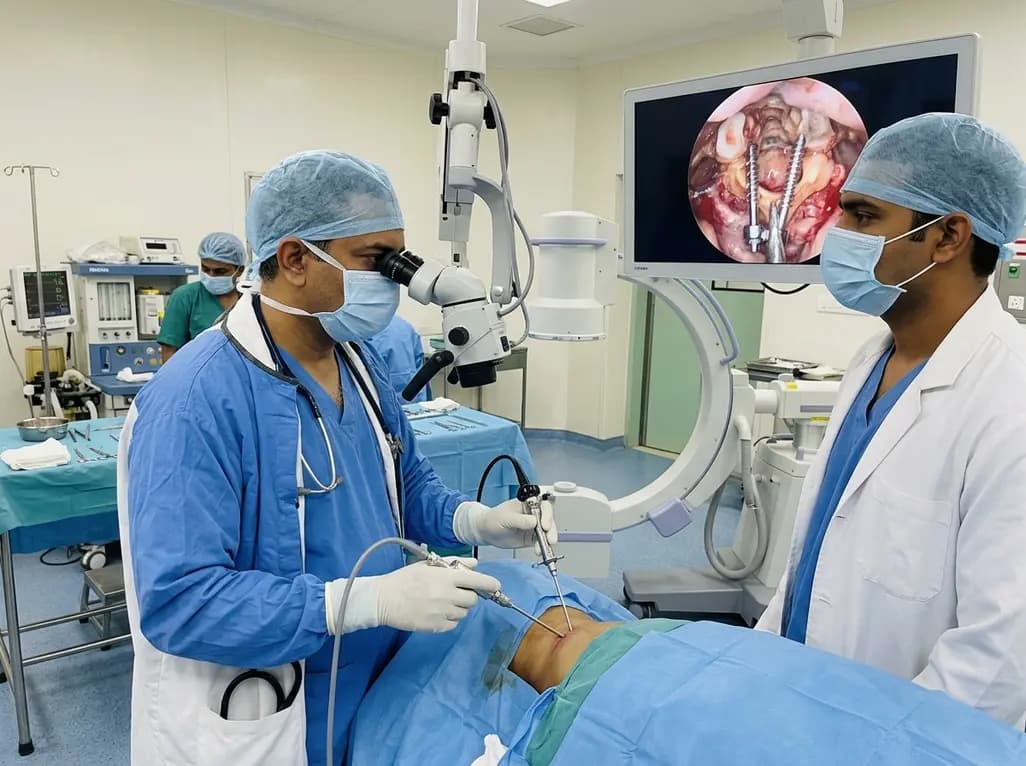
Endoscopic posterior cervical fusion combines minimally invasive decompression, joint preparation, and rigid screw-rod fixation for atlantoaxial pathologies. Early clinical findings demonstrate solid bony union, excellent symptom relief, and minimal soft-tissue morbidity without significant vascular compromise.
Yesterday
Atherosclerosis involves extensive glycometabolic reprogramming across immune and vascular cells. This review examines how glycolysis, the pentose phosphate pathway, and lactate-driven epigenetic shifts fuel plaque vulnerability, while highlighting novel therapeutic targets like PFKFB3 and LDHA.
Today
