.webp&w=384&q=75)

Loading, please wait...
Loading, please wait...

Everolimus remains a vital second-line treatment for hormone receptor-positive metastatic breast cancer. However, clinicians often worry about everolimus-related ILD, which is a frequent and potentially serious adverse event. This drug-related interstitial lung disease (ILD) can affect treatment adherence and clinical outcomes. A recent retrospective study conducted at the National Cancer Center Hospital East examined whether this condition complicates future therapeutic options for these patients.
The study analyzed medical records from 115 patients treated with everolimus plus endocrine therapy. Researchers found that 28.7% of these individuals developed everolimus-related ILD. While most cases were manageable, approximately 15% reached grade 3 or higher. Importantly, the development of lung toxicity did not prevent most patients from receiving later treatments. Specifically, 73.2% of the group with ILD moved to subsequent therapies. This figure was comparable to the 81.8% seen in patients who never developed lung issues.
Physicians employed several strategies to manage these pulmonary complications effectively. Common approaches included dose interruptions, dose reductions, and the administration of prednisolone or steroid pulse therapy. Consequently, the research demonstrated that a history of everolimus-related ILD did not significantly increase the risk of developing lung problems during subsequent chemotherapy or targeted regimens. Only 3.7% of patients with a history of e-rILD experienced lung issues with later drugs, compared to 3.3% in the unaffected group.
Moreover, the choice of subsequent therapy remained similar regardless of whether the patient had experienced prior lung toxicity. This finding suggests that oncologists can maintain a broad range of therapeutic options even after an adverse event. Therefore, while everolimus-related ILD requires vigilant monitoring, it may not necessarily limit the long-term cancer care trajectory for metastatic breast cancer patients.
No, evidence suggests that a history of everolimus-related ILD does not significantly prevent patients from receiving or tolerating subsequent cancer treatments or change the risk profile of future drugs.
In clinical studies, the incidence of any-grade everolimus-related ILD ranges from 16% to nearly 29%, with higher rates often reported in Asian patient populations.
Management usually involves temporary or permanent drug discontinuation, dose adjustments, and the use of corticosteroids depending on the severity grade of the symptoms and radiological findings.
Disclaimer: This content is for informational and educational purposes only. It does not constitute medical advice or establish a doctor-patient relationship. Always seek the advice of a qualified healthcare provider regarding any medical condition. Refer to the latest local and national guidelines for clinical practice.
References
Kiyohara H et al. Impact of everolimus-related interstitial lung disease on subsequent treatment in patients with metastatic breast cancer. Oncologist. 2026 Mar 13. doi: undefined. PMID: 41830435.

Read summarized clinical updates, watch expert medical content, and earn CME certifications right from your smartphone.
Open your smartphone camera to scan and install.





A recent study suggests that everolimus-related ILD does not significantly hinder subsequent treatment options or increase future lung toxicity risks....
7 months ago
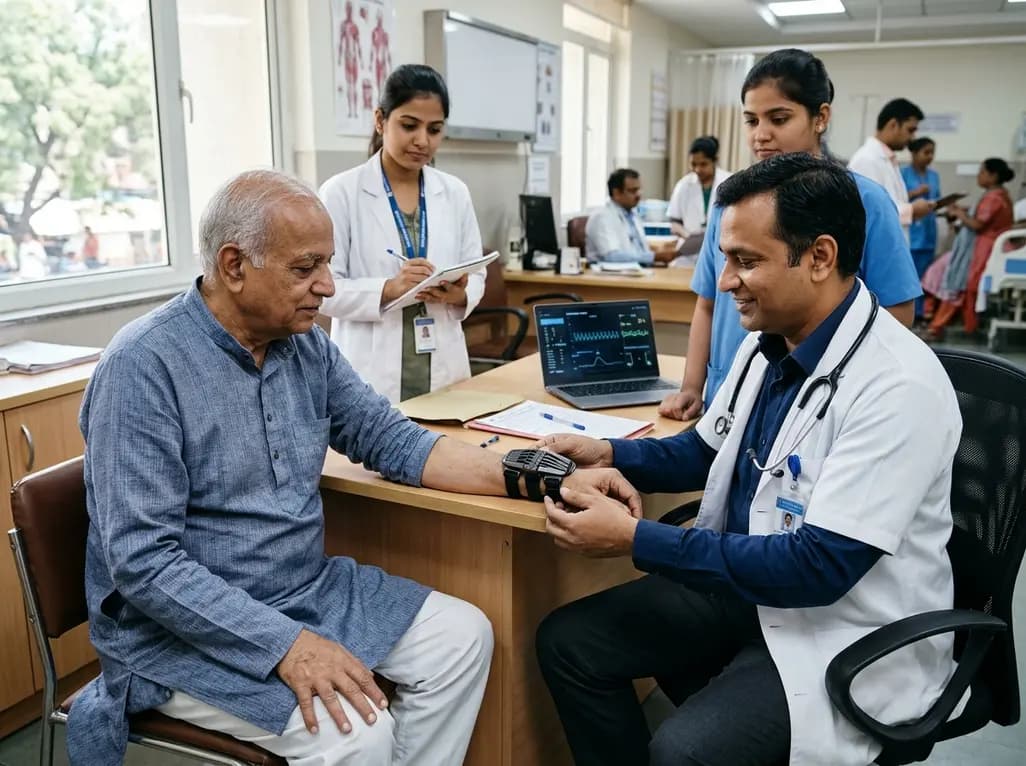
The TREM-AB open-label pilot study evaluated a wearable passive nonlinear vibration absorber for essential tremor. The Nonlinear Energy Sink bracelet reduced clinical Fahn-Tolosa-Marin tremor scores by 32.1% and electrophysiological tremor power by 49.2% with no adverse effects reported.
Today

A population-based study of 20,928 children reveals that small vulnerable newborns face sex-divergent mental capital outcomes at ages 6-7: term SGA girls show higher behavioral difficulties and lower resilience, while preterm non-SGA boys experience increased behavioral problems.
Today
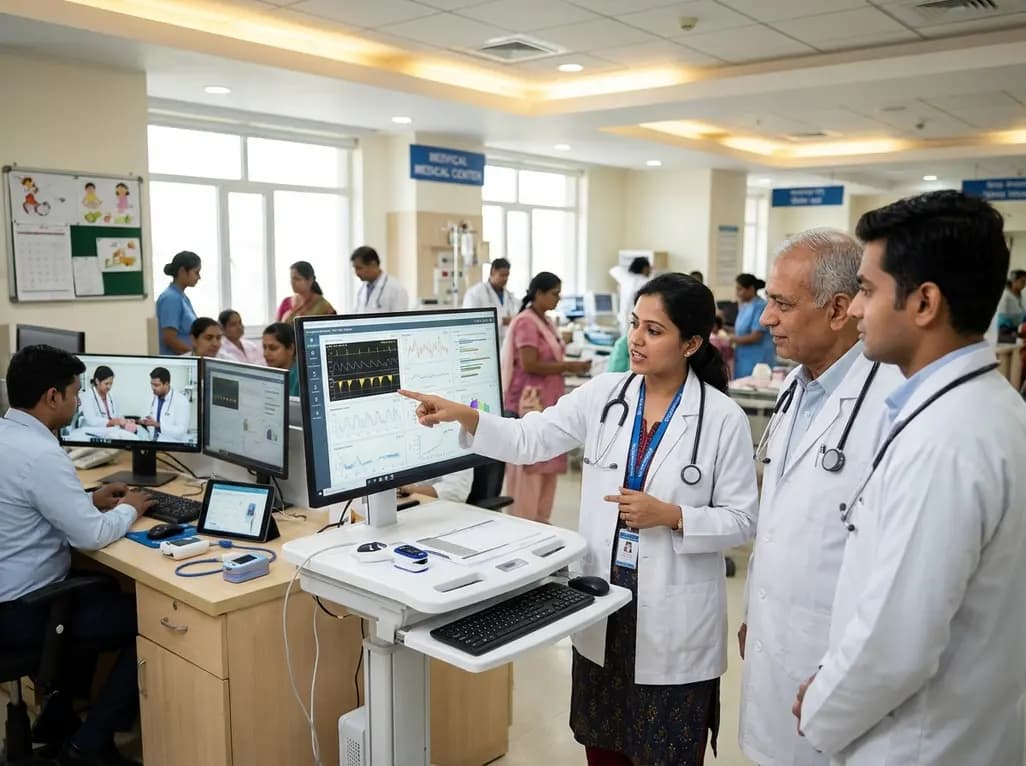
A landmark study details how an enterprise pediatric remote patient management model expanded from a single cardiology pilot to 16 diverse specialty programs by combining centralized digital operations with specialty clinical leadership.
Today

A comparative review of tension band wiring and intramedullary screw fixation in thumb metacarpophalangeal arthrodesis, evaluating union rates, hardware complications, and clinical outcomes.
Today
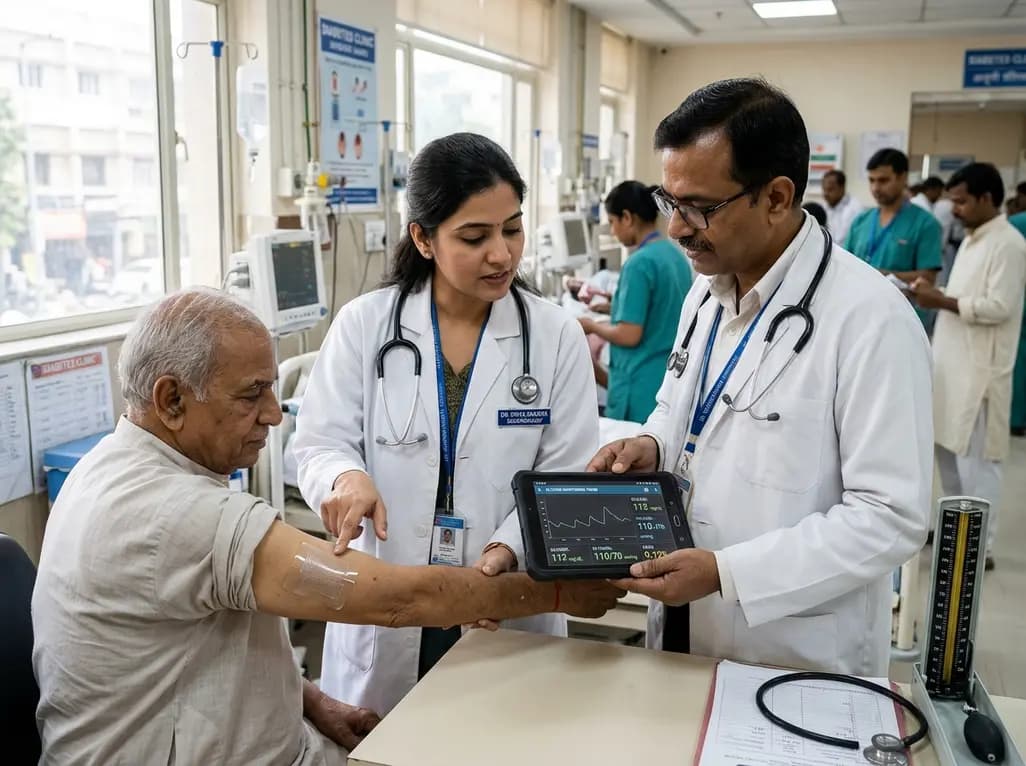
A breakthrough ultrathin multimodal sensor decouples physical hemodynamic monitoring from disposable electrochemical calibration, achieving long-term wearable glucose prediction with 81.36% accuracy and a 9.12% MARD. This offers a robust, drift-free solution for outpatient metabolic surveillance.
Today
