

Loading, please wait...
Loading, please wait...

Chronic occupational stress and emotional exhaustion represent an escalating crisis across clinical environments worldwide. Addressing healthcare worker burnout requires rigorous empirical evaluation of workplace strategies, particularly within high-intensity settings such as geriatric care and extended nursing facilities. Healthcare institutions often implement educational workshops to support staff resilience, yet measuring their tangible clinical utility remains essential. This review examines a multifaceted pilot intervention designed to evaluate employee psychological well-being and institutional leadership dynamics.
Long-term care facilities present unique psychosocial stressors that place clinicians and auxiliary caregivers under relentless emotional pressure. Daily patient interactions frequently involve degenerative cognitive impairments, multifaceted chronic illnesses, and palliative requirements. Consequently, staff members encounter severe compassion fatigue alongside pervasive systemic understaffing. When healthcare personnel experience unmanaged stress, clinical performance diminishes, and interpersonal friction accelerates. Furthermore, elevated turnover rates destabilize care continuity, creating a detrimental feedback loop for remaining team members. Therefore, clinical administrators must identify targeted interventions that alleviate professional distress before chronic exhaustion triggers workforce departure. Many institutions traditionally rely on ad-hoc wellness seminars. However, isolated coping lectures frequently fail because they overlook the operational context of medical delivery. Effective interventions must bridge the gap between individual psychological coping and institutional workflow design. In this context, researchers developed a coordinated workshop curriculum targeting frontline staff and supervisory leaders simultaneously. As a result, modern occupational frameworks increasingly emphasize shared accountability between leaders and healthcare staff.
The pilot initiative titled Caring for Our Care Force integrated theoretical principles from clinical psychology and occupational health psychology. Specifically, investigators designed six specialized workshops that engaged direct-care staff and administrative leadership across seven distinct care facilities. The frontline cohort included eighty-nine healthcare employees, consisting predominantly of registered nurses, practical nurses, and allied clinical caregivers. Simultaneously, sixty-nine organizational leaders, including department supervisors and executive directors, completed concurrent management modules. This dual-track approach ensured that organizational leaders learned how supportive supervision protects frontline staff from psychological distress. Furthermore, the frontline employee curriculum focused on practical cognitive reframing, boundary preservation, and emotional regulation techniques. In contrast, the leadership track trained supervisors to identify early indicators of staff disengagement and implement protective workflow modifications. Thus, the program sought to harmonize interpersonal communication across institutional hierarchies. Moreover, facilitators delivered these interactive sessions within operational working hours to minimize participant fatigue. By implementing complementary educational pathways, the investigators established an interconnected support structure intended to foster psychological safety.
Researchers evaluated the intervention using a single-group pre-test and post-test design, collecting quantitative survey metrics alongside qualitative written feedback. Overall, participating healthcare workers and supervisory leaders rated the quality, structure, and practical utility of the workshops favorably. Many participants expressed sincere appreciation for institutional recognition of their chronic workplace fatigue. However, rigorous statistical analysis revealed no statistically significant improvements in objective learning metrics, daily behavioral adaptations, or general psychological well-being. Additionally, effect sizes across all standardized psychological indices remained consistently small. These empirical findings underscore an essential clinical reality regarding workplace wellness initiatives. Although healthcare employees appreciate educational resources and stress-management seminars, brief didactic workshops cannot counterbalance intense structural workloads. Furthermore, the absence of a parallel control group restricted the capacity to detect subtle secondary benefits. Consequently, the research highlights a critical discrepancy between subjective satisfaction and measurable shifts in clinical burnout scores. Therefore, occupational health specialists must interpret favorable post-workshop reviews cautiously when designing comprehensive psychiatric health programs.
Despite the modest statistical gains, the investigation provides meaningful guidance for the National Institute for Occupational Safety and Health Total Worker Health framework. This holistic paradigm asserts that protecting workforce health requires integrating injury prevention policies with broad institutional wellness promotion. Specifically, individual resilience strategies cannot replace organizational changes in staffing ratios, administrative paperwork burdens, or schedule predictability. When healthcare organizations rely solely on educational workshops, they unintentionally place the burden of stress management onto individual providers. In contrast, an authentic Total Worker Health approach demands that hospital administrations redesign operational workflows to eliminate ergonomic and emotional hazards directly. Furthermore, pairing frontline staff training with supervisor behavioral education remains a vital foundational step. Effective leadership behaviors, such as demonstrating empathy and ensuring manageable duty allocations, substantially mitigate occupational depression. Consequently, future health initiatives must blend psychosocial skill development with structural workplace reforms. By addressing root operational causes alongside personal coping mechanisms, healthcare systems can create sustainable clinical environments.
The lessons derived from this pilot initiative offer valuable strategic recommendations for clinical directors and occupational health teams. First, program developers must conduct thorough baseline assessments to determine the exact organizational stressors affecting specific healthcare units. For instance, intensive care and geriatric wards frequently face different occupational hurdles compared to outpatient facilities. Second, healthcare institutions must ensure longitudinal reinforcement rather than relying on brief, standalone training series. Continuous peer-support groups and structured supervisor check-ins reinforce healthy psychological habits over extended periods. Third, future research initiatives must incorporate randomized controlled trial methodologies to evaluate clinical intervention outcomes rigorously. Additionally, health systems must track objective institutional markers, such as clinician absenteeism, turnover rates, and medication administration discrepancies. When healthcare leaders integrate quantitative institutional metrics with self-reported psychological scales, they obtain a complete assessment of programmatic efficacy. Ultimately, protecting clinical staff requires sustained financial investment, enlightened leadership, and compassionate institutional design that prioritizes caregiver well-being.
Although participants rated the workshops favorably, didactic educational sessions alone cannot overcome deep systemic pressures such as chronic understaffing and heavy patient caseloads. Workplace well-being depends heavily on day-to-day organizational structures rather than short-term cognitive training. Consequently, without fundamental operational adjustments to daily schedules and administrative demands, brief psychological interventions produce only minimal statistical changes in standardized clinical burnout and exhaustion scores.
The Total Worker Health framework integrates physical hazard protection with comprehensive institutional policies that actively promote holistic well-being. Rather than treating worker stress as an isolated personal challenge, this framework targets systemic contributors such as excessive workloads, mandatory overtime, and poor supervisory support. Therefore, it combines leadership behavioral training with structural workplace modifications to create a supportive clinical ecosystem that sustainably prevents psychological burnout.
Healthcare leaders can reduce burnout by establishing regular, supportive check-ins with frontline clinicians to address specific workflow bottlenecks promptly. Additionally, administrators must streamline electronic documentation requirements, maintain safe staffing ratios, and cultivate transparent communication channels. By visibly championing mental health resources and demonstrating empathetic supervisory behaviors, leadership helps remove stigmatizing barriers to seeking psychiatric assistance, thereby sustaining long-term organizational morale.
Disclaimer: This content is for informational and educational purposes only. It is not intended to be a substitute for professional medical advice, diagnosis, or treatment. Always seek the advice of your physician or other qualified health provider with any questions you may have regarding a medical condition. Refer to the latest local and national guidelines for clinical practice.
References

Read summarized clinical updates, watch expert medical content, and earn CME certifications right from your smartphone.
Open your smartphone camera to scan and install.





A pilot study evaluated occupational psychology workshops to address healthcare worker burnout in long-term care. While participants valued the program, significant well-being improvements remained limited, highlighting the critical need for systemic, organizational Total Worker Health interventions.
Today
A study in aged rats reveals that caloric restriction broadly upregulates adipose macrophage genes, whereas concurrent endurance training buffers this response. Despite these tissue-level transcriptional changes, systemic glycemic and lipid markers remain unchanged, highlighting the complexity of geriatric metabolism.
Today
A multicenter study evaluates an XGBoost machine learning model to predict miscarriage risk in PCOS after fresh embryo transfer. While discrimination was strong internally, cross-cohort calibration drift emphasizes its role as a risk-ranking tool rather than a standalone diagnostic instrument.
Today

A landmark study reveals structured variation in daily emotional experiences using mobile cardiac monitoring and machine learning. Uncovering a many-to-many mapping between autonomic states and feelings, this research offers key insights for managing psychosomatic and psychiatric conditions in clinical practice.
Today

Engineered 3D piezoelectric PHBV scaffolds generate electrical charges during mechanical strain, mimicking native muscle electromechanics to promote cellular alignment, myogenic differentiation, and functional tissue repair in severe volumetric muscle loss.
Today
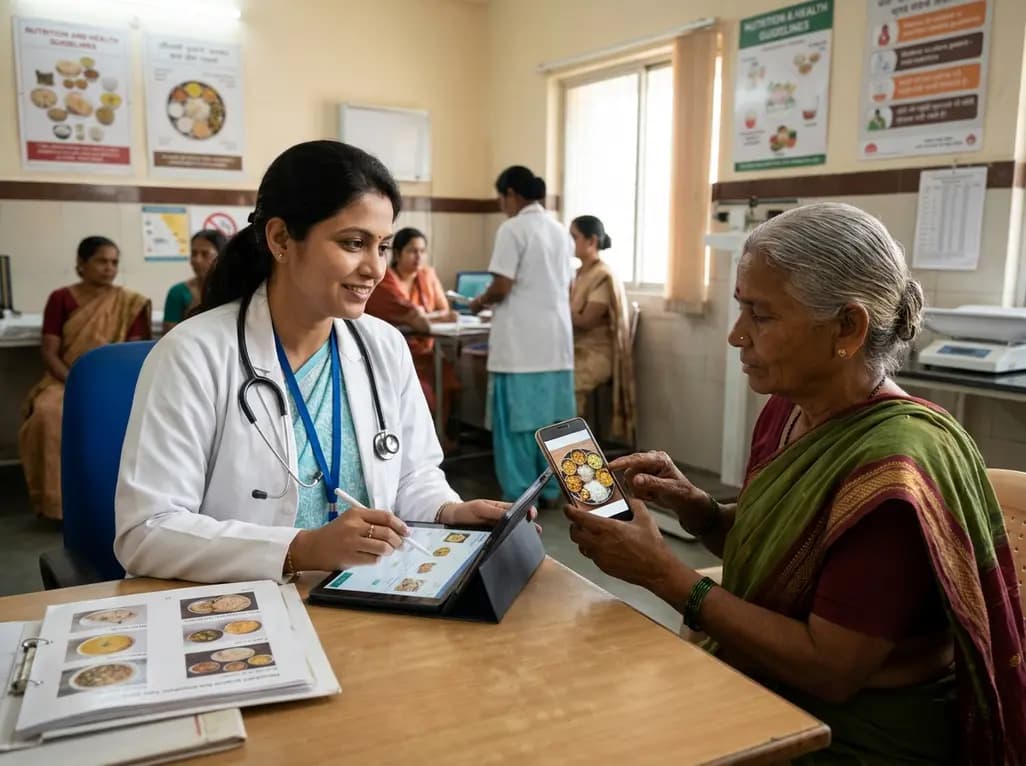
A recent study highlights that pairing photograph-assisted 24-hour recalls with regional food databases significantly boosts dietary assessment accuracy. This methodology reduces cultural bias and strengthens nutrient tracking, offering crucial lessons for clinicians managing nutritional care in diverse populations.
Today
