.webp&w=384&q=75)

Loading, please wait...
Loading, please wait...

Groundwater contamination remains a significant public health threat in India, specifically across the Gangetic plains. Consequently, finding sustainable methods for arsenic detoxification in wastewater is vital for preventing chronic arsenicosis. A recent study highlights eucalyptus wood waste biochar (EWB) as a promising, eco-friendly solution for this environmental challenge.
The research demonstrates that eucalyptus wood waste biochar achieves an impressive removal efficiency of over 95%. Specifically, the adsorption process works optimally at a pH of 6 and a temperature of 60 °C. Furthermore, researchers found that a contact time of 120 minutes allows for maximum decontamination. Therefore, EWB serves as a cost-effective alternative to expensive chemical treatments.
Characterisation using SEM and FT-IR revealed a highly porous structure with functional groups that facilitate efficient adsorption. Notably, the equilibrium data fitted the Langmuir isotherm, which indicates a monolayer adsorption process. Additionally, thermodynamic parameters like enthalpy and entropy changes confirm that the reaction is both spontaneous and endothermic. Moreover, the process follows a pseudo-first-order kinetic model. These findings suggest that EWB is a robust material for treating industrial effluents.
Millions of people in states like Bihar and West Bengal consume water exceeding permissible arsenic limits. Thus, implementing sustainable technologies at the community level is essential. Biochar produced from agricultural waste aligns with circular economy goals. Consequently, it provides a dual benefit by managing wood waste and purifying water supplies simultaneously. This approach could significantly reduce the burden of waterborne heavy metal toxicity in rural populations.
Arsenic is a known carcinogen and chronic exposure leads to skin lesions, organ failure, and cardiovascular complications. In India, groundwater contamination is widespread, making effective removal a clinical priority.
Eucalyptus biochar uses its porous surface and specific functional groups to bind arsenic ions. This mechanism ensures high removal rates, making the water safer for various industrial or agricultural uses.
Disclaimer: This content is for informational and educational purposes only... Refer to the latest local and national guidelines for clinical practice.
References

Read summarized clinical updates, watch expert medical content, and earn CME certifications right from your smartphone.
Open your smartphone camera to scan and install.





A study on Eucalyptus wood waste biochar (EWB) as a sustainable adsorbent achieving 95% efficiency for arsenic (V) removal from industrial wastewater....
6 months ago

A landmark 12-year longitudinal study highlights significant reductions in opioid prescribing for nonspecific low back pain following clinical guidelines and prescription monitoring systems, emphasizing non-opioid multimodal pain care.
Today
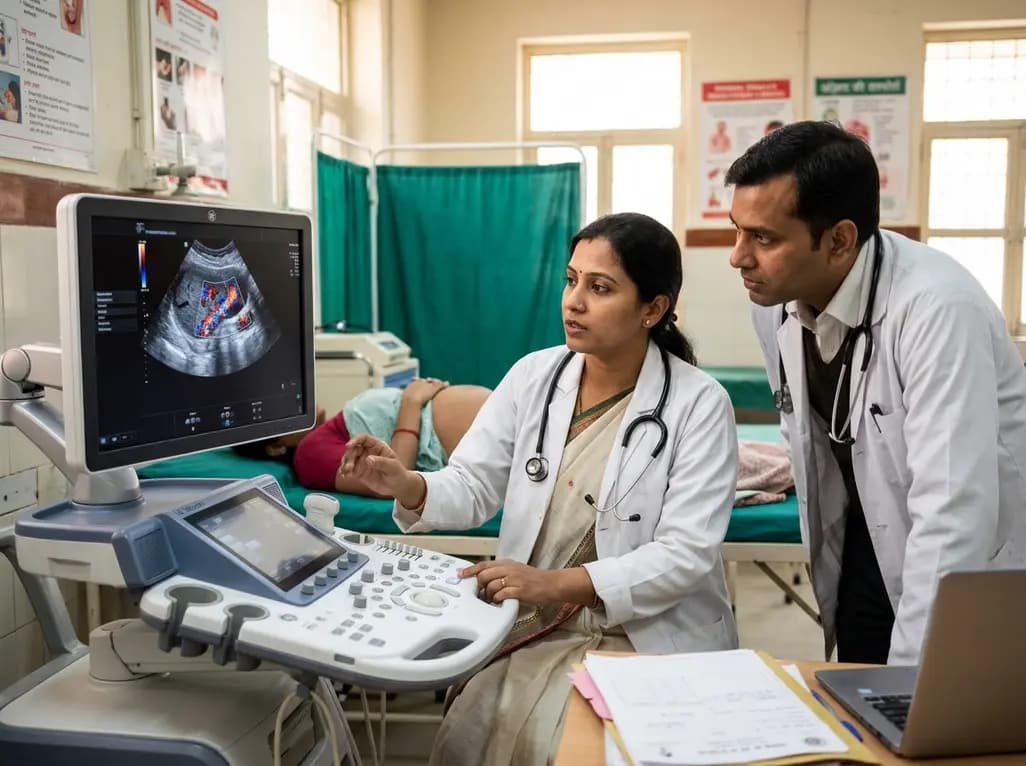
A study in Ultrasound in Obstetrics & Gynecology shows that quantitative vascularization of the anterior fornix/cervix with transvaginal ultrasound reliably identifies placenta accreta spectrum and predicts severe intraoperative hemorrhage, offering vital objective risk stratification.
Today

A landmark study details how an enterprise pediatric remote patient management model expanded from a single cardiology pilot to 16 diverse specialty programs by combining centralized digital operations with specialty clinical leadership.
Yesterday
A breakthrough study shows that 3D-planned corrective osteotomy successfully resolves distal radioulnar joint instability in pediatric diaphyseal forearm malunions. The precise osseous realignment eliminates chronic wrist pain and restores joint function without requiring secondary soft-tissue reconstruction.
Today

Protein O-GlcNAcylation couples cellular nutrient status to vital neuronal functions. This review explores how disrupted O-GlcNAc cycling drives both neurodevelopmental delays and neurodegenerative cascades, positioning metabolic post-translational modifications as therapeutic targets in clinical neurology.
Today
