.webp&w=384&q=75)

Loading, please wait...
Loading, please wait...

A recent study by Nijjar YS et al. evaluated the ESMO-Magnitude of Clinical Benefit Scale (ESMO-MCBS) v2.0 in the context of HPV-positive oropharyngeal cancer (OPC). Researchers aimed to determine the effectiveness of the tool for radiation therapy (RT) outcomes. The findings highlight significant gaps in the current framework, particularly regarding the ESMO-MCBS radiotherapy evaluation process. While the scale works well for systemic treatments, its application to radiotherapy requires specific adjustments to capture clinical value accurately.
The research team screened 73 studies from the American Society for Radiation Oncology (ASTRO) guidelines. Out of 37 comparisons analyzed, only 11 were scorable under the current version. Specifically, six comparisons achieved Grade A status due to survival benefits from chemoradiation or altered fractionation. Five comparisons received Grade B for reducing toxicity or costs. However, 26 comparisons remained non-scorable, representing a major portion of the evidence for clinicians.
Several systematic limitations emerged during the study. Most notably, the scale does not credit improvements in local control, which is a critical endpoint in radiation oncology. Furthermore, many radiotherapy trials utilize non-inferiority designs. These trials often focus on patient convenience or reduced toxicity rather than superior survival. Consequently, the standard ESMO-MCBS criteria frequently fail to reflect the clinical impact of these practice-changing results.
In addition, post-hoc subgroup analyses yielded clinically impactful findings that the current scale cannot account for. The investigators noted that four comparisons showed benefits in locoregional survival but could not be graded. Therefore, developing a validated, RT-specific version of the scale is essential for future assessments. This adaptation will help clinicians and policymakers better understand the value of different radiation protocols in India and worldwide.
The current scale lacks credit for local control and does not adequately account for non-inferiority trials focused on toxicity or convenience.
Many studies were non-scorable because they used post-hoc subgroup analyses or endpoints like locoregional survival which the current version does not formally recognize.
Disclaimer: This content is for informational and educational purposes only. It is not a substitute for professional medical advice, diagnosis, or treatment. Always seek the advice of your physician or another qualified health provider with any questions you may have regarding a medical condition. Refer to the latest local and national guidelines for clinical practice.
References
Nijjar YS et al. Evaluation of the ESMO-magnitude of clinical benefit scale version 2.0 for the definitive treatment of HPV positive oropharynx cancer with radiation therapy. Oral Oncol. 2026 Jun 02. doi: undefined. PMID: 42229021.
Cherny NI, et al. ESMO-Magnitude of Clinical Benefit Scale version 2.0 (ESMO-MCBS v2.0). ESMO. 2025.
ASTRO Guideline on Radiation Therapy for HPV-Positive Oropharyngeal Squamous Cell Carcinoma. Practical Radiation Oncology. 2024.

Read summarized clinical updates, watch expert medical content, and earn CME certifications right from your smartphone.
Open your smartphone camera to scan and install.





Research highlights the limitations of ESMO-MCBS v2.0 in scoring radiation therapy trials for HPV-positive oropharyngeal cancer, calling for RT-specific too...
4 months ago

An observational study from the NIH All of Us Research Program reveals that adding a multi-ancestry polygenic risk score to machine learning models provides only modest improvements in predicting adult weight gain, underscoring the enduring significance of routine clinical and lifestyle factors.
Today

A study in JAMIA Open shows lightweight open-source reasoning LLMs achieve up to 95% sensitivity and accelerate evidence synthesis screening by nearly twentyfold, presenting a cost-effective, scalable AI solution for biomedical research and systematic reviews.
Today
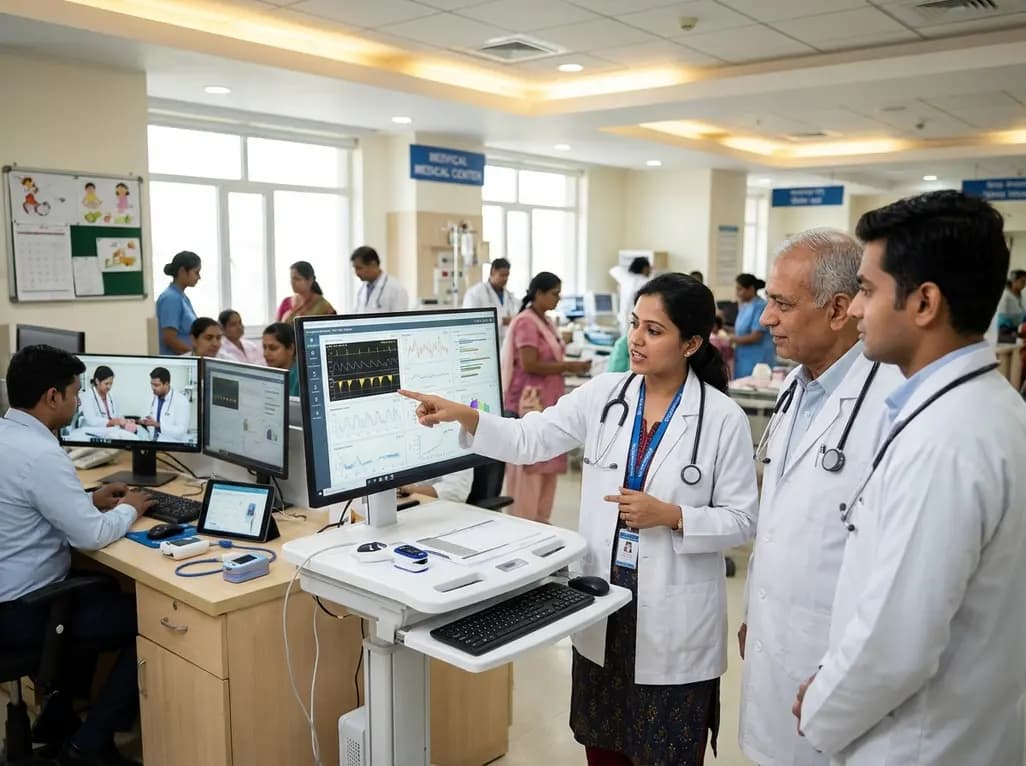
A landmark study details how an enterprise pediatric remote patient management model expanded from a single cardiology pilot to 16 diverse specialty programs by combining centralized digital operations with specialty clinical leadership.
Yesterday

A comparative review of tension band wiring and intramedullary screw fixation in thumb metacarpophalangeal arthrodesis, evaluating union rates, hardware complications, and clinical outcomes.
Yesterday
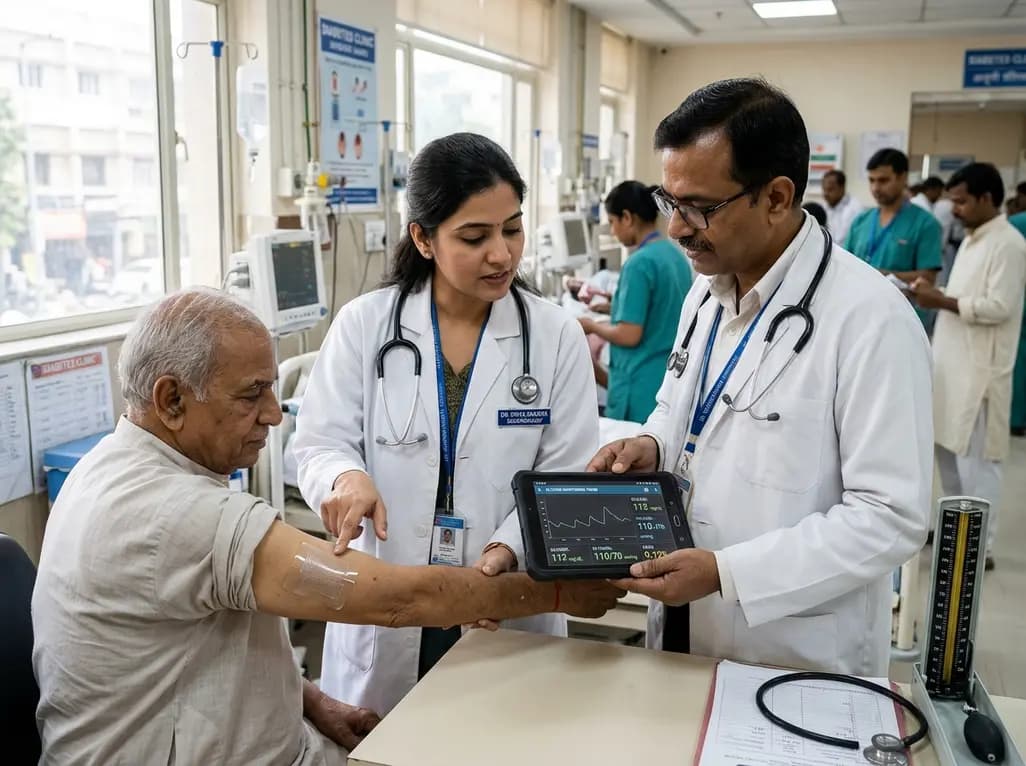
A breakthrough ultrathin multimodal sensor decouples physical hemodynamic monitoring from disposable electrochemical calibration, achieving long-term wearable glucose prediction with 81.36% accuracy and a 9.12% MARD. This offers a robust, drift-free solution for outpatient metabolic surveillance.
Yesterday
