.webp&w=384&q=75)

Loading, please wait...
Loading, please wait...
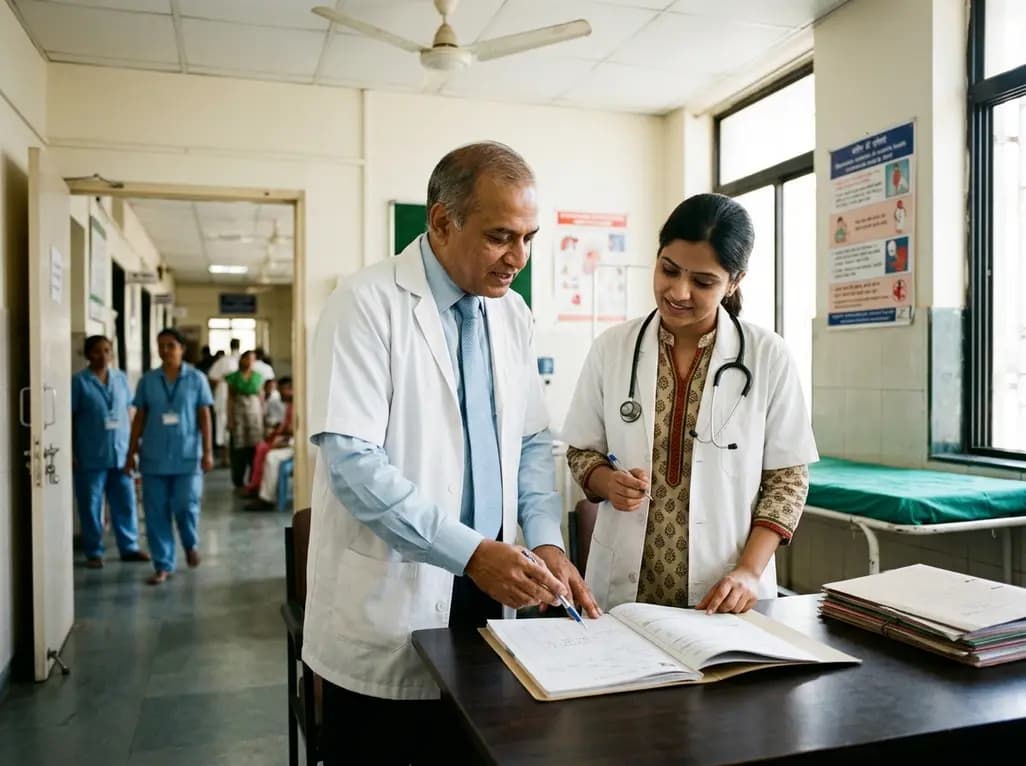
The Employees' State Insurance Corporation (ESIC) recently underwent major administrative shifts during its 198th meeting. Dr. Mansukh Mandaviya, the Union Minister, chaired this key session. Consequently, the organization decided to directly manage all upcoming and newly commissioned hospitals. This pivotal policy alteration aims to standardize patient care across India. In addition, this shift promises to strengthen the overall ESIC healthcare infrastructure. By bypassing state-level inconsistencies, the central body seeks to uniformize clinical quality and operational governance. Consequently, medical practitioners and institutional educators must understand these structural changes. Understanding these reforms ensures better alignment with new nationwide healthcare delivery paradigms.
Historically, the management of ESI hospitals remained divided between state governments and the central corporation. However, this dual-control model frequently led to significant disparities in clinical quality, equipment availability, and administrative speed. To address these persistent challenges, the Corporation approved a landmark policy transition during its recent assembly. Specifically, ESIC will now directly manage all upcoming and newly commissioned ESI hospitals. This strategic centralization ensures that modern facilities operate under uniform national standards from day one. Consequently, patients can expect consistent diagnostic protocols and synchronized pharmaceutical supply chains. They will also experience standardized clinical care across all new institutions. Meanwhile, existing state-managed hospitals undergoing reconstruction or upgradation will remain under local state administration. Nevertheless, state governments retain the voluntary option to hand over these upgraded centers to the central ESIC. This flexible approach allows states to transition responsibility when they lack the necessary administrative resources. Ultimately, this move marks a fundamental departure from legacy operating models. It positions the central body as the primary custodian of new healthcare developments. This shift is anticipated to streamline procurement and enhance staffing efficiency. Furthermore, it will dramatically reduce the time required to operationalize newly built facilities.
Beyond structural centralization, the Corporation approved a vital Memorandum of Understanding (MoU) with the Ministry of Ayush. This agreement establishes a comprehensive, joint framework to integrate traditional Indian medicine within the existing ESIC framework. Consequently, patients will gain seamless access to Ayurveda, Yoga, Unani, Siddha, and Homeopathy alongside conventional allopathic treatments. Furthermore, this collaborative effort aims at capacity-building and specialized training for medical personnel. By promoting holistic care, the initiative directly addresses rising occupational diseases and lifestyle-related health challenges among industrial workers. For instance, chronic musculoskeletal disorders and stress-induced metabolic ailments can be managed through combined therapies. Moreover, this integration will foster interdisciplinary research, enabling clinicians to evaluate the efficacy of combined treatment methodologies. Subsequently, new clinics will feature dedicated AYUSH departments staffed by qualified practitioners. This holistic approach ensures that patient wellness is addressed through both preventive and therapeutic modalities. By bridging ancient wellness traditions with modern clinical protocols, ESIC is establishing a highly progressive model for public healthcare delivery. Medical practitioners will now have the unique opportunity to offer dual-care pathways. Consequently, this expands therapeutic options and improves overall patient outcomes across diverse demographics.
To sustain its rapidly expanding network, the Corporation accorded in-principle approval for the complete reorganization of its Medical Education Division. This ambitious administrative overhaul involves creating specialized functional verticals and establishing multiple new academic posts. Furthermore, the council approved the constitution of a dedicated ESIC Medical Education Advisory Board. This advisory board will oversee and support the planned expansion of medical, dental, nursing, and allied health science institutions. By strengthening institutional governance, ESIC aims to resolve persistent faculty shortages and improve the quality of clinical training. Consequently, this initiative will directly benefit medical students and postgraduate residents who train within the ESIC network. In addition, raising educational standards ensures that future healthcare professionals are well-prepared to meet complex patient needs. The establishment of new facilities, such as the proposed Dental College in Basaidarapur and a Medical College in Haridwar, highlights this educational push. Ultimately, these structural reforms will build a highly competent pipeline of healthcare professionals, directly feeding into the national workforce. This comprehensive academic restructuring will ensure that medical institutions under the ESIC umbrella achieve global benchmarks. Consequently, they will make significant progress in research, pedagogy, and clinical excellence.
A cornerstone of the recent resolutions is the massive expansion of physical infrastructure across diverse geographical zones. Specifically, the Corporation approved the establishment of specialized Occupational Disease Centres (ODCs) in key industrial hubs. These locations include Sanathnagar, Faridabad, Ludhiana, Beltola, and Bhubaneswar. In addition to these centers, the council granted in-principle approval for Zonal Rehabilitation Centres. These facilities will focus comprehensively on occupational health management, providing tailored rehabilitative care to injured workers. Furthermore, several existing hospitals will undergo significant capacity upgrades to meet rising patient volumes. For example, the Model Hospital at Bari Brahmana in Jammu will expand from 50 to 100 beds in a phased manner. Similarly, the ESIC Hospital in Tirunelveli will see its capacity upgraded from 100 to 150 beds. These expansions are crucial for addressing the growing healthcare demands of the industrial workforce. By locating these specialized centers in industrial corridors, ESIC ensures that specialized medical care is highly accessible. Consequently, workers suffering from chronic occupational exposures will receive timely, high-quality interventions close to their workplaces. These physical expansions represent a vital step toward creating a robust safety net for the country's manufacturing and industrial workforce.
To align its operational guidelines with contemporary legislative updates, the Corporation approved a new consolidated Memorandum of Understanding (MoU). This MoU is designed for State ESI Societies. This updated document replaces the older 2017 models of the Memorandum of Association and Rules & Regulations. This legal update was necessitated by the enactment of the landmark Code on Social Security, 2020. Consequently, the new framework streamlines administrative workflows and strengthens legal compliance across all state-level societies. Additionally, the new guidelines allow Governing Body and Executive Committee sessions to proceed smoothly even during pending non-official nominations. To further enhance administrative efficiency, the Insurance Commissioner and Medical Commissioner have been designated as permanent invitees to these high-level sessions. These legal and administrative changes will significantly reduce bureaucratic delays that previously hindered institutional decision-making. Moreover, the updated governance model ensures that policy implementations are tightly synchronized with national labor welfare objectives. By reforming its administrative bylaws, the Corporation is successfully future-proofing its operations against evolving regulatory environments. These governance upgrades are vital for ensuring that administrative policies quickly translate into tangible clinical benefits for insured patients nationwide.
Q1: Why did ESIC decide to directly manage all upcoming and newly commissioned hospitals?
The Corporation decided to directly manage all new facilities to guarantee standardized, efficient, and high-quality healthcare services across India. Previously, dual administration between state governments and the central body led to inconsistent clinical standards and administrative delays. By centralizing management, ESIC can ensure uniform medical protocols, efficient resource allocation, and direct accountability, ultimately improving patient care for insured workers.
Q2: How will the integration of AYUSH services benefit patients within the ESIC system?
The integration of AYUSH services provides a holistic healthcare approach by combining traditional Indian medicine with modern clinical practices. This collaborative framework, established in partnership with the Ministry of Ayush, focuses on preventing and treating occupational and lifestyle-related health conditions. Patients will gain access to diverse therapeutic options like Ayurveda and Yoga, which effectively complement conventional treatments for chronic diseases.
Q3: What major infrastructure expansions were approved in the recent 198th ESIC meeting?
The meeting approved several major infrastructure projects, including the establishment of specialized Occupational Disease Centres in Sanathnagar, Faridabad, Ludhiana, Beltola, and Bhubaneswar. Furthermore, in-principle approval was granted for Zonal Rehabilitation Centres. Additionally, multiple hospital capacity upgrades were sanctioned, such as expanding the Jammu Model Hospital to 100 beds and the Tirunelveli hospital to 150 beds, to accommodate growing patient numbers.
Disclaimer: This content is for informational and educational purposes only. It does not constitute medical advice or replace professional judgment. Refer to the latest local and national guidelines for clinical practice.
References

Read summarized clinical updates, watch expert medical content, and earn CME certifications right from your smartphone.
Open your smartphone camera to scan and install.





Explore the landmark decisions from the 198th ESIC meeting. Under the leadership of Dr. Mansukh Mandaviya, the corporation will directly manage all upcoming hospitals, integrate AYUSH therapies for holistic treatment, and systematically reorganize its Medical Education Division to boost national care.
3 months ago

As monsoon seasons elevate arboviral disease threats, Tamil Nadu has initiated an ICMR-monitored evaluation of the tetravalent dengue vaccine in Tenkasi district. Clinicians emphasize clinical monitoring, public prevention, and high-quality early pediatric care to reduce disease morbidity across endemic regions.
Today

Leucine Rich Bio has introduced South Asia's first comprehensive vaginal microbiome test, BugSpeaks. By profiling microbial dysbiosis, pathogens, and antimicrobial resistance, this next-generation diagnostic platform provides clinicians with deeper insights into recurrent infections, fertility, and reproductive health.
Today

Review how tailored exercise programs benefit frail older patients with heart failure. Explore pathophysiological mechanisms, individualized training prescriptions, and strategies to overcome adherence barriers in clinical practice.
Today

This comparative study evaluates posterior labral tears with and without glenohumeral instability, highlighting distinct demographic patterns, MRI underestimation in stable shoulders, and successful arthroscopic repair outcomes.
Today

A clinical study demonstrates that early intervention with tocilizumab, either as monotherapy or bridged with corticosteroids, achieves significant proptosis reduction and resolves active inflammation in treatment-naive thyroid eye disease.
Today
