

Loading, please wait...
Loading, please wait...

Evaluating complex neuromuscular presentations presents unique challenges for clinicians worldwide. When a young adult presents with episodic muscle stiffness, cold sensitivity, and exercise intolerance alongside chronic weakness, standard diagnostic algorithms often fall short. Neurologists frequently encounter scenarios where clinical features overlap between primary skeletal muscle channelopathies and inborn errors of metabolism. Therefore, physicians must carefully integrate bedside examination, electrophysiology, metabolic profiling, and modern genomics. This comprehensive approach clarifies blended mechanistic etiologies and establishes targeted management pathways.
A rigorous bedside physical examination provides the foundation for solving complex neuromuscular puzzles. In this clinical scenario, an eighteen-year-old woman presented with longstanding exercise intolerance, cold-induced stiffness, and stable proximal weakness. During the physical evaluation, clinicians identified facial weakness, bilateral eyelid myotonia, and prominent percussion myotonia. Furthermore, repetitive muscle contraction worsened the stiffness, confirming the presence of paramyotonia. Manual muscle testing revealed significant symmetrical weakness affecting the neck flexors, deltoids, biceps, triceps, finger abductors, and pelvic girdle muscles. However, sensory examination and deep tendon reflexes remained completely intact throughout the assessment.
Consequently, clinicians recognized that this presentation diverged from typical hereditary channelopathies. While classic nondystrophic myotonias cause transient stiffness, they rarely generate fixed proximal limb weakness or marked neck flexor involvement. In contrast, congenital myopathies and limb-girdle muscular dystrophies usually present with progressive weakness without marked cold-sensitive myotonia. Therefore, the simultaneous presence of prominent paramyotonia and fixed girdle weakness immediately suggested an atypical or dual pathology. Physicians must avoid anchoring prematurely on a single unifying diagnosis when clinical clues conflict. Careful serial examinations ensure that clinicians capture fluctuating manifestations alongside non-progressive deficits.
Accurate characterization of episodic muscle stiffness requires distinguishing classical warm-up phenomena from paradoxical paramyotonia. Typically, patients with chloride channelopathies experience myotonia congenita, where repeated physical activity relieves muscle stiffness through the warm-up phenomenon. Conversely, patients with sodium channel mutations exhibit paramyotonia congenita, where repetitive muscle activity and low ambient temperatures aggravate muscle rigidity. In this patient, repetitive handgrip maneuvers produced worsening contractures, confirming true paramyotonia.
Additionally, cold sensitivity played a profound role in exacerbating her functional impairment. Exposure to cold triggers sustained membrane depolarization in sodium channelopathies, leading to prolonged sodium channel inactivation and secondary weakness. However, clinicians recognized that episodic muscle stiffness alone could not explain the patient's persistent, stable proximal muscle weakness. Muscle channelopathies may cause transient weakness during paralytic episodes, but they rarely cause chronic, fixed myopathy. As a result, the clinical team recognized that a secondary or coexisting metabolic defect might contribute to chronic muscle fatigue and weakness. Detailed phenotypic analysis thus directed the diagnostic reasoning toward combined membrane and bioenergetic investigations. Recognizing these overlapping patterns prevents costly diagnostic delays.
Electrodiagnostic testing plays an indispensable role in confirming sarcolemmal hyperexcitability and evaluating secondary muscle injury. In this patient, needle electromyography demonstrated diffuse, spontaneous myotonic discharges across multiple cranial and limb muscle groups. These dive-bomber potentials produced high-frequency acoustic patterns characteristic of repetitive muscle action potentials. Furthermore, sensory nerve action potentials and motor nerve conduction studies remained within normal reference intervals, effectively excluding sensory-motor peripheral neuropathies.
Repetitive nerve stimulation testing provided further physiological insight into membrane channel behavior. Specifically, short and prolonged exercise testing helped differentiate temperature-sensitive channelopathies from dystrophic myotonias. In paramyotonia congenita, muscle cooling combined with brief exercise produces an immediate decline in compound muscle action potential amplitudes. However, the presence of low-amplitude, short-duration motor unit potentials also indicated underlying myopathic structural changes within the proximal muscles. Consequently, the electrophysiologic profile confirmed diffuse membrane hyperexcitability alongside an active myopathic process. These findings proved that sarcolemmal channel dysfunction coexisted with structural muscle pathology, prompting immediate metabolic screening. Electrodiagnostic precision therefore bridged clinical suspicion and biochemical testing.
When exercise intolerance and chronic weakness accompany episodic myotonia, biochemical screening must explore underlying metabolic myopathies. In this case, laboratory evaluations revealed intermittently elevated serum creatine kinase levels ranging between 78 and 1,105 units per liter. This fluctuation indicated ongoing, episodic muscle fiber breakdown rather than continuous necrotic destruction. Moreover, extended metabolic screening demonstrated distinct elevations in medium-chain and long-chain acylcarnitines.
These abnormal acylcarnitine patterns immediately pointed toward an impaired mitochondrial fatty acid beta-oxidation pathway. Conditions such as multiple acyl-CoA dehydrogenase deficiency or carnitine palmitoyltransferase defects produce exercise intolerance, lipid accumulation, and exertional rhabdomyolysis. Additionally, impaired mitochondrial lipid handling deprives contracting muscle fibers of essential ATP during prolonged physical exertion. Consequently, metabolic exhaustion can induce membrane instability, worsening preexisting channel dysfunction. Therefore, the biochemical findings established a crucial link between metabolic energy failure and skeletal muscle symptoms. Clinicians synthesized these data to hypothesize that an inborn error of metabolism either triggered or exacerbated the channelopathy phenotype. Such biochemical markers illuminate systemic cellular dysfunction beyond electrical channel defects.
Resolving complex neuromuscular presentations ultimately requires the precise integration of modern genomic sequencing with functional tissue pathology. Muscle biopsy analysis often demonstrates intracellular lipid droplet accumulation alongside non-specific myopathic remodeling, validating the biochemical acylcarnitine findings. Furthermore, comprehensive next-generation sequencing panels examine both ion channel genes, such as SCN4A and CLCN1, and mitochondrial or lipid metabolism genes, such as ETFA, ETFDH, and CPT2. In several reported cases, dual genetic diagnoses or complex variant interactions explain such blended clinical phenotypes.
Once clinicians define the mechanistic etiology, they can institute targeted therapy. For instance, sodium channel blockers like mexiletine effectively reduce membrane hyperexcitability and relieve paramyotonia symptoms. Concurrently, metabolic interventions provide vital supportive care for underlying fatty acid oxidation defects. Physicians often prescribe high-dose riboflavin, oral carnitine supplementation, and dietary modifications avoiding prolonged fasting. Additionally, patients receive counseling regarding cold avoidance, graded physical activity, and rhabdomyolysis prevention strategies. Thus, comprehensive diagnostic reasoning directly transforms patient outcomes through precision medical therapy and lifestyle modifications. Coordinated long-term monitoring preserves functional capacity and prevents metabolic crises.
Episodic muscle stiffness typically arises from skeletal muscle channelopathies, such as paramyotonia congenita and myotonia congenita, affecting sodium or chloride channels. In addition, metabolic myopathies, periodic paralyses, and dystrophic myotonias can present with intermittent stiffness, exercise intolerance, or contractures. Comprehensive clinical evaluation and genetic testing differentiate these underlying etiologies effectively.
Classical myotonia improves with repetitive muscle activity through the warm-up phenomenon, as seen in chloride channel disorders. Conversely, paramyotonia congenita worsens with repetitive muscle contractions and cold exposure, reflecting delayed inactivation of voltage-gated sodium channels. Clinicians detect this difference at the bedside by evaluating grip relaxation after repeated hand contractions.
Acylcarnitine profiling identifies inborn errors of fatty acid oxidation and organic acid metabolism. When patients experience exercise intolerance, fluctuating creatine kinase elevations, or unexplained muscle weakness, elevated acylcarnitine fractions pinpoint enzymatic defects. Identifying these metabolic abnormalities enables timely dietary modifications, riboflavin administration, or carnitine therapy, preventing severe exertional rhabdomyolysis.
Disclaimer: This content is for informational and educational purposes only and does not substitute professional clinical judgment. Always consult a qualified specialist for diagnostic decisions. Refer to the latest local and national guidelines for clinical practice.
References

Read summarized clinical updates, watch expert medical content, and earn CME certifications right from your smartphone.
Open your smartphone camera to scan and install.





A comprehensive guide exploring the diagnostic reasoning behind episodic muscle stiffness, paramyotonia, and metabolic abnormalities to decode complex neuromuscular disorders.
Today

A retrospective study of 6,113 adults shows that combining GLP-1 receptor agonists with digital health apps nearly doubles the odds of achieving significant weight loss. Frequent progress logging serves as a primary behavioral driver of long-term metabolic success.
Today

Sexual dysfunction affects a high proportion of reproductive-age females with multiple sclerosis. This comprehensive review highlights multi-tier etiologies, proactive clinical screening tools, preconception counseling considerations, and integrated therapeutic options across multidisciplinary care pathways.
Today
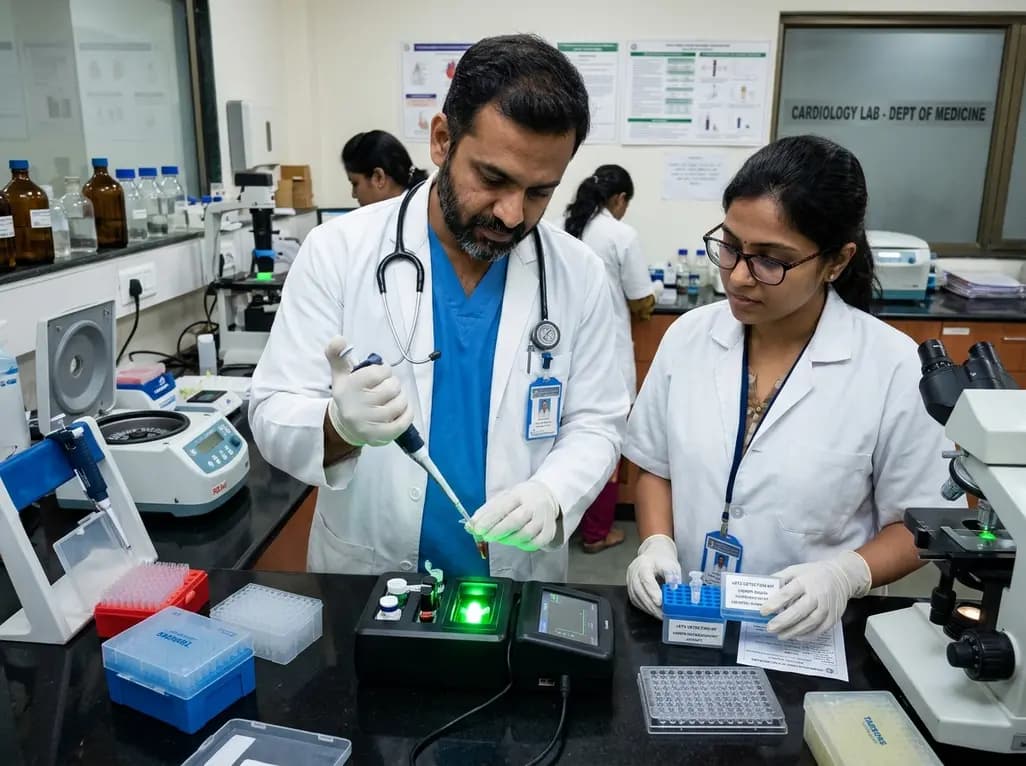
Researchers have engineered an innovative CRISPR-Cas12a fluorescent diagnostic kit for clinical sST2 detection. By combining nanotechnology with enzymatic trans-cleavage, this platform enables rapid, ultrasensitive heart failure diagnosis and risk stratification, outperforming conventional laboratory ELISA methods.
Today

Non-union fractures occur in 2-5% of cases, causing significant disability and cost. Conservative modalities such as LIPUS, PEMF, and focused ESWT offer non-surgical healing options for defects up to 5-10 mm when adequate mechanical stability exists without infection.
Today
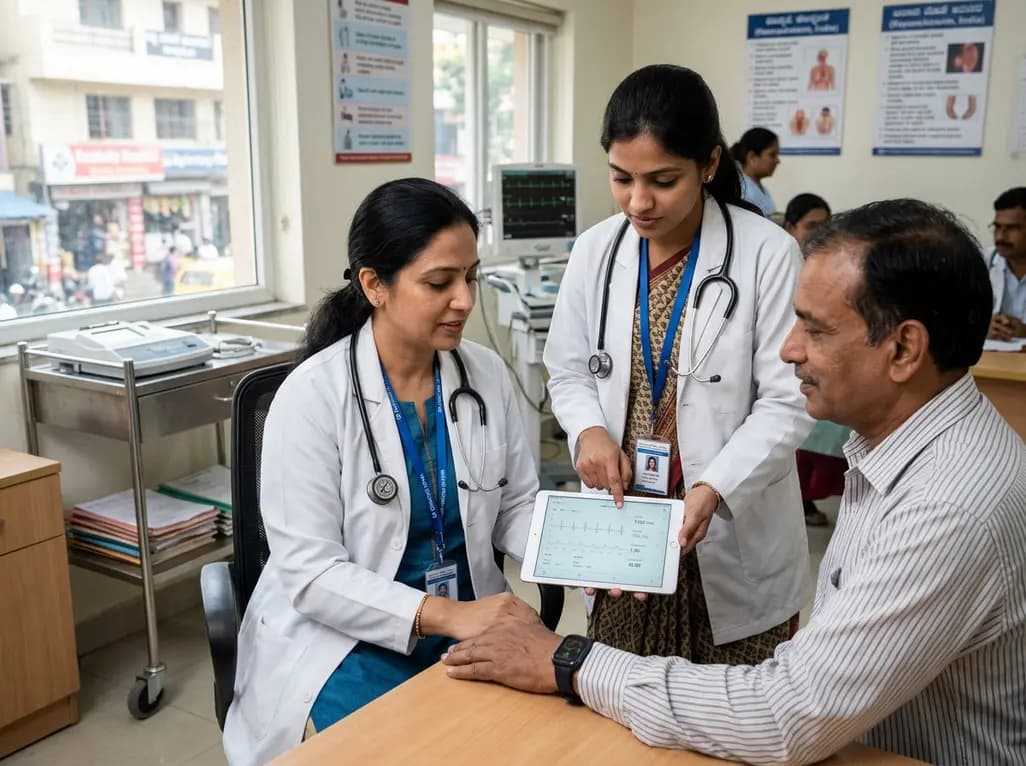
India is poised to transform chronic disease management through wearable health technology. Discover how continuous remote monitoring and predictive algorithms empower clinicians to detect early cardiovascular signals, personalize metabolic interventions, and deliver equitable preventive care across populations.
Yesterday
