.webp&w=384&q=75)

Loading, please wait...
Loading, please wait...
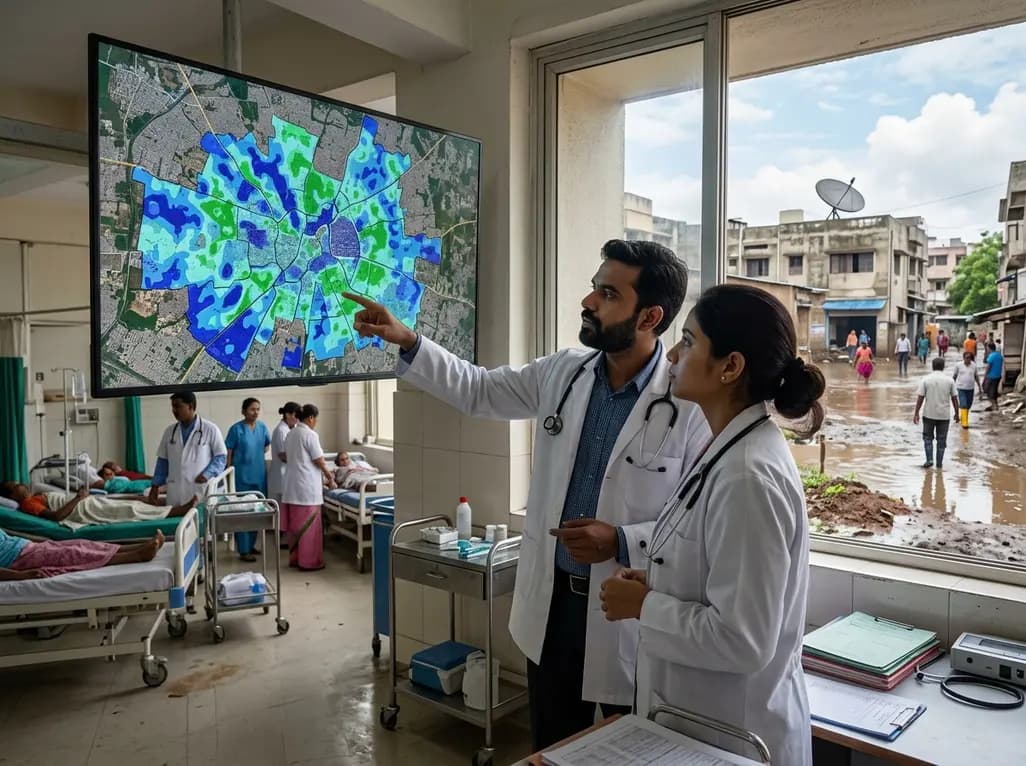
Leptospirosis represents a significant global health challenge, particularly in subtropical and tropical regions where environmental conditions favor the survival of the Leptospira bacteria. Recent research has highlighted that human leptospirosis risk factors are deeply intertwined with complex hydrological patterns and socioeconomic conditions. In regions such as the Buenos Aires province of Argentina, which experiences recurrent flooding, the disease has become an endemic threat. This province ranks significantly high in confirmed human cases, necessitating a deeper look into why certain environmental triggers lead to outbreaks. Understanding these triggers is vital for clinicians and public health officials worldwide, especially in countries like India, where monsoon-driven floods create similar high-risk scenarios. By examining long-term epidemiological data, researchers can identify the specific circumstances that allow this zoonotic disease to thrive and spill over into human populations.
While traditional rainfall data has often been used to predict disease outbreaks, newer metrics like Terrestrial Water Storage (TWS) are proving far more accurate. TWS integrates multiple hydrological components, including soil moisture, groundwater, and surface water logging. Interestingly, recent ecological studies found that annual precipitation alone often shows a weak and statistically non-significant correlation with leptospirosis incidence. In contrast, TWS variations demonstrate a remarkably high correlation with the emergence of human cases. This is because TWS reflects the actual persistence of water in the environment rather than just the volume of falling rain. Specifically, when water remains in the soil or pools on the surface for extended periods, it creates a hospitable niche for leptospires. Consequently, utilizing satellite data such as that from the GRACE mission allows for a more nuanced understanding of hydrological risk than simple rain gauges can provide. This shift in monitoring strategy represents a major advancement in environmental epidemiology.
Epidemiological data reveals that certain demographic groups are disproportionately affected by leptospirosis. In the Buenos Aires study, middle-aged males accounted for nearly 80% of confirmed cases. This pattern is often linked to occupational and domestic exposure to contaminated water and animal reservoirs. For instance, individuals working in agriculture, sanitation, or those living in areas with poor drainage often come into direct contact with environmental sources of the bacteria. Furthermore, the presence of domestic animals and rodents in close proximity to human dwellings serves as a critical bridge for transmission. These reservoirs shed the bacteria in their urine, which then survives in the water-saturated environment. Therefore, understanding the intersection of human activity and environmental persistence is essential. Notably, the Canicola serogroup was identified as a primary infecting agent in many cases, highlighting the role of domestic dogs in the urban transmission cycle. This underscores the need for integrated veterinary and public health interventions.
The survival of Leptospira in the environment is a primary driver of human infection. These spirochetes are highly sensitive to desiccation and extreme pH but can remain viable for weeks or even months in moist soil and stagnant water. The study conducted over a sixteen-year period showed that outbreaks often result in a significant surge in confirmed cases, sometimes increasing incidence by over 30%. These spikes typically follow interannual patterns associated with excess water. When rainfall exceeds the annual average, the resulting saturation of the landscape allows for widespread environmental contamination. Moreover, the ecological design of these studies helps characterize how specific serogroups adapt to local environmental niches. By tracking which serogroups are most prevalent, health authorities can better tailor diagnostic tests and vaccine strategies for livestock and pets. Specifically, the relationship between water persistence and serogroup variety suggests that environmental management is just as crucial as clinical treatment in reducing the total disease burden.
The transition from reactive to proactive public health policy requires robust early warning systems. Integrating TWS data derived from satellite gravimetry offers a sophisticated tool for predicting periods of high transmission risk. Because TWS identifies areas where the soil is fully saturated and cannot absorb more water, it serves as a precursor to the flooding events that trigger outbreaks. Public health departments can use this information to issue timely advisories to vulnerable municipalities. Additionally, such systems allow for the strategic allocation of medical resources, such as diagnostic kits and antibiotics, before the peak of an outbreak. Implementing these technologies into national public health frameworks can significantly reduce the morbidity and mortality associated with leptospirosis. Furthermore, this data-driven approach helps overcome the limitations of ground-based meteorological stations, which may be sparse or poorly maintained in high-risk rural areas. This integration of space-based technology and epidemiology is the future of infectious disease surveillance.
For clinicians, the environmental data serves as a critical diagnostic aid. When a patient presents with non-specific febrile illness during periods of high terrestrial water storage, the index of suspicion for leptospirosis should be high. Early diagnosis is vital because the disease can rapidly progress to severe forms, such as Weil's disease or pulmonary hemorrhage syndrome, which carry high fatality rates. Management requires prompt antibiotic therapy, often with doxycycline or penicillin, and supportive care for organ failure. Furthermore, doctors should inquire about recent exposure to stagnant water or animal contact, as these are primary human leptospirosis risk factors. In endemic regions, community education regarding the use of protective footwear and sanitation can prevent many infections. As we continue to see shifting weather patterns and increased flooding due to climate change, the medical community must remain vigilant. Collaborative efforts between environmental scientists and healthcare providers will be essential to mitigating the impact of this neglected zoonosis in the coming decades.
Terrestrial Water Storage (TWS) provides a more comprehensive view of the environment by measuring the total amount of water stored in soil, groundwater, and surface reservoirs. Unlike rainfall, which only measures the input at a specific time, TWS reflects how long the environment remains saturated. Since leptospires require moisture to survive, TWS accurately identifies the prolonged environmental conditions that facilitate bacterial persistence and human exposure, making it a superior predictor for outbreaks.
Leptospirosis often begins as an acute febrile illness characterized by high fever, severe headache, and myalgia, particularly in the calves. A distinctive clinical sign is conjunctival suffusion, which occurs in about one-third of cases. While many cases are mild, some progress to severe multi-organ failure. This includes jaundice, acute kidney injury, and potentially fatal pulmonary hemorrhage. Early clinical suspicion is essential for starting effective antibiotic treatment before life-threatening complications develop.
Prevention focuses on reducing contact with contaminated water and animal urine. Individuals in high-risk areas should wear protective waterproof clothing and boots when working in wet soil or floodwaters. Improving drainage systems and sanitation to reduce rodent populations is also critical. Furthermore, vaccinating domestic animals and livestock can reduce the bacterial load shed into the environment. Public health campaigns should emphasize early medical consultation for any fever following exposure to stagnant water or heavy rains.
Disclaimer: This content is for informational and educational purposes only. It does not constitute professional medical advice, diagnosis, or treatment. Always seek the advice of your physician or other qualified healthcare provider with any questions you may have regarding a medical condition. Refer to the latest local and national guidelines for clinical practice.
References
Scialfa EA et al. Epidemiological and Environmental Risk Factors for Human Leptospirosis Cases in Buenos Aires Province, Argentina (2000-2016): An Ecological Study. Zoonoses Public Health. 2026 Jul 06. doi: 10.1111/zph.70074. PMID: 42410475.
World Health Organization. Leptospirosis: Guidance for Diagnosis, Surveillance and Control. Geneva: WHO Press.
Indian Council of Medical Research. Indian Guidelines for the Diagnosis and Management of Human Leptospirosis. Journal of Pure and Applied Microbiology.

Read summarized clinical updates, watch expert medical content, and earn CME certifications right from your smartphone.
Open your smartphone camera to scan and install.





A long-term study in Buenos Aires reveals that Terrestrial Water Storage (TWS) is a superior predictor of leptospirosis compared to rainfall, highlighting the role of soil moisture in disease transmission and the potential for satellite-based early warning systems to protect vulnerable populations.
3 months ago

As monsoon seasons elevate arboviral disease threats, Tamil Nadu has initiated an ICMR-monitored evaluation of the tetravalent dengue vaccine in Tenkasi district. Clinicians emphasize clinical monitoring, public prevention, and high-quality early pediatric care to reduce disease morbidity across endemic regions.
Today

Leucine Rich Bio has introduced South Asia's first comprehensive vaginal microbiome test, BugSpeaks. By profiling microbial dysbiosis, pathogens, and antimicrobial resistance, this next-generation diagnostic platform provides clinicians with deeper insights into recurrent infections, fertility, and reproductive health.
Today

Review how tailored exercise programs benefit frail older patients with heart failure. Explore pathophysiological mechanisms, individualized training prescriptions, and strategies to overcome adherence barriers in clinical practice.
Today

This comparative study evaluates posterior labral tears with and without glenohumeral instability, highlighting distinct demographic patterns, MRI underestimation in stable shoulders, and successful arthroscopic repair outcomes.
Today

A clinical study demonstrates that early intervention with tocilizumab, either as monotherapy or bridged with corticosteroids, achieves significant proptosis reduction and resolves active inflammation in treatment-naive thyroid eye disease.
Today
