.webp&w=384&q=75)

Loading, please wait...
Loading, please wait...
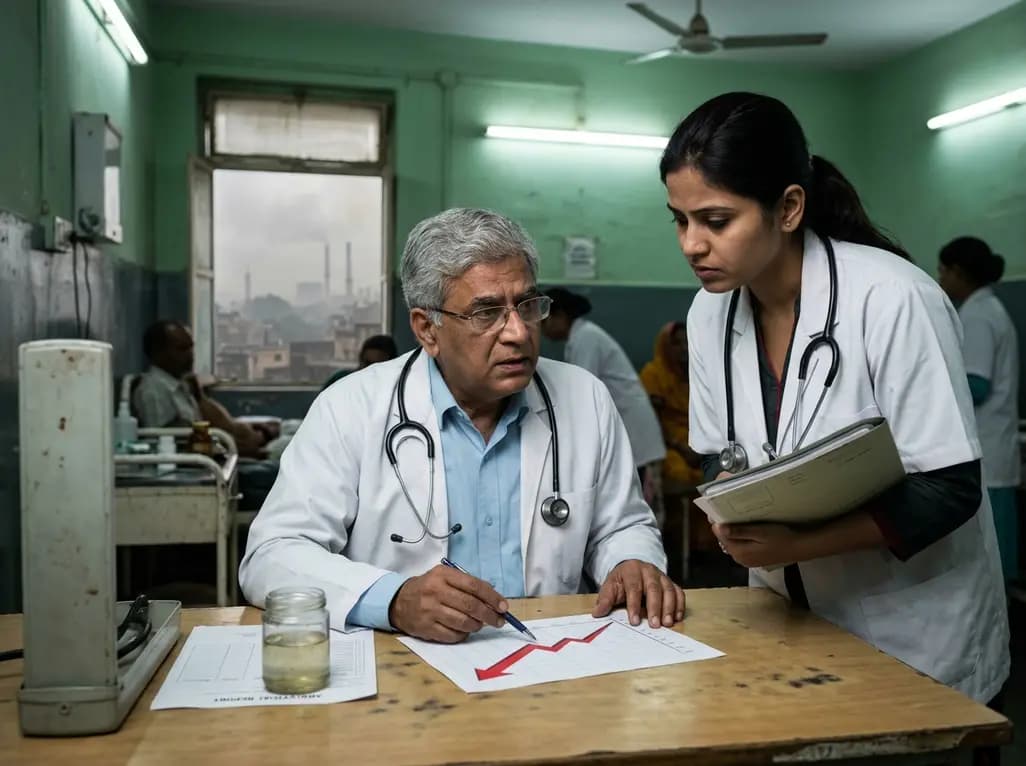
Recent public health assessments in Bihar reveal an alarming surge in serious chronic illnesses due to rising environmental pollutants. Consequently, doctors and researchers are identifying a significant rise in environmental cancer risk across both rural and urban communities. Specifically, long-term exposure to contaminated groundwater and toxic air is triggering several malignancies. Clinicians must understand these environmental hazards to effectively address the growing burden of disease.
Groundwater contamination severely affects nearly 26% of rural wards across 31 of Bihar's 38 districts. According to the Bihar Economic Survey 2024-25, over 30,207 rural wards are consuming unsafe water. Specifically, this toxic load includes 4,709 wards with arsenic contamination, 3,789 with fluoride, and 21,709 with excessive iron. Consequently, prolonged consumption of these heavy metals significantly increases cancer development in vulnerable populations.
Arsenic poses the most dangerous risk, and the World Health Organization classifies it as a Group 1 carcinogen. Furthermore, clinical studies directly associate chronic arsenic ingestion with skin, bladder, and lung cancers. In addition, local research has recorded arsenic levels far exceeding permissible safety standards. Consequently, these contaminants enter the food chain through irrigation, creating a severe and cumulative carcinogenic threat.
Deteriorating air quality is another key environmental threat driving the respiratory disease burden. For instance, fine particulate matter such as PM2.5 can penetrate deep into the lungs, triggering inflammatory cascades and damaging DNA. Consequently, these processes elevate the risk of lung cancers among residents.
Seven major Bihar cities, including Patna, Bhagalpur, and Muzaffarpur, rank among the world's most polluted urban zones. Specifically, Patna's average PM2.5 levels are nearly ten times higher than the WHO standards. Vehicular emissions, waste burning, and construction dust primarily drive this severe air pollution. Moreover, household air pollution from biomass fuels poses a severe risk to non-smoking women in poorly ventilated kitchens. A recent study documented extensive lung cancer cases in non-smoking women, linking their illnesses directly to domestic smoke exposure.
Healthcare professionals must incorporate environmental exposure histories into their routine clinical diagnostics. For example, asking patients about their primary drinking water source can help identify early heavy metal poisoning. Additionally, doctors should screen individuals from highly polluted districts for early markers of respiratory damage. Promoting domestic ventilation and encouraging clean fuels can significantly reduce household exposure risks. Finally, early cancer screenings in high-risk zones can save lives and help manage Bihar's escalating healthcare crisis.
Q1: How does arsenic in groundwater contribute to cancer?
Arsenic acts as a potent systemic carcinogen. Consequently, chronic ingestion of contaminated water damages cellular DNA and induces skin, bladder, and lung cancers.
Q2: Why are non-smoking women in Bihar facing high rates of lung cancer?
Specifically, prolonged exposure to biomass smoke from wood and coal-fired stoves, combined with poor kitchen ventilation, significantly raises lung cancer risk.
Q3: Which cities in Bihar exhibit the highest PM2.5 concentrations?
Major affected cities include Patna, Bhagalpur, Muzaffarpur, Hajipur, Chapra, Saharsa, and Araria. Notably, Patna's average levels exceed the WHO standard by nearly tenfold.
Disclaimer: This content is for informational and educational purposes only. It does not constitute medical advice or replace professional judgment. Refer to the latest local and national guidelines for clinical practice.
References

Read summarized clinical updates, watch expert medical content, and earn CME certifications right from your smartphone.
Open your smartphone camera to scan and install.





Rising groundwater contamination and toxic air pollution in Bihar are driving a spike in cancer cases, demanding urgent clinical screening and action....
4 months ago

As monsoon seasons elevate arboviral disease threats, Tamil Nadu has initiated an ICMR-monitored evaluation of the tetravalent dengue vaccine in Tenkasi district. Clinicians emphasize clinical monitoring, public prevention, and high-quality early pediatric care to reduce disease morbidity across endemic regions.
Today

A comparative cohort study evaluates vNOTES vs TLH hysterectomy for benign conditions, demonstrating shorter operative duration, faster return to daily activities, and equivalent female sexual function scores without increased dyspareunia.
Today

Review how tailored exercise programs benefit frail older patients with heart failure. Explore pathophysiological mechanisms, individualized training prescriptions, and strategies to overcome adherence barriers in clinical practice.
Today

This comparative study evaluates posterior labral tears with and without glenohumeral instability, highlighting distinct demographic patterns, MRI underestimation in stable shoulders, and successful arthroscopic repair outcomes.
Today

A clinical study demonstrates that early intervention with tocilizumab, either as monotherapy or bridged with corticosteroids, achieves significant proptosis reduction and resolves active inflammation in treatment-naive thyroid eye disease.
Today
