.webp&w=384&q=75)

Loading, please wait...
Loading, please wait...

Researchers are making significant strides in the field of tissue engineering by developing engineered skeletal muscle tissue (ESMT). This innovation holds immense value for regenerative medicine and biosyncretic robotics. Because native skeletal muscle involves complex regulatory mechanisms, replicating these functions in vitro remains a challenge. However, new bionic stimulation methods are effectively bridging the functional gap between lab-grown constructs and native tissue.
The human body contains over six hundred muscles that perform intricate motor functions. Consequently, constructing a functional replica requires a deep understanding of cross-scale structural properties. Scientists focus on the bionic principles of the skeletal muscle microenvironment to guide the growth of these tissues. They use advanced manufacturing methods to ensure proper cellular alignment and maturation during the construction process.
To enhance tissue development, researchers utilize mechanical and electrical stimulation modes. These training methods mimic the natural environment of native muscle. For instance, mechanical stretching promotes the fusion of myoblasts into mature myotubes. Similarly, electrical pulses trigger contractions that strengthen the muscle fibers and improve metabolic activity. Therefore, co-stimulation often yields the most robust results for functional integration and long-term stability in engineered skeletal muscle tissue constructs.
Despite recent progress, a performance gap still exists between bio-artificial constructs and native tissues. Vascularization and innervation remain primary hurdles for large-scale clinical application. Furthermore, researchers must optimize stimulation protocols to ensure consistent outcomes across different muscle types. Future perspectives suggest that organ-on-a-chip technology will play a vital role in screening drug efficacy and safety using these engineered models.
Stimulation training, including mechanical and electrical modes, mimics the natural physiological environment. It promotes cellular alignment, increases muscle fiber diameter, and enhances contractile force, making the tissue more functional and mature.
Engineered muscle tissues are vital for treating volumetric muscle loss, developing biohybrid robots, and serving as platforms for drug screening. They also provide insight into muscle-related diseases without the ethical concerns associated with animal models.
Disclaimer: This content is for informational and educational purposes only. It does not constitute medical advice or a professional healthcare recommendation. Refer to the latest local and national guidelines for clinical practice.
References
Du H et al. Fabrication and Stimulation Training of Engineered Skeletal Muscle Tissues. Adv Healthc Mater. 2026 Feb 15. doi: 10.1002/adhm.202504677. PMID: 41691437.
Babu DP et al. Progress in Skeletal Muscle Tissue Engineering: Advancing from 3D to 4D Bioprinting. Prog Biomed Eng (Bristol). 2025 Nov 11. doi: 10.1088/2516-1091/ae1e47.
Khodabukus A et al. Tissue-Engineered Skeletal Muscle Models to Study Muscle Function, Plasticity, and Disease. Front Physiol. 2021 Feb 26;12:619710. doi: 10.3389/fphys.2021.619710.

Read summarized clinical updates, watch expert medical content, and earn CME certifications right from your smartphone.
Open your smartphone camera to scan and install.





A comprehensive review of fabrication methods and bionic stimulation training for engineered skeletal muscle tissue to bridge functional gaps....
8 months ago

Following regulatory scrutiny from FSSAI regarding promotional representations and lean muscle preservation claims, Dr. Reddy's Laboratories and Nestlé Health Science are currently reviewing the branding and marketing strategy for their joint nutritional supplement Celevida GLP+.
Today

A comprehensive scoping review synthesises evidence linking prenatal maternal mental health to long-term offspring neurodevelopment, evaluating neuroendocrine, inflammatory, and epigenetic pathways while highlighting clinical screening and future research priorities.
Today

The Directorate General of Health Services directs Indian states to halt the hazardous reuse and reprocessing of single-use medical devices. Discover regulatory implications under the Drugs and Cosmetics Act, critical infection risks, legal liabilities, and operational changes required across clinical specialties.
Today
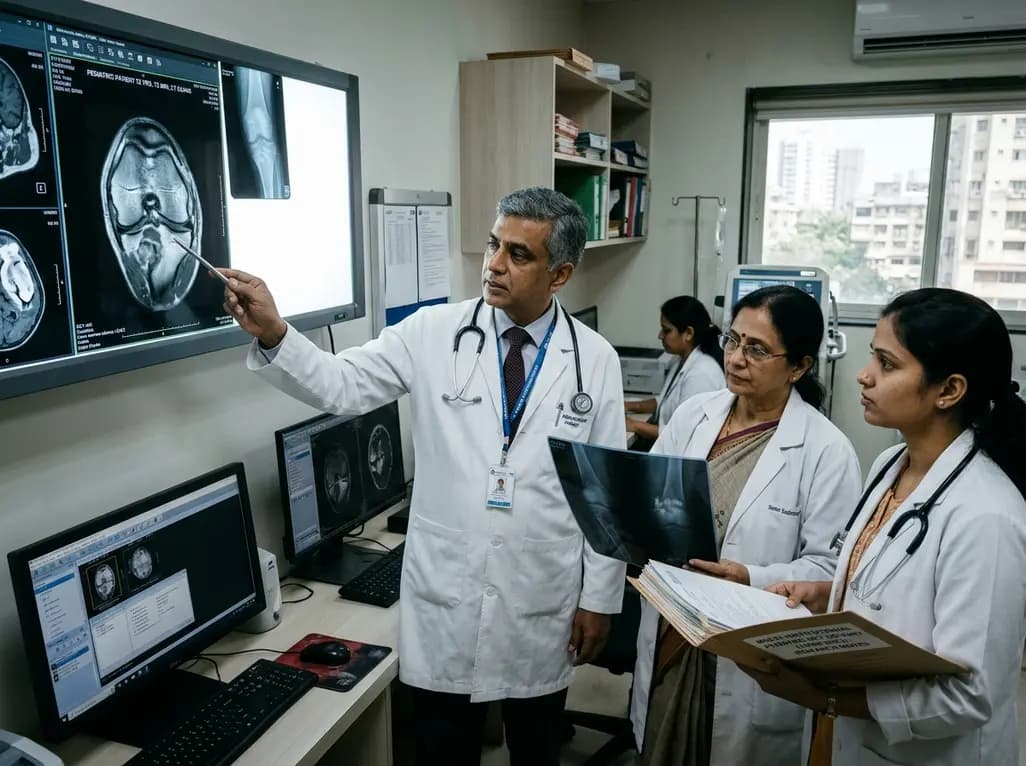
A 25-year multi-institutional cohort reveals high recurrence rates in pediatric giant cell tumor of bone, particularly in patients with open physes and bone marrow edema on preoperative MRI. Early surveillance and careful balance between growth plate preservation and tumor clearance are essential.
Today

India is advancing preventive healthcare by integrating genomics, artificial intelligence, and quantum technologies. With the SANGAM programme sequencing one million Indian genomes, clinicians can unlock personalized therapies, detect cardiometabolic risks early, and curb the burden of diabetes and heart disease.
Today
