.webp&w=384&q=75)

Loading, please wait...
Loading, please wait...
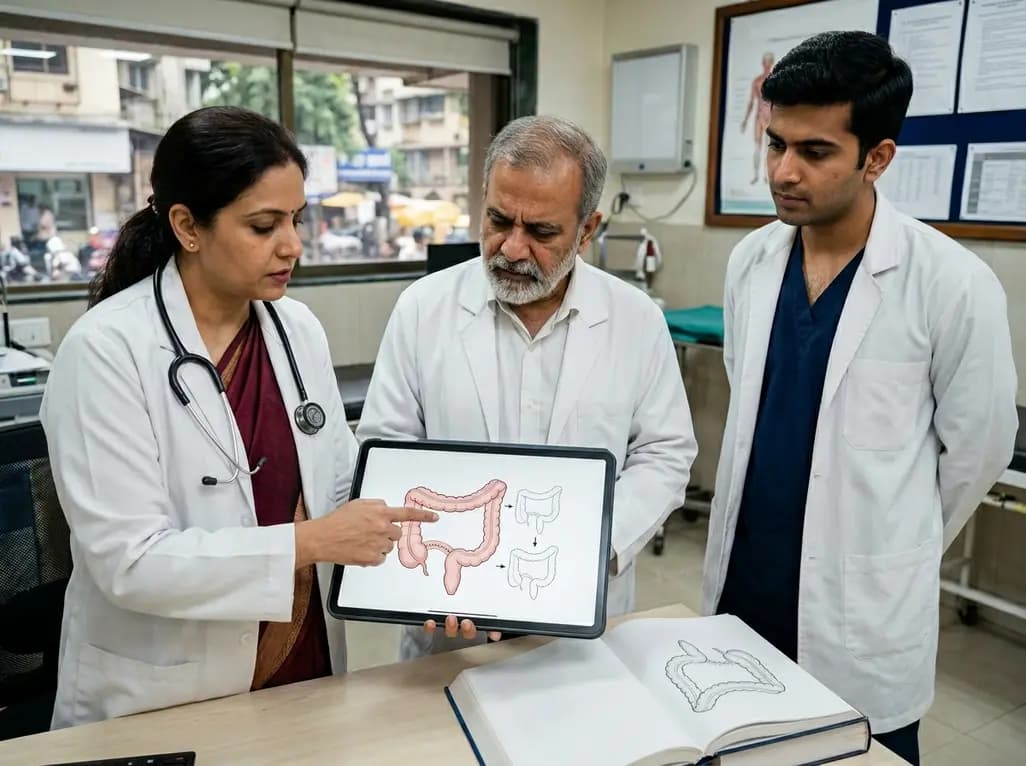
Surgeons continuously seek ways to optimize care for patients with Crohn's disease. Recent research suggests that an end-to-side ileocolonic anastomosis significantly improves outcomes after ileocecectomy. Although various configurations like the Kono-S or side-to-side are common, this specific method offers distinct advantages. Consequently, understanding these clinical benefits helps surgeons make more informed decisions during reconstructive procedures.
A retrospective study at the University of Chicago Medical Center evaluated 239 patients who underwent surgery between 2018 and 2022. Researchers compared multiple configurations, including end-to-end and side-to-side techniques. Notably, the end-to-side approach demonstrated superior results regarding efficiency and safety. For instance, patients receiving this configuration experienced lower blood loss and shorter operative times.
Furthermore, the long-term data revealed a compelling trend in disease management. On multivariable analysis, elective surgery and the end-to-side configuration correlated with lower rates of Crohn's disease recurrence. Moreover, with an average follow-up of 32 months, this technique appears to be a technically simple yet highly effective method. Therefore, clinicians should consider this approach as a viable standard for ileocolonic reconstruction in Crohn's patients.
The choice of anastomosis remains a critical factor in preventing postoperative complications. Additionally, the study emphasizes that technically easy methods often yield the best surgical outcomes. Because the end-to-side configuration reduces time in the operating room, it may lower the overall risk of surgical site infections. Thus, adopting this configuration could enhance recovery protocols in high-volume inflammatory bowel disease centers.
No, surgeons consider it a technically easy and safe reconstruction method. It often requires less operative time compared to more complex handsewn techniques like the Kono-S.
Yes, clinical data indicate that the end-to-side configuration is associated with significantly lower recurrence rates over a 32-month follow-up period compared to other configurations.
Beyond lower recurrence, patients who received an end-to-side anastomosis also experienced lower blood loss and shorter durations in the operating room.
Disclaimer: This content is for informational and educational purposes only. It is not intended as medical advice or a substitute for professional healthcare consultation. Refer to the latest local and national guidelines for clinical practice.
References
1. Kinford CW et al. End-to-Side Ileocolonic Anastomosis after Ileocecectomy for Crohn's Disease is a Safe Option with Low Recurrence. Dis Colon Rectum. 2026 Jun 17. doi: 10.1097/DCR.0000000000004346. PMID: 42302313.
2. Gurland B, et al. Stapled End-To-Side Ileocolic Anastomosis in Crohn's Disease: Old Dog, Reliable Tricks? A Retrospective Two-Center Cohort Study. J Gastrointest Surg. 2024.
"
Read summarized clinical updates, watch expert medical content, and earn CME certifications right from your smartphone.
Open your smartphone camera to scan and install.





A University of Chicago study finds that end-to-side ileocolonic anastomosis is a safe, technically easy option for Crohn's disease surgery. This configuration is associated with lower blood loss, shorter operative times, and significantly reduced recurrence rates compared to other configurations.
4 months ago

Following regulatory scrutiny from FSSAI regarding promotional representations and lean muscle preservation claims, Dr. Reddy's Laboratories and Nestlé Health Science are currently reviewing the branding and marketing strategy for their joint nutritional supplement Celevida GLP+.
Today

Demanding exhaustive hormonal profiling can inadvertently discourage clinical studies involving females. Methodological standards must align with the specific scientific question to expand, not restrict, equitable evidence for women.
Today

The Directorate General of Health Services directs Indian states to halt the hazardous reuse and reprocessing of single-use medical devices. Discover regulatory implications under the Drugs and Cosmetics Act, critical infection risks, legal liabilities, and operational changes required across clinical specialties.
Today
A novel calcium polyphosphate coacervate enables injectable bone implants with in situ hierarchical porosity via phase separation and gas foaming, significantly enhancing cell proliferation, energy metabolism, and osteogenic differentiation for minimally invasive bone defect repair.
Today

India is advancing preventive healthcare by integrating genomics, artificial intelligence, and quantum technologies. With the SANGAM programme sequencing one million Indian genomes, clinicians can unlock personalized therapies, detect cardiometabolic risks early, and curb the burden of diabetes and heart disease.
Today
