.webp&w=384&q=75)

Loading, please wait...
Loading, please wait...

Alzheimer's disease (AD) remains one of the most challenging neurodegenerative conditions worldwide, characterized by progressive cognitive decline. Recent research has highlighted that cerebral glucose hypometabolism is a core feature of AD, occurring well before clinical symptoms manifest. Consequently, modulating brain energy metabolism has emerged as a promising therapeutic strategy. New experimental evidence suggests that Electroacupuncture for Alzheimer's may play a vital role in restoring these metabolic functions and improving cognitive outcomes.
In a recent study using 5×FAD mouse models, researchers demonstrated that electroacupuncture (EA) treatment significantly improves learning and memory. The therapy specifically targets the hippocampus, a brain region critical for memory formation. By reducing β-amyloid (Aβ) deposition and enhancing metabolic efficiency, EA provides a multi-faceted approach to neuroprotection. However, the most striking finding involves the specific molecular pathways that govern these metabolic improvements.
The study revealed that EA specifically activates the IGF1/IGF1R signaling pathway within the hippocampus. This activation is crucial because it promotes the membrane translocation of GLUT3, the primary glucose transporter in neurons. Consequently, enhanced neuronal glucose uptake provides the necessary fuel for cellular functions. Furthermore, this metabolic boost increases the activity of the tricarboxylic acid (TCA) cycle, which is the powerhouse of cellular energy production. Therefore, the improved energy supply directly supports synaptic plasticity and cognitive resilience.
Additionally, the research highlighted that EA helps optimize information processing within the brain's metabolic network. By enhancing glucose metabolism, the treatment effectively mitigates the "energy crisis" typically seen in AD brains. This restoration of metabolic health not only slows the progression of memory deficits but also offers a biological basis for using acupuncture as a complementary clinical tool.
While the current findings are based on animal models, they provide strong theoretical and experimental support for the clinical application of EA. In practice, physicians might consider electroacupuncture as part of a holistic management plan for geriatric patients. Moreover, the safety profile and non-invasive nature of EA make it an attractive adjunct to standard pharmacological treatments like cholinesterase inhibitors. However, further large-scale human trials are necessary to standardize protocols and confirm long-term efficacy in diverse patient populations.
Electroacupuncture enhances glucose metabolism by activating specific signaling pathways like IGF1/IGF1R. This process increases the translocation of glucose transporters (GLUT3) to the neuronal membrane, allowing the brain to utilize energy more efficiently.
Yes, experimental studies have shown that consistent electroacupuncture treatment can significantly attenuate the deposition of β-amyloid (Aβ) in the hippocampus and cortex, which are hallmark features of Alzheimer's disease.
Electroacupuncture is generally considered safe and well-tolerated when performed by trained professionals. It is a non-pharmacological intervention that can be used alongside standard medications to help manage cognitive symptoms.
Disclaimer: This content is for informational and educational purposes only. It does not constitute professional medical advice, diagnosis, or treatment. Always seek the advice of your physician or other qualified healthcare provider with any questions you may have regarding a medical condition. Refer to the latest local and national guidelines for clinical practice.
References
Liang S et al. Electroacupuncture Improves the Learning and Memory by Modulating Hippocampal Glucose Metabolism through IGF1/IGF1R Signaling in Alzheimer's Disease. Adv Sci (Weinh). 2026 May 23. doi: 10.1002/advs.202514241. PMID: 42175737.
Li R, Chen Z, Jiang Y, et al. Electroacupuncture for treating the cognitive symptoms of Alzheimer's disease: a randomized controlled trial. Front Psychiatry. 2026;17:1834514. doi: 10.3389/fpsyt.2026.1834514.
Xu A, et al. Electroacupuncture Protects Cognition by Regulating Tau Phosphorylation and Glucose Metabolism via the AKT/GSK3β Signaling Pathway in Alzheimer's Disease Model Mice. Frontiers in Neuroscience. 2020;14:387-400. doi: 10.3389/fnins.2020.574023.

Read summarized clinical updates, watch expert medical content, and earn CME certifications right from your smartphone.
Open your smartphone camera to scan and install.





A study reveals electroacupuncture improves memory in Alzheimer's by modulating hippocampal glucose metabolism through the IGF1/IGF1R signaling pathway....
5 months ago

Following regulatory scrutiny from FSSAI regarding promotional representations and lean muscle preservation claims, Dr. Reddy's Laboratories and Nestlé Health Science are currently reviewing the branding and marketing strategy for their joint nutritional supplement Celevida GLP+.
Today

A comprehensive scoping review synthesises evidence linking prenatal maternal mental health to long-term offspring neurodevelopment, evaluating neuroendocrine, inflammatory, and epigenetic pathways while highlighting clinical screening and future research priorities.
Today

The Directorate General of Health Services directs Indian states to halt the hazardous reuse and reprocessing of single-use medical devices. Discover regulatory implications under the Drugs and Cosmetics Act, critical infection risks, legal liabilities, and operational changes required across clinical specialties.
Today
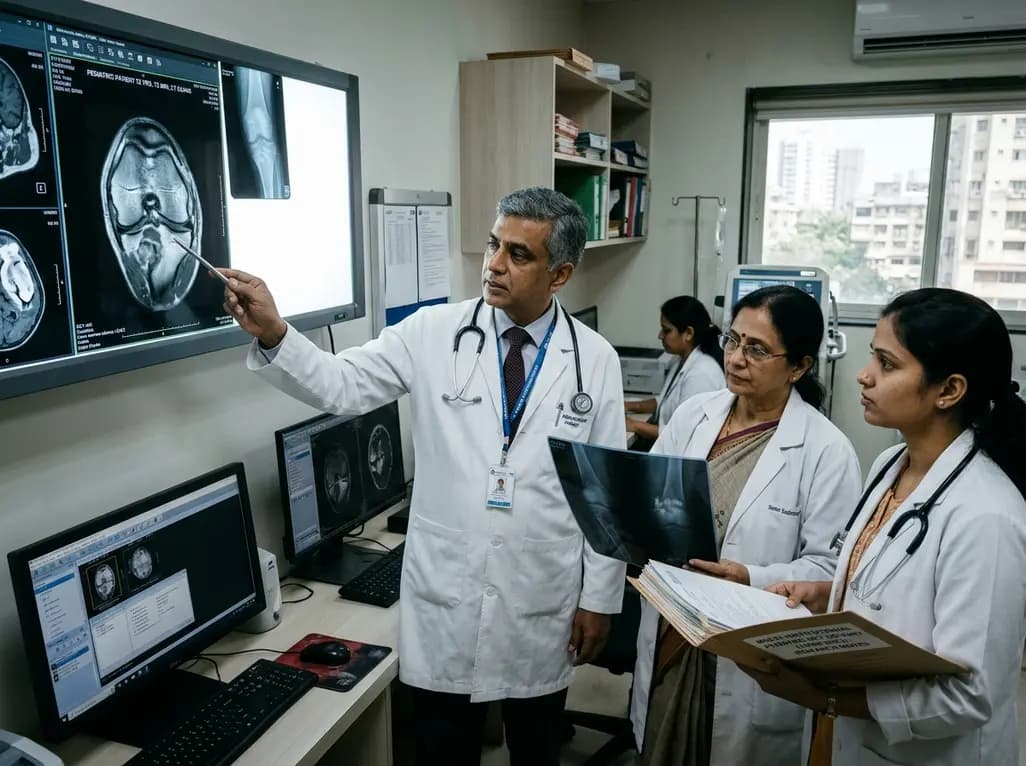
A 25-year multi-institutional cohort reveals high recurrence rates in pediatric giant cell tumor of bone, particularly in patients with open physes and bone marrow edema on preoperative MRI. Early surveillance and careful balance between growth plate preservation and tumor clearance are essential.
Today

India is advancing preventive healthcare by integrating genomics, artificial intelligence, and quantum technologies. With the SANGAM programme sequencing one million Indian genomes, clinicians can unlock personalized therapies, detect cardiometabolic risks early, and curb the burden of diabetes and heart disease.
Today
