.webp&w=384&q=75)

Loading, please wait...
Loading, please wait...

Neurologists face significant hurdles when managing generalized myasthenia gravis because standard therapies often yield unpredictable responses. Clinicians frequently prescribe efgartigimod for myasthenia gravis to address antibody-mediated impairment at the neuromuscular junction. This autoimmune condition involves pathogenic immunoglobulin G autoantibodies targeting acetylcholine receptors, thereby impairing muscle transmission. Consequently, affected individuals suffer from progressive weakness that impairs speech, swallowing, vision, and peripheral movement. Traditional therapies rely on broad immunosuppression and cholinesterase inhibitors, but these drugs often trigger severe systemic side effects. Moreover, conventional regimens fail to achieve adequate symptom relief in a notable proportion of individuals. Specifically, efgartigimod functions as an engineered human IgG1 antibody fragment that binds directly to the neonatal Fc receptor. By selectively inhibiting this receptor, the medication accelerates the lysosomal degradation of endogenous antibodies. As a result, circulating autoantibody concentrations decrease markedly, allowing functional synaptic communication to recover. Recent subgroup evaluations from the pivotal Phase 3 ADAPT trial provide critical insights into this targeted approach. Therefore, evaluating these findings clarifies how real-world patient subgroups respond to neonatal Fc receptor blockade.
The randomized, double-blind, placebo-controlled ADAPT trial enrolled adult participants with generalized myasthenia gravis to assess therapeutic efficacy and safety. Researchers randomized 129 acetylcholine receptor antibody-positive participants in a 1:1 ratio to receive intravenous efgartigimod or a matching placebo. Specifically, patients received efgartigimod at 10 milligrams per kilogram administered as four once-weekly infusions over each treatment cycle. The trial protocol permitted repeat cycles based on individualized clinical evaluation during the 26-week study window. Furthermore, investigators analyzed patient subgroups to determine whether baseline variables influenced treatment responses. These subgroups included participants with past exposure to nonsteroidal immunosuppressive therapies and those using concomitant medications during the study. Additionally, researchers stratified cohorts by duration since diagnosis, chronological age, sex, body mass index, and prior thymectomy status. Clinicians assessed functional capacity using the Myasthenia Gravis Activities of Daily Living scale and the Quantitative Myasthenia Gravis score. Moreover, responders had to show sustained, meaningful improvements during the first two treatment cycles. Through this rigorous design, researchers successfully examined drug efficacy across a clinically representative cohort of patients.
The subgroup analysis revealed robust and consistent therapeutic efficacy among participants receiving efgartigimod compared with those receiving placebo. Across all predefined categories, efgartigimod-treated patients demonstrated substantially higher responder rates on the primary functional scales during cycles 1 and 2. Specifically, patients achieved meaningful reductions in daily symptom burden regardless of prior nonsteroidal immunosuppressant therapy history. Many patients who previously failed standard immunosuppression responded favorably to neonatal Fc receptor blockade. In addition, concomitant use of background medications did not diminish the clinical benefit of efgartigimod infusions. Patients receiving concurrent corticosteroids or acetylcholinesterase inhibitors achieved high response rates that matched the broader trial population. Similarly, baseline disease severity did not limit patient responsiveness. Participants with high initial functional impairment experienced profound reductions in their scores. Furthermore, the clinical benefit remained consistent regardless of whether patients had previously undergone a thymectomy. Demographic factors, such as age, sex, and body mass index, also showed no negative effect on therapeutic outcomes. Consequently, these data confirm that efgartigimod delivers dependable clinical improvement across highly diverse patient cohorts.
The evaluation of safety endpoints demonstrated that efgartigimod maintains an acceptable tolerability profile across all investigated patient subgroups. Notably, the overall rates of treatment-emergent adverse events were comparable between participants receiving efgartigimod and those receiving placebo. The occurrence of adverse events remained stable regardless of whether patients used concomitant corticosteroids, immunosuppressants, or cholinesterase inhibitors. Most adverse reactions were mild or moderate in severity, and few individuals discontinued therapy because of toxicity. Clinicians observed transient headaches and mild upper respiratory tract infections as the most frequent complaints. However, investigators observed no increased signal for severe opportunistic infections despite significant reductions in circulating immunoglobulin G levels. This favorable safety outcome stems from the targeted mechanism of neonatal Fc receptor inhibition. Because efgartigimod accelerates antibody clearance without suppressing upstream cellular immunity, vital immune defenses remain intact. Furthermore, patient age and baseline body mass index did not amplify the frequency of treatment-related complications. Clinicians can therefore administer this therapy without expecting disproportionate toxicities in older patients or individuals with elevated metabolic risk. Ultimately, the consistent tolerability profile supports flexible, cycle-based administration in diverse outpatient populations.
The broad efficacy documented in these subgroup analyses provides compelling evidence for integrating efgartigimod earlier into clinical care pathways. Neurologists often struggle when adjusting therapies for fragile patients who cannot tolerate escalating doses of traditional oral immunosuppressants. In these complex scenarios, neonatal Fc receptor targeting offers rapid disease control without inducing long-term glucocorticoid toxicity. Furthermore, clinicians can prescribe this treatment regardless of whether the patient has recently received a definitive diagnosis or lived with the disease for decades. Disease duration did not impede therapeutic response in the ADAPT trial cohorts. Therefore, specialists do not need to reserve this medication exclusively as a desperate, late-stage salvage option. In addition, the cyclic dosing structure provides physicians with notable management flexibility. Medical teams can tailor subsequent infusion cycles to the individual recurrence patterns of clinical symptoms. This patient-tailored strategy minimizes drug exposure while maintaining prolonged functional independence and quality of life. Indian clinicians managing severe myasthenia gravis can leverage these insights to establish clear, personalized treatment goals. Consequently, identifying ideal candidates and monitoring real-world functional improvements will enhance neuromuscular care standards across tertiary hospitals.
Efgartigimod binds competitively to the neonatal Fc receptor, preventing it from recycling endogenous immunoglobulin G antibodies back into circulation. Consequently, this blockade accelerates the lysosomal degradation of pathogenic autoantibodies targeting acetylcholine receptors. As circulating autoantibody levels decline, neuromuscular transmission improves, which significantly relieves muscle weakness and restores daily functional capacity in affected individuals.
No, prior use of nonsteroidal immunosuppressive therapies did not diminish the clinical effectiveness of efgartigimod. In the ADAPT trial subgroup analysis, patients achieved consistently superior response rates on functional scales compared with placebo. This clinical benefit occurred regardless of whether individuals had previously discontinued or failed standard nonsteroidal immunosuppressive agents in their past care.
Clinicians should primarily monitor patients for mild upper respiratory tract infections, headaches, and urinary tract infections during treatment cycles. Because efgartigimod reduces total immunoglobulin G concentrations, practitioners must promptly evaluate infectious symptoms. However, clinical trial data demonstrated that rates of adverse events remained comparable to placebo, with no observed increase in severe opportunistic infections.
Disclaimer: This content is for informational and educational purposes only and does not constitute medical advice. Consult qualified healthcare professionals for diagnosis and treatment. Refer to the latest local and national guidelines for clinical practice.
References

Read summarized clinical updates, watch expert medical content, and earn CME certifications right from your smartphone.
Open your smartphone camera to scan and install.





Subgroup analyses from the Phase 3 ADAPT trial reveal that efgartigimod provides consistent efficacy and tolerability in generalized myasthenia gravis, regardless of prior immunosuppressive therapies, disease duration, or patient demographics, supporting broader personalized clinical use.
last month
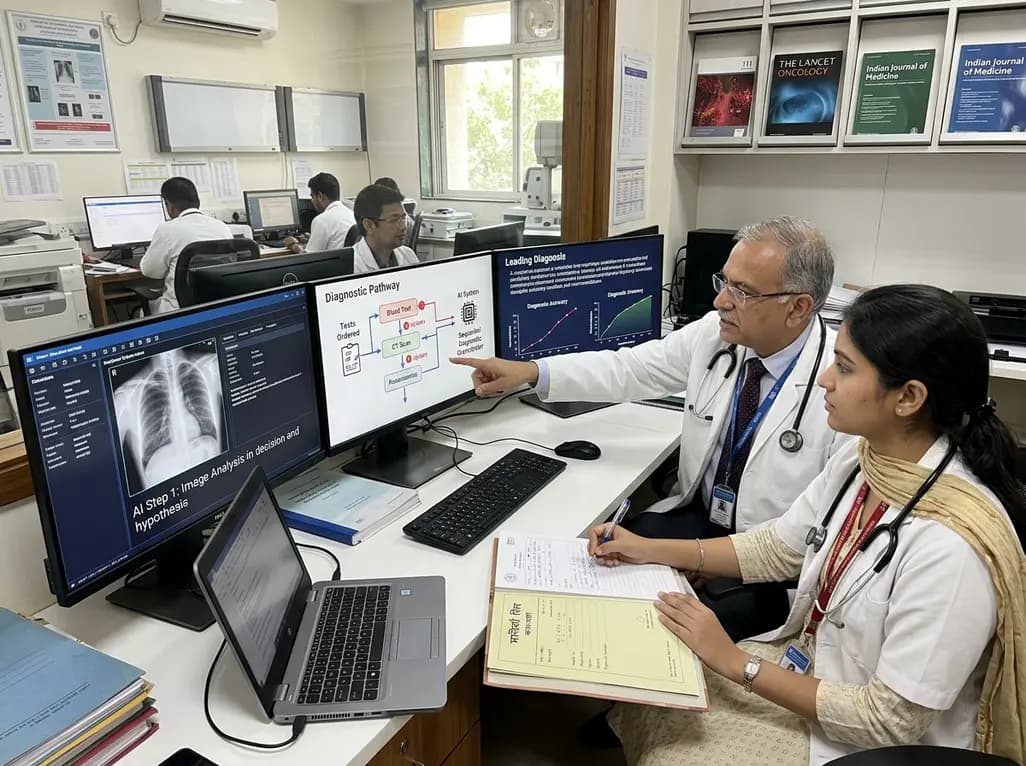
A breakthrough peer-reviewed study demonstrates that a sequential AI diagnosis system can mirror real-world clinical reasoning. By ordering stepwise tests and updating hypotheses dynamically, this multi-agent orchestrator achieved superior diagnostic accuracy while reducing investigative costs.
Today

A prenatal case highlights severe glutaric acidemia type II presenting as bilateral hyperechoic cystic kidneys at 18 weeks. Whole-exome sequencing revealed a novel homozygous ETFDH frameshift variant, demonstrating the power of rapid genetic testing in fetal renal anomalies.
Today

Review how tailored exercise programs benefit frail older patients with heart failure. Explore pathophysiological mechanisms, individualized training prescriptions, and strategies to overcome adherence barriers in clinical practice.
Yesterday

This comparative study evaluates posterior labral tears with and without glenohumeral instability, highlighting distinct demographic patterns, MRI underestimation in stable shoulders, and successful arthroscopic repair outcomes.
Yesterday

A clinical study demonstrates that early intervention with tocilizumab, either as monotherapy or bridged with corticosteroids, achieves significant proptosis reduction and resolves active inflammation in treatment-naive thyroid eye disease.
Yesterday
