.webp&w=384&q=75)

Loading, please wait...
Loading, please wait...
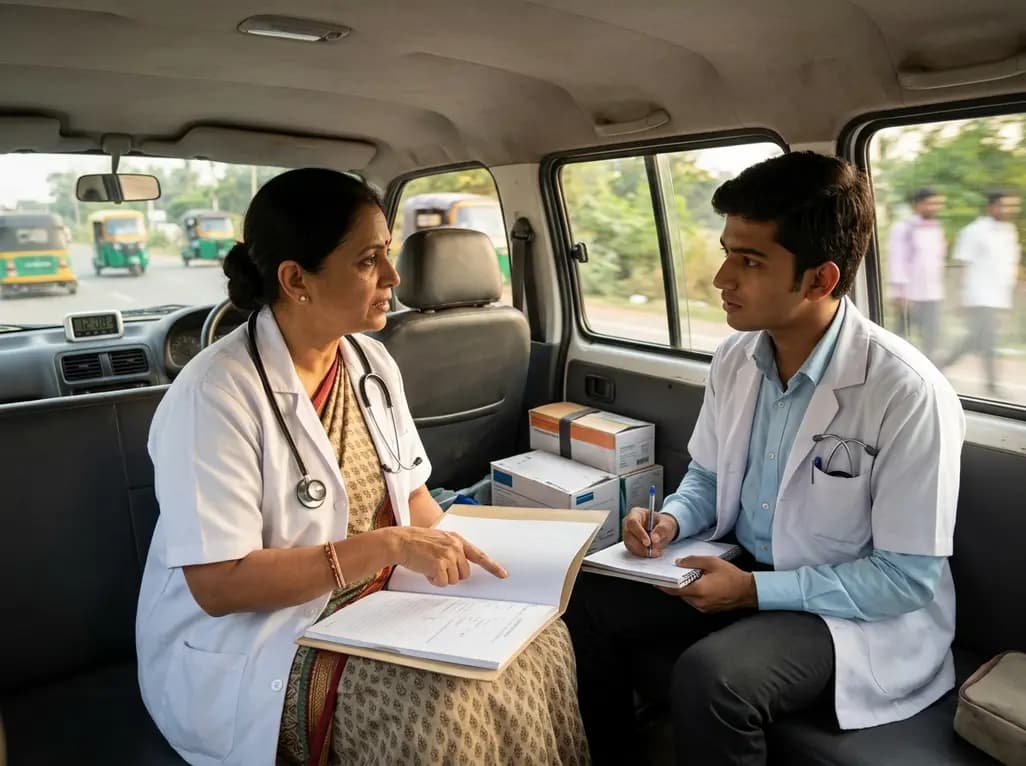
Medical and veterinary education often occurs in fast-paced, high-stakes environments. However, ambulatory practice offers a unique, often underutilized window for instruction: travel time. This period between patient visits provides a rare opportunity for focused interaction between the educator and the student. Implementing effective ambulatory clinical teaching requires recognizing that the vehicle is not merely a mode of transport but a mobile classroom. During these transitions, educators can address the cognitive and emotional needs of learners without the immediate pressure of patient care. Research indicates that structured use of this time can bridge the gap between theoretical knowledge and practical application. By intentionally planning for these intervals, practitioners can transform routine journeys into high-impact educational sessions. Consequently, both the student's confidence and their clinical reasoning skills improve significantly before they even step onto a clinical site.
Establishing a strong interpersonal connection is the foundation of any successful educational experience. In ambulatory settings, the initial travel time allows for informal, non-clinical discussions that are vital for building rapport. These conversations help humanize the educator and reduce the student's anxiety. When students feel psychologically safe, they are more likely to ask questions and admit knowledge gaps. This rapport creates an environment conducive to learning, where the hierarchy between student and teacher becomes more manageable. Furthermore, understanding a student's personal interests and professional goals allows the educator to tailor their teaching style. Therefore, rapport-building should not be viewed as wasted time. Instead, it is a strategic investment in the learner's engagement. A relaxed atmosphere facilitates better communication during high-pressure clinical scenarios later in the day. As a result, students become more receptive to feedback and more willing to participate in complex procedures. Maintaining this positive relationship throughout the rotation ensures a consistent and supportive learning trajectory.
Travel time on the way to a case is ideal for setting the stage for the upcoming encounter. Educators should use this period to establish the student's current knowledge level regarding the specific case. By asking probing questions about the expected pathology or diagnostic steps, the clinician can scaffold the learning experience appropriately. Additionally, clearly defining the student's role—whether as an observer, an assistant, or the primary examiner—minimizes confusion on-site. This clarity allows students to focus their mental energy on clinical tasks rather than navigating social or professional uncertainties. Setting these expectations ensures that the student is prepared to contribute meaningfully to the visit. Moreover, the clinician can share specific pearls of wisdom regarding the patient's history or local environmental factors that might influence the diagnosis. Consequently, the student enters the clinical setting with a clear roadmap. This proactive approach not only enhances the student’s performance but also ensures that patient care remains efficient and professional.
To maximize effective ambulatory clinical teaching, the educator's questioning style must be intentional and adaptive. Using the Socratic method during the journey encourages students to practice diagnostic reasoning in real-time. Instead of providing answers, the clinician should ask open-ended questions that challenge the student to synthesize data. For instance, discussing the differential diagnoses for a specific set of symptoms helps the student apply academic theory to a real-world context. This active engagement prevents the student from becoming a passive observer. Furthermore, the clinician can use the vehicle's quiet environment to explain complex physiological or regulatory concepts that are difficult to discuss in a noisy clinic. Providing prior awareness of planned work is also essential, as it allows students to conduct quick reviews of relevant literature. When students are given the chance to prepare, the quality of the clinical discussion improves dramatically. This collaborative exchange fosters critical thinking and professional identity, making the student feel like a valued member of the clinical team.
The journey back from a visit is perhaps the most critical time for reflective learning. Debriefing allows the student to process what they have just experienced and connect it to their existing knowledge base. Clinicians should encourage students to summarize the case and identify what went well and what could be improved. This guided reflection is a cornerstone of professional development, helping students refine their clinical judgment. Moreover, de-briefing provides an opportunity for the educator to give immediate, constructive feedback. By addressing errors or highlighting successes right away, the clinician ensures that the lessons are ingrained while the experience is fresh. This practice also allows the student to vent any frustrations or emotional stress associated with difficult cases. Therefore, the de-briefing session serves as both an educational and a supportive tool. Consistently closing the loop through reflection ensures that each case contributes to the student's overall competency. Ultimately, this cycle of briefing, acting, and de-briefing creates a robust framework for mastery in clinical practice.
Universities and medical institutions play a pivotal role in optimizing ambulatory education. To ensure that effective ambulatory clinical teaching is standardized, institutions must provide targeted training for clinical educators. Many practitioners are excellent clinicians but may lack formal training in pedagogical techniques like scaffolding or reflective debriefing. By offering workshops and resources focused on mobile teaching strategies, universities can help veterinarians and physicians use travel time more effectively. Additionally, improving student preparation before rotations can maximize the utility of the time spent in the vehicle. For example, providing students with access to electronic health records or case summaries in advance allows for more sophisticated discussions during travel. This institutional support bridges the gap between academic theory and field-based practice. Furthermore, recognizing the unique challenges of ambulatory teaching—such as travel fatigue and environmental stressors—can help in designing better rotation schedules. When institutions prioritize the quality of the mobile learning environment, they enhance the educational outcomes for both the student and the preceptor.
Non-clinical discussions are essential for building rapport and reducing the inherent stress of clinical rotations. By talking about neutral topics, educators create a psychologically safe environment where students feel comfortable admitting knowledge gaps. This trust is vital for clinical learning because it encourages active participation and reduces the fear of making mistakes. Consequently, students who have a strong rapport with their teachers show higher levels of engagement and better retention of clinical concepts during high-pressure scenarios.
Effective questioning involves using open-ended, Socratic methods that prompt the student to explain their clinical reasoning. Instead of asking simple "yes" or "no" questions, educators should ask "why" and "how" to challenge the student's synthesis of information. This scaffolding technique helps the student build on their existing knowledge. Furthermore, the quiet environment of a vehicle is perfect for deep-dive discussions that allow the educator to gauge and expand the student's critical thinking skills in real-time.
Post-visit debriefing is crucial because it facilitates guided reflection, allowing students to bridge the gap between their actions and academic theory. It provides a structured time to identify mistakes, celebrate successes, and resolve emotional stressors from difficult cases. By reflecting immediately after the encounter, students can lock in key clinical lessons while the experience is fresh. This process ensures continuous improvement and helps students develop the habit of self-reflection, which is vital for long-term professional growth and clinical excellence.
Disclaimer: This content is for informational and educational purposes only. It is not intended to provide medical advice or to be a substitute for professional medical advice, diagnosis, or treatment. Always seek the advice of your physician or other qualified health provider with any questions you may have regarding a medical condition. Refer to the latest local and national guidelines for clinical practice.
References
Wood S et al. Making the Most of Travel Time for Teaching and Learning in Ambulatory Practice: A Focus Group Study With Students and Veterinarians. J Vet Med Educ. 2026 Jul 21. doi: 10.3138/jvme-2025-0195. PMID: 42479421.
Burgess A et al. Tips for teaching in the clinical setting. BMC Med Educ. 2020;20(1):450. doi:10.1186/s12909-020-02357-w.
Ramani S, Leinster S. AMEE Guide no. 34: Teaching in the clinical environment. Med Teach. 2008;30(4):347-64. doi:10.1080/01421590802146190.

Read summarized clinical updates, watch expert medical content, and earn CME certifications right from your smartphone.
Open your smartphone camera to scan and install.





Ambulatory practice offers unique travel time that serves as a hidden classroom. This study highlights how rapport-building, pre-visit briefings, and post-case debriefings in the vehicle can significantly enhance clinical education and student readiness for real-life cases.
3 months ago

As monsoon seasons elevate arboviral disease threats, Tamil Nadu has initiated an ICMR-monitored evaluation of the tetravalent dengue vaccine in Tenkasi district. Clinicians emphasize clinical monitoring, public prevention, and high-quality early pediatric care to reduce disease morbidity across endemic regions.
Today

A comparative cohort study evaluates vNOTES vs TLH hysterectomy for benign conditions, demonstrating shorter operative duration, faster return to daily activities, and equivalent female sexual function scores without increased dyspareunia.
Today

Review how tailored exercise programs benefit frail older patients with heart failure. Explore pathophysiological mechanisms, individualized training prescriptions, and strategies to overcome adherence barriers in clinical practice.
Today

This comparative study evaluates posterior labral tears with and without glenohumeral instability, highlighting distinct demographic patterns, MRI underestimation in stable shoulders, and successful arthroscopic repair outcomes.
Today

A clinical study demonstrates that early intervention with tocilizumab, either as monotherapy or bridged with corticosteroids, achieves significant proptosis reduction and resolves active inflammation in treatment-naive thyroid eye disease.
Today
