.webp&w=384&q=75)

Loading, please wait...
Loading, please wait...

Modern clinical neurology relies heavily on the accuracy of electroencephalography (EEG). However, raw EEG data often contains artifacts from muscle movements or environmental noise. Consequently, automated EEG epoch rejection has become a vital tool for ensuring data reliability. A new study introduces EEGEpochNet, an end-to-end framework designed to simplify this process. By utilizing self-supervised contrastive learning, this model reduces the need for manual inspection by experts. Furthermore, it addresses traditional challenges such as parameter optimization and label dependency in clinical settings.
EEGEpochNet operates through three integrated modules. First, it uses a multi-level morphological representation to capture scale-invariant patterns. This approach eliminates the need for handcrafted feature engineering, which often limits traditional methods. Second, bidirectional GRUs model temporal evolution to distinguish artifacts from genuine brain activity. Finally, the self-supervised contrastive learning module allows the model to learn from unlabeled data. This feature is particularly beneficial when labeled examples are scarce. Therefore, the framework remains highly effective in diverse clinical scenarios across India.
Researchers evaluated EEGEpochNet against state-of-the-art counterparts like Autoreject and BRCNN. The results were impressive, with F1-scores reaching up to 95.33% on real-world datasets. Moreover, the model demonstrated superior performance in pediatric cases, which are notoriously difficult to analyze. Because it is parameter-efficient, clinicians can deploy this tool in various settings without expensive specialized hardware. This innovation marks a significant step toward clinical-grade automation in neurophysiology. Additionally, the ability to work with limited labeled data makes it suitable for emerging research centers.
Unlike traditional methods that require manual thresholding, EEGEpochNet uses self-supervised learning to identify artifacts automatically. This reduces human bias and significantly speeds up data processing for neurologists.
Yes, the study confirmed that EEGEpochNet performs exceptionally well on pediatric datasets. It achieved high F1-scores despite the inherent noise and artifacts common in child recordings.
Disclaimer: This content is for informational and educational purposes only and does not constitute medical advice. Always seek the advice of a physician or other qualified health provider with any questions you may have regarding a medical condition. Refer to the latest local and national guidelines for clinical practice.
References
Gao T et al. EEGEpochNet: Self-supervised contrastive learning for automated EEG epoch rejection with multi-level feature construction. J Neural Eng. 2026 Feb 23. doi: 10.1088/1741-2552/ae4924. PMID: 41730244.
Pavlove F. Automated EEG Channel and Epoch Quality Control. Proceedings of the MEi:CogSci Conference. 2023 Jun 5.
Jiang X, et al. Self-supervised Contrastive Learning for EEG-based Sleep Staging. IEEE International Joint Conference on Neural Networks (IJCNN). 2021 Jul 18.

Read summarized clinical updates, watch expert medical content, and earn CME certifications right from your smartphone.
Open your smartphone camera to scan and install.





EEGEpochNet uses self-supervised learning to automate EEG epoch rejection, achieving high F1-scores and reducing the burden of manual data inspection....
8 months ago

An observational study from the NIH All of Us Research Program reveals that adding a multi-ancestry polygenic risk score to machine learning models provides only modest improvements in predicting adult weight gain, underscoring the enduring significance of routine clinical and lifestyle factors.
Today

A study in JAMIA Open shows lightweight open-source reasoning LLMs achieve up to 95% sensitivity and accelerate evidence synthesis screening by nearly twentyfold, presenting a cost-effective, scalable AI solution for biomedical research and systematic reviews.
Today
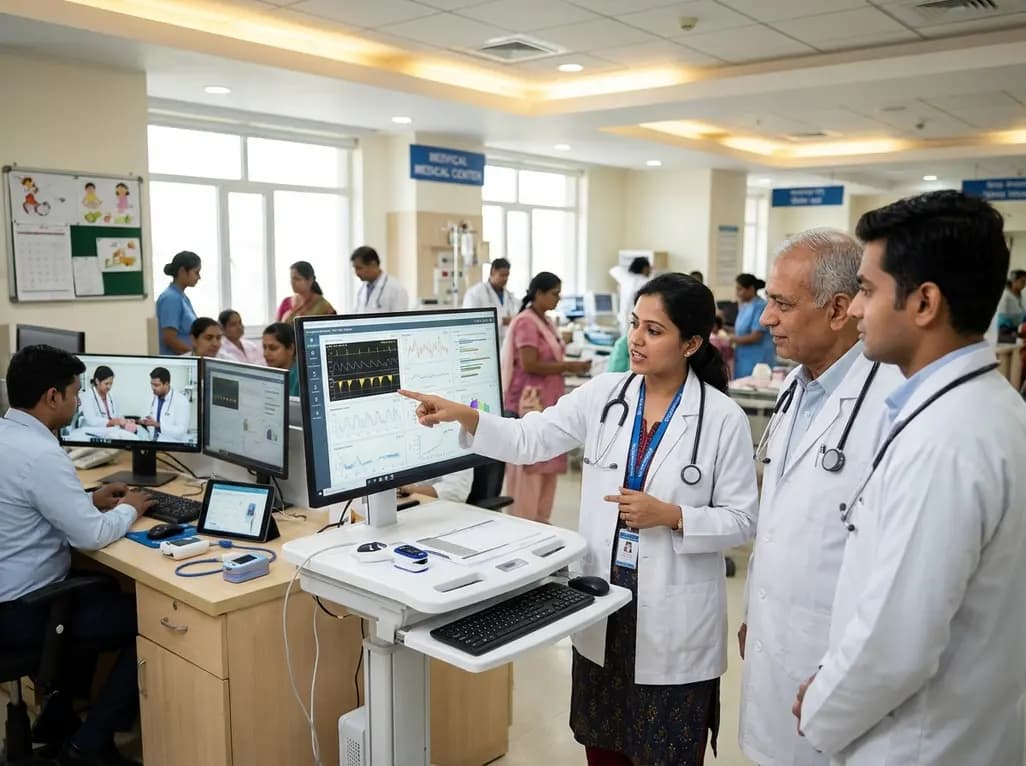
A landmark study details how an enterprise pediatric remote patient management model expanded from a single cardiology pilot to 16 diverse specialty programs by combining centralized digital operations with specialty clinical leadership.
Today
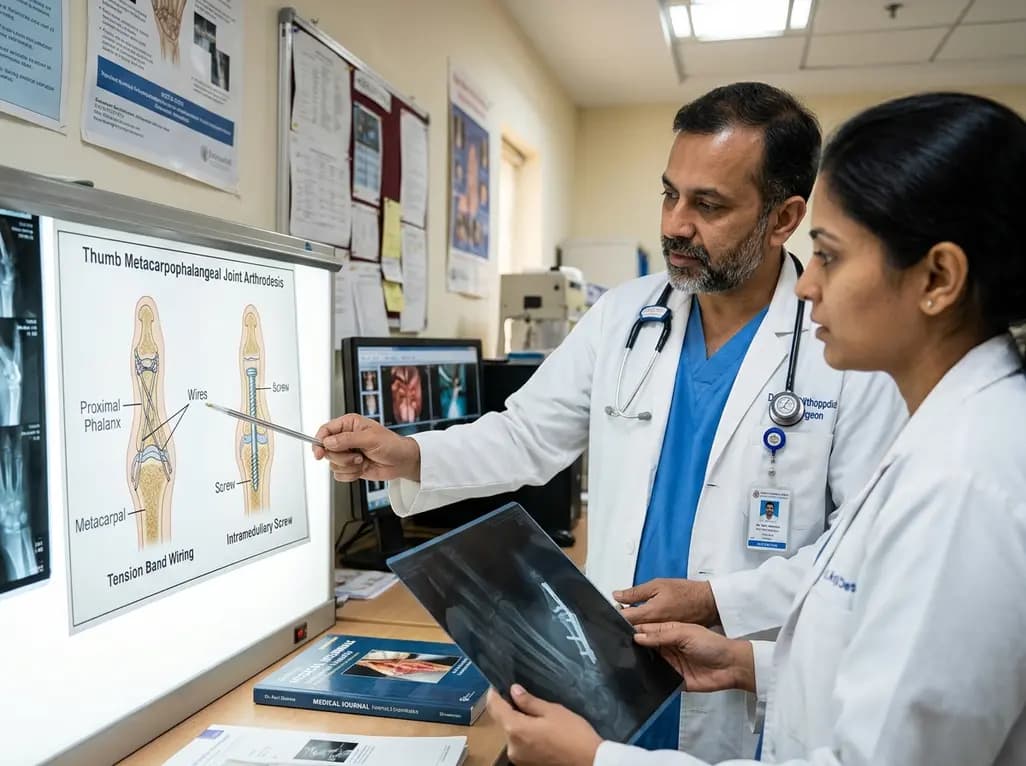
A comparative review of tension band wiring and intramedullary screw fixation in thumb metacarpophalangeal arthrodesis, evaluating union rates, hardware complications, and clinical outcomes.
Yesterday
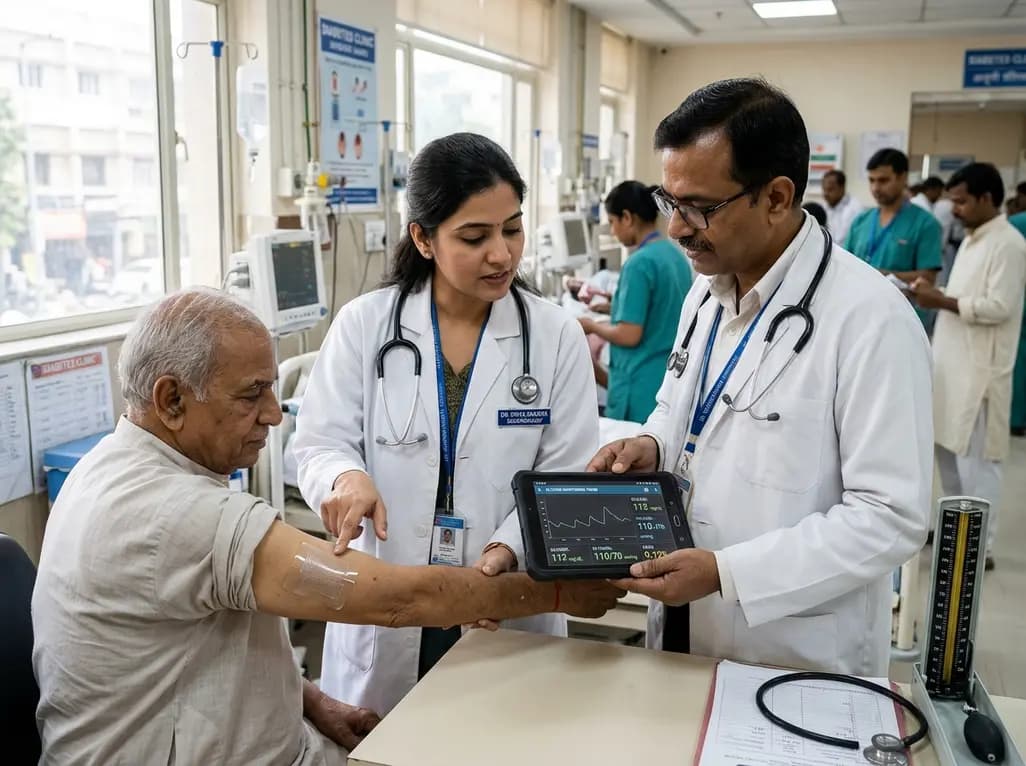
A breakthrough ultrathin multimodal sensor decouples physical hemodynamic monitoring from disposable electrochemical calibration, achieving long-term wearable glucose prediction with 81.36% accuracy and a 9.12% MARD. This offers a robust, drift-free solution for outpatient metabolic surveillance.
Yesterday
