.webp&w=384&q=75)

Loading, please wait...
Loading, please wait...

Amputation often leads to significant changes in the central nervous system, which can disrupt an individual's body schema. Recent medical research investigates how EEG oscillations in amputees shift during cognitive and motor-related tasks. This specific study examined behavioral performance alongside low-frequency oscillatory (LFO) activity. Researchers analyzed data from upper-limb amputees (ULA), lower-limb amputees (LLA), and healthy controls. During the recording of electroencephalography (EEG), participants performed a specialized hand laterality task. This task involved identifying stimuli with different angular orientations. Consequently, participants underwent testing both before and after lateralization training.
The results revealed that orientation significantly affects behavioral accuracy. Furthermore, the study highlighted differential neural effects based on the level of amputation. Lower-frequency oscillations often serve as important markers for neural adaptation after limb loss. However, the researchers found that targeted training could modulate these specific rhythms over time. This suggests that lateralization training may help restore or compensate for body schema disruptions in the brain. Therefore, clinicians should consider these neurophysiological shifts when designing modern rehabilitation protocols. Additionally, understanding these oscillations provides valuable insight into the cognitive load associated with limb loss. Future studies will likely further elucidate how these EEG patterns correlate with long-term functional recovery and prosthetic use.
Low-frequency oscillations are brain wave patterns that often reflect neural adaptation and cognitive processing. In amputees, these rhythms can indicate how the brain reorganizes after losing sensory input from a limb.
A hand laterality task requires the brain to mentally rotate and identify limb images. This exercise helps clinicians assess and potentially improve the body schema, which is the internal map the brain uses to control movement.
Yes, research shows that specific cognitive and lateralization training can modulate brain waves. These changes suggest that the brain remains plastic and can be "retrained" to improve neural connectivity and functional outcomes.
Disclaimer: This content is for informational and educational purposes only and does not constitute medical advice or a professional relationship. Always seek the advice of a physician or other qualified health provider with any questions regarding a medical condition. Refer to the latest local and national guidelines for clinical practice.
References
Dilek B et al. Differential Effects of Lateralization-Task and Training on Low-Frequency EEG Oscillations in Upper- and Lower-Limb Amputees. Psychol Rep. 2026 Feb 07. doi: 10.1177/00332941261423126. PMID: 41653402.
Liaw YF et al. Interference of unilateral lower limb amputation on motor imagery rhythm and remodeling of sensorimotor areas. Front Hum Neurosci. 2022;16:1005322. doi: 10.3389/fnhum.2022.1005322.

Read summarized clinical updates, watch expert medical content, and earn CME certifications right from your smartphone.
Open your smartphone camera to scan and install.





A study on how lateralization tasks and training impact low-frequency EEG oscillations and body schema in upper- and lower-limb amputees....
8 months ago

The TREM-AB open-label pilot study evaluated a wearable passive nonlinear vibration absorber for essential tremor. The Nonlinear Energy Sink bracelet reduced clinical Fahn-Tolosa-Marin tremor scores by 32.1% and electrophysiological tremor power by 49.2% with no adverse effects reported.
Today

A population-based study of 20,928 children reveals that small vulnerable newborns face sex-divergent mental capital outcomes at ages 6-7: term SGA girls show higher behavioral difficulties and lower resilience, while preterm non-SGA boys experience increased behavioral problems.
Today
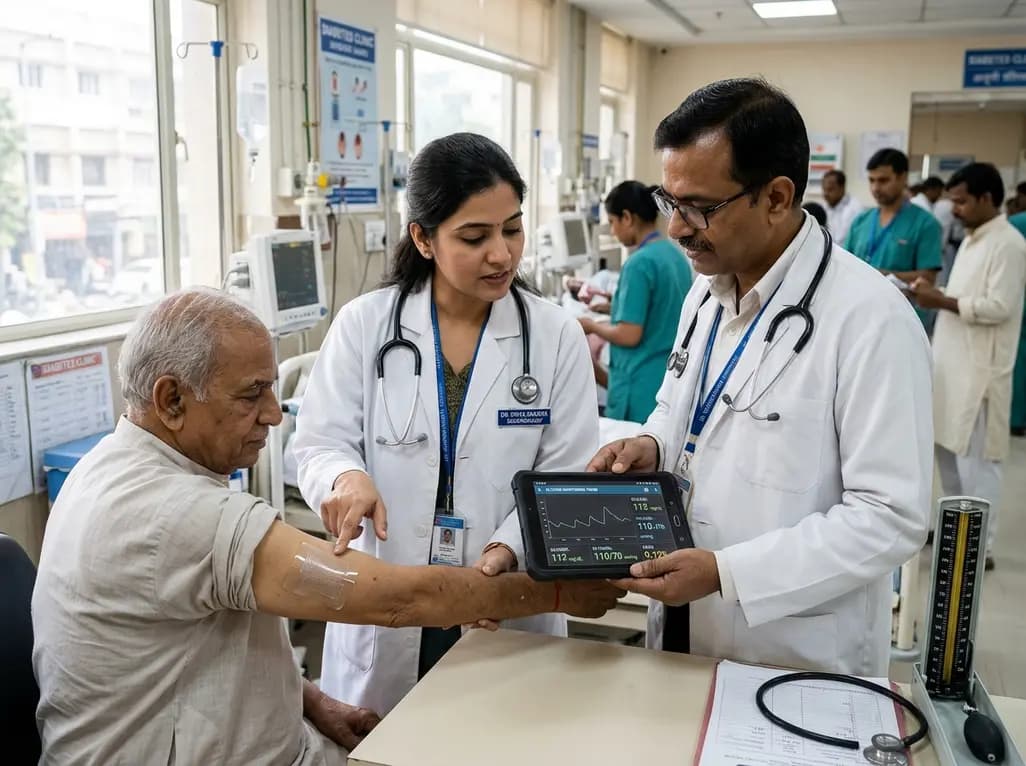
A breakthrough ultrathin multimodal sensor decouples physical hemodynamic monitoring from disposable electrochemical calibration, achieving long-term wearable glucose prediction with 81.36% accuracy and a 9.12% MARD. This offers a robust, drift-free solution for outpatient metabolic surveillance.
Today
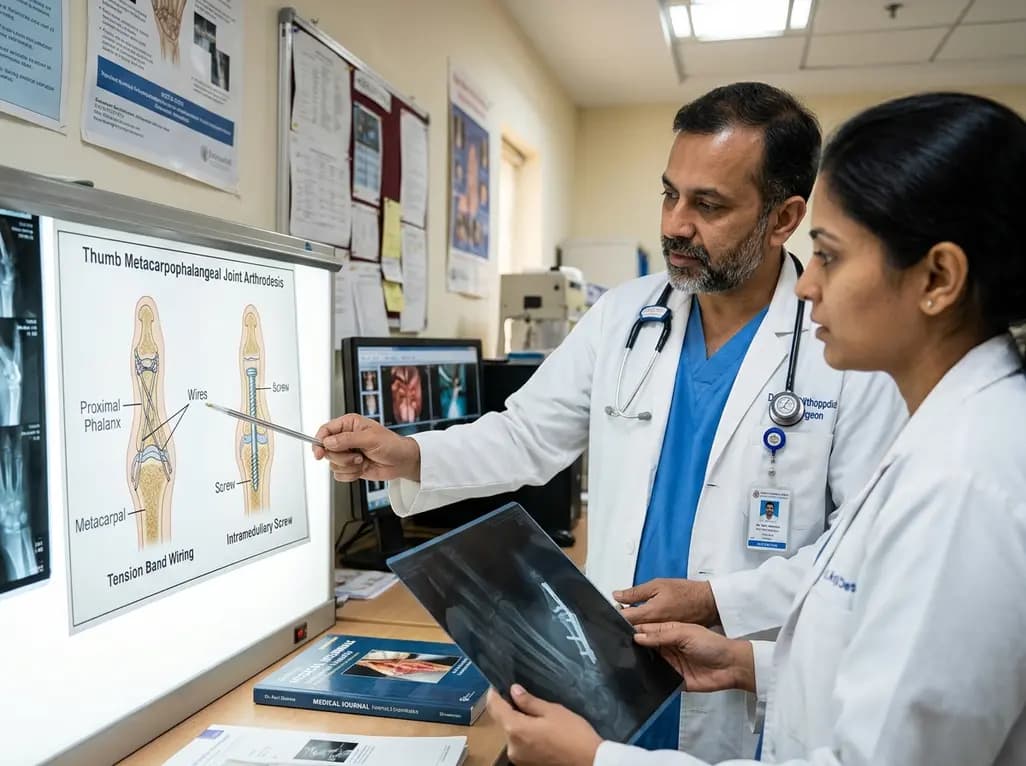
A comparative review of tension band wiring and intramedullary screw fixation in thumb metacarpophalangeal arthrodesis, evaluating union rates, hardware complications, and clinical outcomes.
Today

Following regulatory scrutiny from FSSAI regarding promotional representations and lean muscle preservation claims, Dr. Reddy's Laboratories and Nestlé Health Science are currently reviewing the branding and marketing strategy for their joint nutritional supplement Celevida GLP+.
Today
