.webp&w=384&q=75)

Loading, please wait...
Loading, please wait...

Clinical neurophysiology continues to seek objective biomarkers that explain underlying circuit dysfunction in psychiatric illnesses. Historically, clinicians and researchers analyzed electroencephalography through canonical oscillatory frequency bands like theta, alpha, and gamma. However, recent computational advances separate oscillatory peaks from underlying broadband background noise. This background signal, termed EEG aperiodic activity, represents fundamental physiological mechanisms that govern neural populations. Specifically, the aperiodic slope and offset reflect cortical excitation-inhibition balance and overall neuronal population firing rates. Consequently, understanding how these non-oscillatory signals fluctuate provides critical insight into neurobiological phenotypes across psychiatric disorders. A landmark systematic review synthesized data across schizophrenia spectrum disorders, major depressive disorder, treatment-resistant depression, and bipolar disorder. Rather than revealing static, disorder-specific pathologies, the review highlights that aperiodic parameters function primarily as context-sensitive measures of dynamic brain states.
Traditional electroencephalography decomposes electrical signals into distinct rhythmic oscillations. Nevertheless, the non-oscillatory baseline constitutes a vast proportion of the power spectrum. Computational methods now parameterize these spectra into periodic peaks and an aperiodic component defined by slope and offset. Biologically, the spectral slope, or exponent, reflects the decay rate of power across ascending frequencies. Computational models demonstrate that this exponent directly indexes the balance between cortical excitation and synaptic inhibition. For example, higher inhibitory gamma-aminobutyric acid neurotransmission typically steepens the aperiodic slope. Conversely, enhanced glutamatergic excitatory transmission flattens the spectral curve. Meanwhile, the broadband offset indicates the total baseline power, correlating with aggregate neuronal population spiking. Therefore, parameterizing these non-oscillatory signals allows clinicians to isolate distinct neurochemical dynamics that traditional frequency bands obscure. Furthermore, this physiological framework enables researchers to track microcircuit integrity non-invasively in clinical populations. Because excitation-inhibition imbalances characterize multiple psychiatric conditions, investigating aperiodic features provides an objective window into cortical pathophysiology. Clinicians can thus monitor shifts in synaptic tone without requiring invasive intracranial monitoring.
Schizophrenia-spectrum disorders present significant biological heterogeneity, which clearly manifests in electrophysiological assessments. The systematic review evaluated thirty peer-reviewed studies across 2,298 participants, identifying diverse aperiodic patterns in psychotic illness. Several investigations reported steeper spectral slopes and increased offsets in patients with schizophrenia compared to healthy controls. These alterations suggest heightened, aberrant cortical inhibition or compensatory inhibitory responses in chronic stages. In addition, affected individuals frequently displayed reduced temporal flexibility across cognitive tasks. However, resting-state parameters alone produced conflicting conclusions across distinct patient cohorts. Interestingly, task-related recordings and dynamic stimulus processing revealed substantially stronger clinical relevance than static resting states. For instance, cognitive activation provoked abnormal slope shifts in patients who struggled with working memory demands. Furthermore, these dynamic parameters tracked closely with cognitive disorganization and negative symptom severity. In contrast, medication-naive individuals at first episode psychosis exhibited reduced offsets across select temporal and parietal channels. Thus, disease chronicity, antipsychotic exposure, and cognitive demands heavily influence aperiodic metrics. These divergent findings reinforce the principle that schizophrenia-spectrum pathophysiology demands context-specific evaluation rather than uniform diagnostic categorization.
In contrast to psychotic disorders, research in unipolar depression demonstrated more coherent neurophysiological patterns. Studies investigating major depressive disorder and treatment-resistant depression consistently identified flatter aperiodic slopes and decreased offsets. Notably, investigators observed these abnormalities prominently over central and posterior cortical regions. Physiological models suggest that a flatter slope corresponds to a shift toward relative cortical hyperexcitation or deficient inhibitory tone. Additionally, evidence from both sleep polysomnography and intracranial recordings corroborated these non-oscillatory reductions. During non-rapid eye movement sleep, depressed patients failed to show normal slope steepening, reflecting disrupted homeostatic synaptic plasticity. Furthermore, the magnitude of slope flattening often correlated with depressive episode severity and somatic distress. Therefore, this flattening may capture an inflexible cortical state characterized by tonic synaptic strain. Importantly, aperiodic measures also differentiated unipolar depression from other affective pathologies. Clinicians frequently encounter diagnostic dilemmas between unipolar and bipolar presentations, making reliable markers essential. While current clinical practice relies heavily on clinical history, tracking posterior aperiodic decay offers a viable objective surrogate for cortical network dysfunction.
Perhaps the most clinically compelling finding involves how therapeutic interventions modulate aperiodic neural signals. Longitudinal studies demonstrated that aperiodic parameters respond dynamically to both pharmacological agents and neurostimulation protocols. For instance, electroconvulsive therapy rapidly alters the spectral slope, often steepening the decay in responders. Similarly, novel rapidly acting antidepressants like ketamine induce immediate, measurable shifts in aperiodic exponent and offset. However, the precise direction of change varied across distinct therapeutic classes. Selective serotonin reuptake inhibitors produced subtle, progressive normalizations, whereas repetitive transcranial magnetic stimulation prompted focal changes under the stimulating coil. Consequently, aperiodic activity serves as an acute indicator of target engagement rather than a static disease fingerprint. Clinicians could potentially utilize serial EEG sessions to assess whether a treatment successfully restores excitation-inhibition equilibrium. Moreover, early changes in aperiodic slope during treatment frequently predicted downstream symptom remission before clinical scales reflected improvement. Therefore, dynamic neurophysiological monitoring offers immense potential to personalize therapeutic algorithms, particularly in refractory psychiatric conditions.
Despite promising discoveries, significant methodological hurdles currently preclude the routine clinical adoption of these biomarkers. First, evidence regarding bipolar disorder remains strikingly scarce, preventing meaningful meta-analytic synthesis across affective poles. Second, recording techniques vary widely among academic centers, incorporating disparate recording lengths, electrode densities, and analytical algorithms. For example, different fitting algorithms can yield discordant exponent estimates from identical raw datasets. In addition, concurrent psychotropic medications, including benzodiazepines and mood stabilizers, markedly alter baseline cortical activity. Researchers must therefore establish standardized recording protocols and control rigorously for pharmacological confounders. Direct physiological validation through paired neurochemical spectroscopy also remains essential to verify excitatory and inhibitory mechanisms conclusively. Until researchers achieve methodological harmonization, clinicians should interpret aperiodic parameters with caution. Nevertheless, this transdiagnostic perspective advances our conceptualization of psychiatric disease beyond rigid categorical frameworks. By tracking flexible neural dynamics rather than rigid disease labels, neurophysiology moves closer to precision psychiatric medicine.
Biologically, aperiodic activity represents the scale-free background electrical power of the brain across multiple frequencies. The aperiodic slope reflects the relative balance between cortical excitation and synaptic inhibition, where steeper slopes signify enhanced inhibitory tone. Concurrently, the broadband offset corresponds to the overall firing rate of local neuronal populations. Therefore, analyzing these parameters allows neuroscientists and clinicians to observe foundational synaptic physiology without the confounding effects of overlapping rhythmic brain oscillations.
Major depressive disorder typically associates with flatter aperiodic slopes and decreased broadband offsets, particularly across central and posterior electrodes, signaling reduced cortical inhibition. Conversely, schizophrenia-spectrum disorders display substantial heterogeneity, frequently presenting steeper slopes, elevated offsets, or reduced dynamic flexibility during cognitive processing. Consequently, while depressive illnesses exhibit relatively consistent hyperexcitation patterns, psychotic conditions reflect complex network disorganization that varies markedly with chronicity, medication exposure, and specific cognitive task demands.
Clinicians cannot currently deploy aperiodic activity as an isolated, definitive diagnostic test in everyday psychiatric practice. Although these metrics sensitively reflect cortical state changes and treatment responses, substantial methodological heterogeneity and pharmacological confounds limit their diagnostic specificity. Instead, aperiodic parameters function best as dynamic biomarkers that track within-subject neurophysiological changes across time. Future implementation will require harmonized analytical pipelines, normative reference databases, and direct biochemical validation alongside standard clinical evaluation protocols.
Disclaimer: This content is for informational and educational purposes only. It is not intended as medical advice, diagnosis, or treatment. Always consult a qualified healthcare professional regarding any medical condition or clinical decision. Refer to the latest local and national guidelines for clinical practice.
References

Read summarized clinical updates, watch expert medical content, and earn CME certifications right from your smartphone.
Open your smartphone camera to scan and install.





A systematic review indicates that EEG aperiodic activity serves as a context-sensitive, dynamic marker of cortical excitation-inhibition balance and treatment response across schizophrenia, bipolar disorder, and depression, shifting the paradigm beyond rigid categorical diagnostic labels.
Today

Left bundle branch pacing is an emerging physiological resynchronization strategy for heart failure. While observational data and some trials show benefits over biventricular pacing, divergent trial outcomes highlight the importance of confirmed conduction capture and specialized operator technique.
Today

Postoperative adhesions cause severe complications, including bowel obstruction and infertility. This review highlights functional biomaterials, evaluating polysaccharide films and hydrogels while addressing retention, tissue conformability, and translational hurdles in clinical surgery.
Today
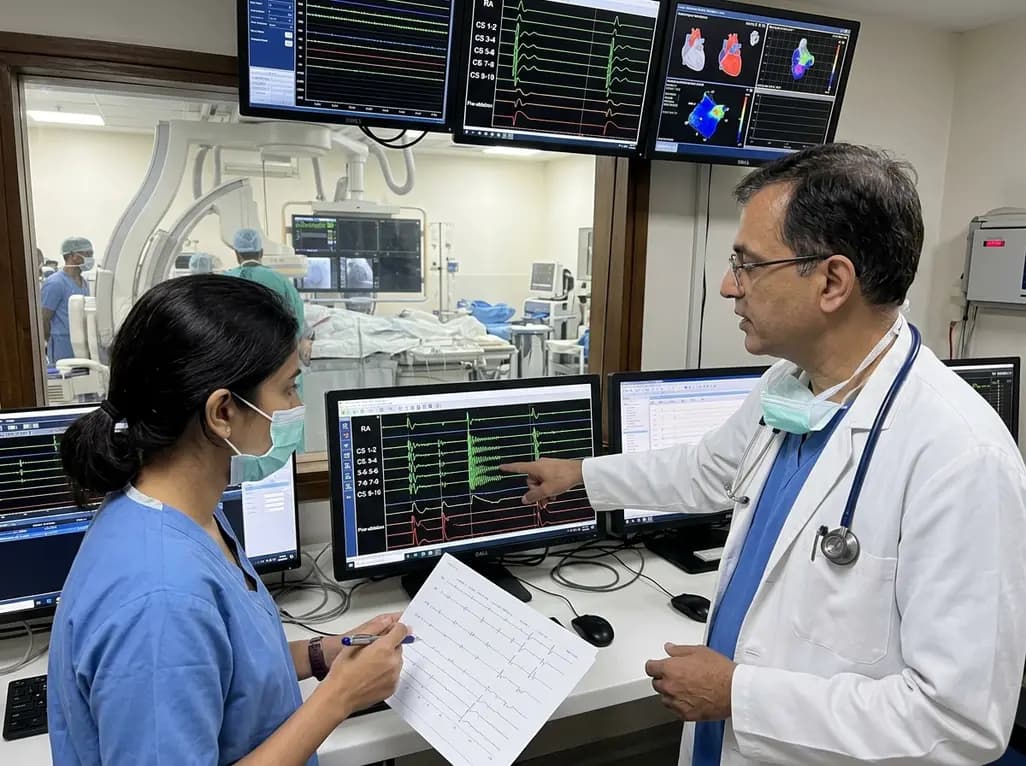
Radiofrequency catheter ablation of the cavotricuspid isthmus successfully terminates typical atrial flutter. This article reviews the mechanisms driving coronary sinus electrogram changes, wavefront activation pathways, and clinical criteria to verify bidirectional block during electrophysiology studies.
Today

New biomechanical research reveals that foot-strike angle significantly influences knee energy absorption during cutting tasks in female soccer players. Understanding these kinematic patterns offers clinicians valuable pathways for targeted ACL injury prevention and athletic retraining.
Today

A cross-sectional study demonstrates that increased BMI in adolescents significantly enhances mandibular length and alters salivary adipokines like adiponectin and resistin, providing novel insights into craniofacial growth and orthodontic planning.
Today
