.webp&w=384&q=75)

Loading, please wait...
Loading, please wait...
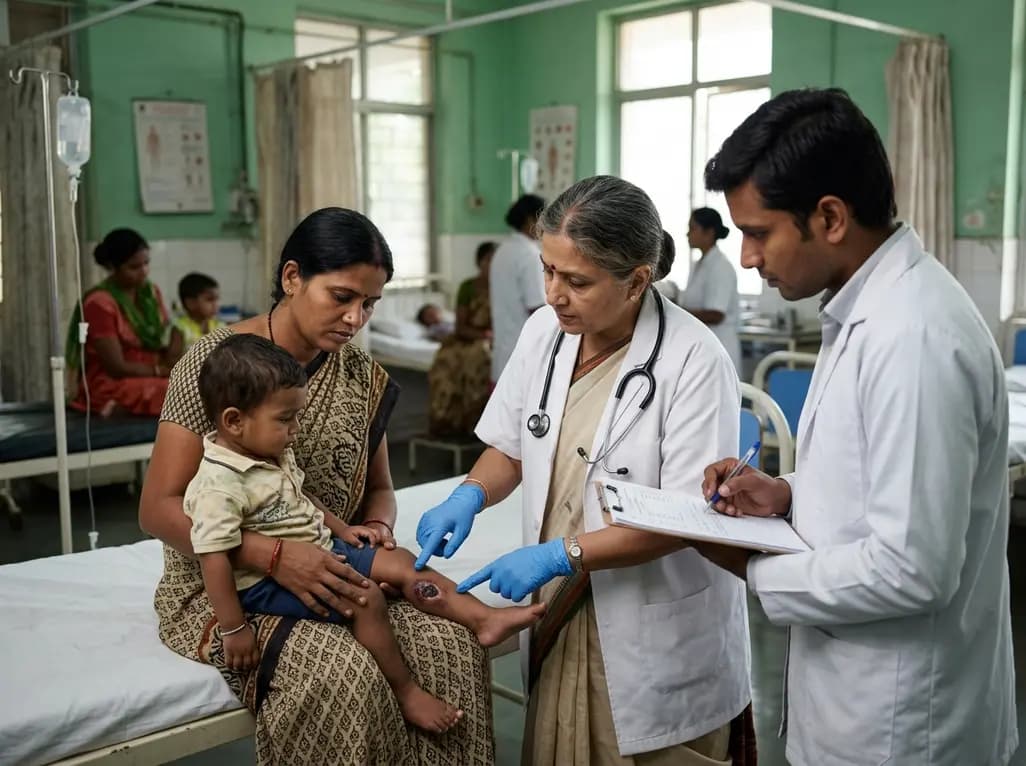
Ecthyma gangrenosum (EG) represents a rare yet life-threatening dermatological emergency that clinicians must recognize immediately. This condition typically manifests as a systemic infection, most frequently associated with the opportunistic pathogen Pseudomonas aeruginosa. While it can occur in healthy individuals, it predominantly affects those with compromised immune systems. Specifically, ecthyma gangrenosum in children often serves as a critical warning sign of underlying neutropenia or primary immunodeficiency. In a recent case report, a 19-month-old boy presented with high-grade fever and rapidly progressing skin lesions, highlighting the aggressive nature of this disease. Early identification of these lesions is paramount because they frequently precede the full clinical onset of septic shock. Consequently, pediatricians and dermatologists must maintain a high index of clinical suspicion when encountering necrotic ulcers in febrile patients. By understanding the typical progression from simple erythematous macules to central necrotic eschars, medical professionals can initiate life-saving interventions more rapidly. Furthermore, this case underscores how modern diagnostic tools are revealing deeper genetic predispositions that make certain children more vulnerable to such severe infectious complications.
The development of ecthyma gangrenosum is intricately linked to the invasive capabilities of Pseudomonas aeruginosa. This gram-negative bacterium utilizes a variety of virulence factors to bypass host defenses, especially in the setting of severe neutropenia. During the course of the infection, the bacteria invade the perivascular spaces of small arteries and veins. This invasion leads to a localized bacterial vasculitis, which eventually causes tissue ischemia and subsequent necrosis. The characteristic appearance of the skin lesions reflects this underlying vascular destruction. In addition to direct invasion, the pathogen releases toxins like elastase and exotoxin A, which further degrade local tissues. Therefore, the presence of these lesions is often an external marker of a much more extensive internal process. Although other pathogens can mimic these skin findings, Pseudomonas remains the most common culprit in pediatric cases. Clinicians must realize that the infection can spread hematogenously, leading to multi-organ involvement. As a result, the management strategy must focus on both controlling the local skin infection and treating the systemic bacteremia. Timely administration of effective anti-pseudomonal antibiotics remains the cornerstone of reducing morbidity and mortality in these vulnerable patients.
In the case of the 19-month-old patient, the clinical presentation was severe and multifaceted. The child exhibited systemic symptoms such as diarrhea, vomiting, and high-grade fever for five days prior to admission. Upon examination, he showed signs of acute distress, including tachycardia, hypotension, and delayed capillary refill, indicating the onset of septic shock. The skin lesions were multiple and erythematous, eventually evolving into the classic necrotic ulcers seen in ecthyma gangrenosum. Laboratory findings were equally concerning, revealing pancytopenia with a profound reduction in neutrophil counts. Furthermore, elevated inflammatory markers like C-reactive protein confirmed the intensity of the systemic inflammatory response. To establish a definitive diagnosis, clinicians must rely on both blood and skin cultures. In this instance, cultures identified pan-susceptible Pseudomonas aeruginosa, allowing for more targeted therapy. Additionally, the diagnostic workup often includes imaging and extensive hematological investigations to identify any underlying causes for the patient's neutropenia. This comprehensive approach ensures that the medical team addresses not only the immediate infection but also the systemic vulnerabilities that allowed the infection to take hold in the first place.
One of the most significant aspects of this recent case report is the identification of a novel genetic variant through whole-exome sequencing. The patient was found to have a variant in the HELLS gene, specifically identified as c.1904G>A; p.Cys635Tyr. The HELLS gene, which stands for Helicase, Lymphoid-Specific, is vital for proper DNA methylation and chromatin remodeling. Mutations in this gene have been previously linked to certain immunodeficiency syndromes. Although this specific variant was classified as a variant of uncertain significance, its presence in a child with severe neutropenia suggests a potential link between host genetics and susceptibility to ecthyma gangrenosum in children. As genomic medicine becomes more integrated into clinical practice, identifying such variants may help explain why some children experience unusually severe or recurrent infections. Moreover, understanding the genetic landscape allows for better family counseling and may eventually lead to more personalized therapeutic approaches. Consequently, this case serves as an important reminder that when faced with rare or extreme clinical presentations, clinicians should consider genetic testing as a tool to uncover underlying primary immunodeficiencies or other predisposing conditions that are not immediately apparent through standard laboratory tests.
Successfully managing severe ecthyma gangrenosum requires a coordinated effort across multiple medical specialties. Initial treatment usually involves the empirical administration of broad-spectrum antibiotics. In this case, the patient was started on meropenem and vancomycin to ensure wide coverage against potential pathogens. Once the sensitivity of the Pseudomonas isolate was confirmed, the treatment was narrowed to cefepime. This transition is essential for preventing the development of antibiotic resistance while maintaining efficacy. In addition to antimicrobial therapy, intensive supportive care is critical for stabilizing the patient. The 19-month-old boy required multiple blood transfusions and fresh frozen plasma to manage his pancytopenia and associated coagulopathy. These interventions are often necessary to sustain the patient through the most acute phase of the illness. Furthermore, hemodynamic monitoring and fluid resuscitation are vital in cases where septic shock is present. Dermatological care, including wound management and potential surgical consultation for debridement, also plays a key role. The collaboration between pediatricians, infectious disease specialists, and hematologists ensured a holistic approach to the patient's care. Ultimately, this multidisciplinary strategy is the most effective way to navigate the complexities of severe pediatric infections.
The case of the 19-month-old highlights several critical lessons for the broader medical community. First, the rapid progression of skin lesions in a febrile child must always be treated with extreme urgency. Second, the occurrence of ecthyma gangrenosum in children should prompt a thorough search for both systemic infection and an underlying immune defect. Third, the integration of advanced diagnostics like genetic sequencing can provide valuable insights into the pathophysiology of rare diseases. Although the patient in this report survived, the severity of his condition emphasizes the need for ongoing research into better diagnostic markers and treatment protocols. Specifically, further studies are needed to determine the clinical impact of novel variants like the one found in the HELLS gene. As our understanding of the genetic basis of immunity evolves, we may be able to identify high-risk patients earlier and implement preventive strategies. For now, the combination of clinical vigilance, early antibiotic intervention, and comprehensive supportive care remains our best defense. Sharing these rare cases in medical literature ensures that clinicians worldwide can learn from these experiences and improve outcomes for future pediatric patients facing similar life-threatening challenges.
The initial signs of ecthyma gangrenosum in children typically include high-grade fever and the appearance of small, red, painless macules or patches on the skin. These lesions can quickly evolve into blisters or pustules that soon rupture to form deep, necrotic ulcers with a black central crust. Because the disease progresses rapidly, any new skin lesion in a febrile or immunocompromised child should be evaluated immediately by a medical professional.
While ecthyma gangrenosum is most commonly seen in immunocompromised children, especially those with severe neutropenia, it can occasionally occur in previously healthy individuals. In these rare cases, the infection might follow a localized injury or occur as a complication of a transiently weakened immune system due to a viral illness. However, the presence of these lesions should always trigger a thorough investigation of the patient's immune status to rule out underlying conditions.
The HELLS gene is responsible for DNA processes that are essential for the normal development of white blood cells. A variant or mutation in this gene can impair the immune system's ability to produce or deploy neutrophils, which are the body's primary defense against bacteria like Pseudomonas. Consequently, a child with a HELLS variant might be more susceptible to severe, invasive infections like ecthyma gangrenosum because their body cannot effectively clear the invading pathogens from the bloodstream.
Disclaimer: This content is for informational and educational purposes only. It is not a substitute for professional medical advice, diagnosis, or treatment. Always seek the advice of your physician or other qualified health provider with any questions you may have regarding a medical condition. Refer to the latest local and national guidelines for clinical practice.
References
Almatrafi MA et al. Severe Ecthyma Gangrenosum in a Pediatric Patient With Neutropenia and a Novel HELLS Variant: Case Report. Clin Case Rep. 2026 Jul undefined. doi: 10.1002/ccr3.73143. PMID: 42437106.
Vaiman M, et al. Ecthyma gangrenosum and ecthyma-like lesions: review article. Eur J Clin Microbiol Infect Dis. 2015.
Gezginç Y, et al. Pseudomonas aeruginosa-associated ecthyma gangrenosum in a child with neutropenia. J Pediatr Inf. 2021.

Read summarized clinical updates, watch expert medical content, and earn CME certifications right from your smartphone.
Open your smartphone camera to scan and install.





This case report explores a 19-month-old with severe ecthyma gangrenosum, neutropenia, and a novel HELLS variant. It highlights the importance of early diagnosis, aggressive treatment, and the role of genetic testing in managing complex pediatric infectious diseases.
3 months ago

As monsoon seasons elevate arboviral disease threats, Tamil Nadu has initiated an ICMR-monitored evaluation of the tetravalent dengue vaccine in Tenkasi district. Clinicians emphasize clinical monitoring, public prevention, and high-quality early pediatric care to reduce disease morbidity across endemic regions.
Today

A comparative cohort study evaluates vNOTES vs TLH hysterectomy for benign conditions, demonstrating shorter operative duration, faster return to daily activities, and equivalent female sexual function scores without increased dyspareunia.
Today

Review how tailored exercise programs benefit frail older patients with heart failure. Explore pathophysiological mechanisms, individualized training prescriptions, and strategies to overcome adherence barriers in clinical practice.
Yesterday

This comparative study evaluates posterior labral tears with and without glenohumeral instability, highlighting distinct demographic patterns, MRI underestimation in stable shoulders, and successful arthroscopic repair outcomes.
Yesterday

A clinical study demonstrates that early intervention with tocilizumab, either as monotherapy or bridged with corticosteroids, achieves significant proptosis reduction and resolves active inflammation in treatment-naive thyroid eye disease.
Today
