.webp&w=384&q=75)

Loading, please wait...
Loading, please wait...

The United States recently expanded its emergency public health measures. Consequently, authorities extended the Ebola travel ban to lawful permanent residents.
Specifically, the temporary policy restricts entry for travelers visiting three African nations in the previous 21 days. These restricted areas include Uganda, South Sudan, and the Democratic Republic of Congo.
The World Health Organization (WHO) recently elevated the risk of the rare Bundibugyo Ebola strain in the region to 'very high'. Therefore, international health agencies declared the outbreak a public health emergency of international concern.
In response, the Centers for Disease Control and Prevention (CDC) utilized its authority under Title 42. This legal authority permits the federal government to bar entry to prevent contagious diseases from spreading.
Historically, travel restrictions shielded Green Card holders from reentry bans. However, officials now cite massive resource constraints in containing quarantinable diseases on domestic soil.
For example, quarantine facilities require highly specialized and isolated environments with limited capacity. Thus, temporary restrictions balance public health safety with available emergency response resources. Meanwhile, US citizens returning from these countries must undergo enhanced health screening at designated airports.
Currently, medical experts confirm that the immediate risk of Ebola to the general public remains extremely low. Nevertheless, clinicians should maintain high vigilance when examining patients with recent international travel history.
Common symptoms of Ebola include high fever, severe headache, muscle pain, and unexplained hemorrhaging. Additionally, if a patient exhibits symptoms after visiting affected regions, immediately isolate them and contact public health departments.
Q1: Why did the US extend the Ebola travel ban to Green Card holders?
The CDC extended the restriction due to resource constraints in managing quarantined individuals on US soil. The severe threat of the Bundibugyo strain in Central Africa necessitated stronger border measures to protect public health.
Q2: Which countries are included in the new travel restrictions?
The restricted countries include the Democratic Republic of Congo (DRC), Uganda, and South Sudan. Travelers who visited these nations in the prior 21 days face temporary entry blocks.
Q3: Does the new travel restriction apply to US citizens?
No, the restriction does not ban US citizens or nationals. However, returning US citizens must undergo enhanced health screenings at designated entry ports like Washington Dulles and Atlanta airports.
Disclaimer: This content is for informational and educational purposes only. It does not constitute medical advice or replace professional judgment. Refer to the latest local and national guidelines for clinical practice.
References

Read summarized clinical updates, watch expert medical content, and earn CME certifications right from your smartphone.
Open your smartphone camera to scan and install.





The US expanded its Ebola travel ban to Green Card holders from the DRC, Uganda, and South Sudan due to a high-risk Bundibugyo strain outbreak....
4 months ago
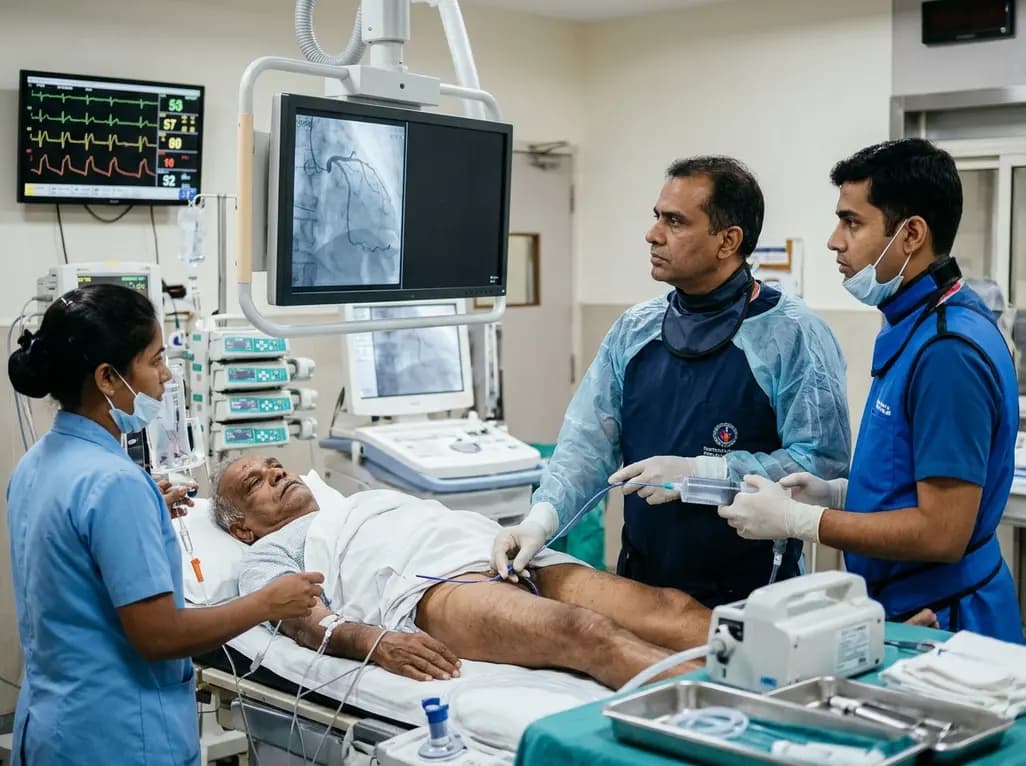
An elderly man with partially repaired Tetralogy of Fallot presented with STEMI caused by coronary embolism rather than atherosclerosis. Successful treatment with sustained mechanical aspiration thrombectomy underscores the vital need for high clinical vigilance in adult congenital heart disease.
Today

Demanding exhaustive hormonal profiling can inadvertently discourage clinical studies involving females. Methodological standards must align with the specific scientific question to expand, not restrict, equitable evidence for women.
Today

A recent study demonstrates that spinal oxygen sensors do not require mitochondrial electron transport to trigger sympathetic excitation during acute hypoxia, revealing new insights into how mitochondrial oxidative stress modulates autonomic tone in cardiovascular and neurological diseases.
Today

A comparative review of tension band wiring and intramedullary screw fixation in thumb metacarpophalangeal arthrodesis, evaluating union rates, hardware complications, and clinical outcomes.
Today

Following regulatory scrutiny from FSSAI regarding promotional representations and lean muscle preservation claims, Dr. Reddy's Laboratories and Nestlé Health Science are currently reviewing the branding and marketing strategy for their joint nutritional supplement Celevida GLP+.
Today
