.webp&w=384&q=75)

Loading, please wait...
Loading, please wait...
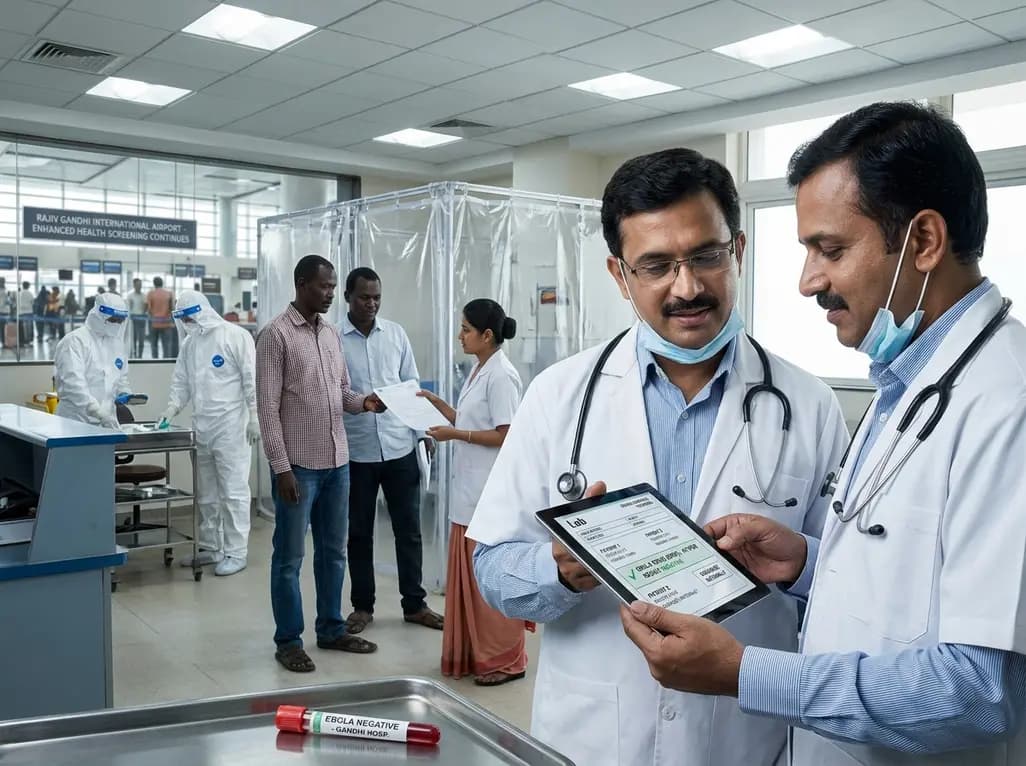
Recently, public health officials in Telangana breathed a sigh of relief as a second Sudanese national admitted to Gandhi Hospital tested negative for Ebola. Consequently, authorities have confirmed that there are no active Ebola cases in Hyderabad. This development highlights the robustness of ongoing Ebola screening measures at international travel entry points. Crucially, the student was isolated after developing a fever, but laboratory testing ruled out the lethal virus.
The state-run Gandhi Hospital had prepared a dedicated ten-bed isolation ward specifically for suspected cases. Before this, another Sudanese traveller undergoing knee surgery also tested negative. Airport health officials are strictly implementing health protocols. Specifically, international passengers arriving from high-risk regions must undergo thermal screening. These protocols apply particularly to individuals coming from Uganda and the Democratic Republic of the Congo. Therefore, travellers from these areas must complete a self-declaration form prior to deboarding.
Ebola remains a highly severe and frequently fatal disease in humans. According to the World Health Organization, the virus spreads to humans from wild animals like fruit bats. Subsequently, it spreads between people through direct contact with infected bodily fluids. For this reason, early detection and strict quarantine are essential to prevent outbreaks. Fortunately, both isolated patients in Hyderabad have recovered well and are asymptomatic. As a result, medical officers plan to discharge them soon under surveillance guidelines.
Q1: Why were the Sudanese nationals isolated in Hyderabad?
The travellers were isolated at Gandhi Hospital as a precautionary measure after presenting with fever during thermal screening or surveillance, combined with their recent travel history from high-risk areas.
Q2: What Ebola screening measures are active at the Hyderabad airport?
The airport has implemented enhanced public health protocols, including thermal screening for international arrivals, monitoring, and self-declaration forms for high-risk transits.
Disclaimer: This content is for informational and educational purposes only. It does not constitute medical advice or replace professional judgment. Refer to the latest local and national guidelines for clinical practice.
References

Read summarized clinical updates, watch expert medical content, and earn CME certifications right from your smartphone.
Open your smartphone camera to scan and install.





Two Sudanese travellers tested negative for Ebola at Hyderabad's Gandhi Hospital. Enhanced screening continues at Rajiv Gandhi International Airport....
4 months ago

As monsoon seasons elevate arboviral disease threats, Tamil Nadu has initiated an ICMR-monitored evaluation of the tetravalent dengue vaccine in Tenkasi district. Clinicians emphasize clinical monitoring, public prevention, and high-quality early pediatric care to reduce disease morbidity across endemic regions.
Today

Leucine Rich Bio has introduced South Asia's first comprehensive vaginal microbiome test, BugSpeaks. By profiling microbial dysbiosis, pathogens, and antimicrobial resistance, this next-generation diagnostic platform provides clinicians with deeper insights into recurrent infections, fertility, and reproductive health.
Today

Review how tailored exercise programs benefit frail older patients with heart failure. Explore pathophysiological mechanisms, individualized training prescriptions, and strategies to overcome adherence barriers in clinical practice.
Today

This comparative study evaluates posterior labral tears with and without glenohumeral instability, highlighting distinct demographic patterns, MRI underestimation in stable shoulders, and successful arthroscopic repair outcomes.
Today

A clinical study demonstrates that early intervention with tocilizumab, either as monotherapy or bridged with corticosteroids, achieves significant proptosis reduction and resolves active inflammation in treatment-naive thyroid eye disease.
Today
