.webp&w=384&q=75)

Loading, please wait...
Loading, please wait...
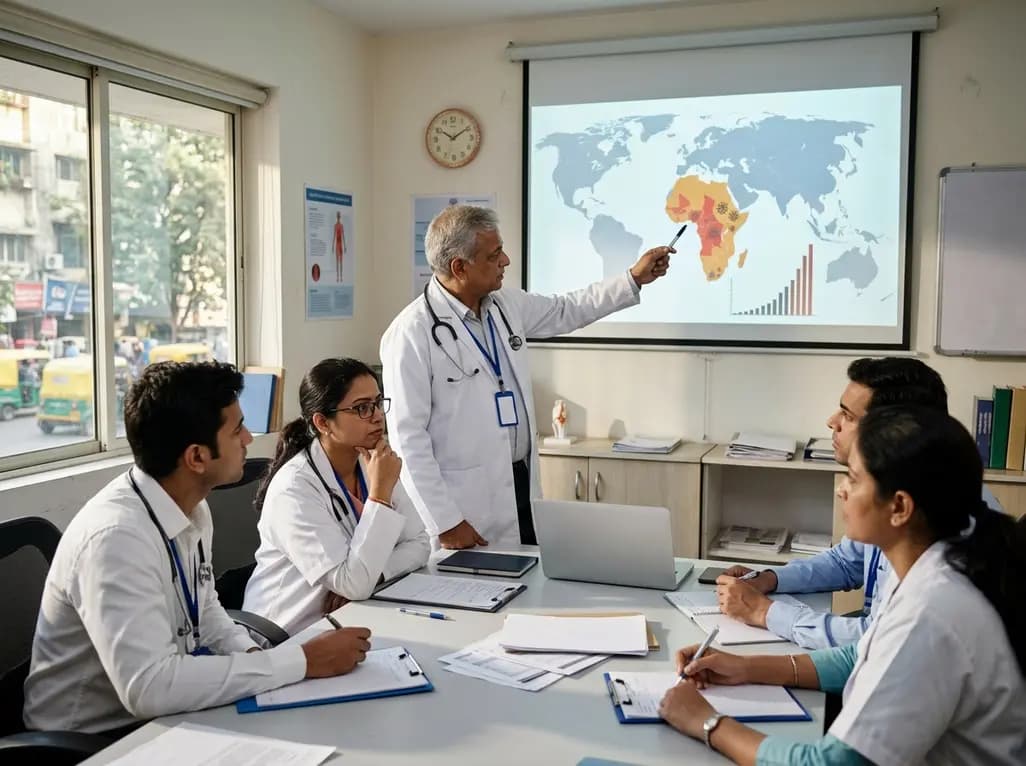
The current Ebola outbreak in Central Africa is raising serious concerns among international health authorities. Recently, the United States Centers for Disease Control and Prevention (CDC) released modeling data suggesting that the crisis could escalate dramatically. Specifically, the agency warns that infections could surpass 20,000 cases if public health interventions fail. Consequently, epidemiologists are calling for urgent containment measures.
The CDC generated several computer-simulated scenarios to predict the trajectory of the disease. In a worst-case scenario, the epidemic could mimic the devastating 2014-2016 West African outbreak. That historical crisis resulted in over 28,000 cases and 11,000 deaths. However, the actual outcome depends heavily on isolation rates. For instance, if responders isolate only 20% of infected individuals, the models project at least 20,000 cases. Alternatively, raising isolation rates to 50% or 70% could halve that estimate to around 10,000 cases. Furthermore, experts emphasize that limited field data makes precise long-term modeling extremely difficult.
The causative agent of this outbreak is the Bundibugyo virus, which presents unique clinical challenges. Unlike the more common Zaire strain, this virus does not have an approved vaccine or targeted treatment. Consequently, supportive care remains the primary clinical approach. Healthcare workers face significant transmission risks because the pathogen spreads through contact with infected bodily fluids. Moreover, ongoing armed conflicts in the Democratic Republic of the Congo hinder the humanitarian response. Armed violence has displaced thousands of families, which worsens disease spread. Thus, security issues are actively blocking essential contact tracing and diagnostic testing.
Despite the severity of the situation in Africa, the immediate risk to other regions remains low. For example, the United States has already implemented travel restrictions on individuals who recently visited high-risk areas. Additionally, travelers undergo targeted health screenings at designated receiving airports. Meanwhile, the World Health Organization has declared the outbreak a global health emergency. This declaration will help mobilize international funding and technical resources. Ultimately, global solidarity and robust public health measures are crucial to halting this deadly epidemic.
Q1: What is the primary cause of the current Ebola outbreak?
The current outbreak is caused by the Bundibugyo virus, which is a rare species of Ebola virus first identified in 2007. It causes severe viral hemorrhagic fever and is highly transmissible through contact with infected bodily fluids.
Q2: Are there approved vaccines available for the Bundibugyo virus?
No, there are currently no licensed vaccines or specific therapeutic treatments specifically approved for the Bundibugyo virus. While approved vaccines exist for the Zaire strain, health officials are currently evaluating candidate vaccines for Bundibugyo in clinical trials.
Q3: Why is containment particularly difficult in the affected regions?
Containment is highly challenging due to ongoing armed conflict, significant population displacement, and community resistance in conflict zones. These factors severely disrupt essential public health response efforts, contact tracing, and diagnostic screening.
Disclaimer: This content is for informational and educational purposes only. It does not constitute medical advice or replace professional judgment. Refer to the latest local and national guidelines for clinical practice.
References

Read summarized clinical updates, watch expert medical content, and earn CME certifications right from your smartphone.
Open your smartphone camera to scan and install.





US health officials warn the Central African Ebola outbreak could reach 20,000 cases without isolation. The rare Bundibugyo virus currently has no approved ...
4 months ago

As monsoon seasons elevate arboviral disease threats, Tamil Nadu has initiated an ICMR-monitored evaluation of the tetravalent dengue vaccine in Tenkasi district. Clinicians emphasize clinical monitoring, public prevention, and high-quality early pediatric care to reduce disease morbidity across endemic regions.
Today

Leucine Rich Bio has introduced South Asia's first comprehensive vaginal microbiome test, BugSpeaks. By profiling microbial dysbiosis, pathogens, and antimicrobial resistance, this next-generation diagnostic platform provides clinicians with deeper insights into recurrent infections, fertility, and reproductive health.
Today

Review how tailored exercise programs benefit frail older patients with heart failure. Explore pathophysiological mechanisms, individualized training prescriptions, and strategies to overcome adherence barriers in clinical practice.
Today

This comparative study evaluates posterior labral tears with and without glenohumeral instability, highlighting distinct demographic patterns, MRI underestimation in stable shoulders, and successful arthroscopic repair outcomes.
Today

A clinical study demonstrates that early intervention with tocilizumab, either as monotherapy or bridged with corticosteroids, achieves significant proptosis reduction and resolves active inflammation in treatment-naive thyroid eye disease.
Today
