

Loading, please wait...
Loading, please wait...

Historically, clinicians excluded physical activity from psychiatric rehabilitation regimens due to severe somatic risks. However, contemporary research confirms that structured eating disorder exercise therapy provides substantial physical and psychological benefits when delivered under trained multidisciplinary supervision. Recent investigations demonstrate that carefully guided movement improves lean muscle mass, restores bone mineral density, and alleviates comorbid depressive symptoms. Consequently, psychiatric and sports medicine teams are actively re-evaluating traditional activity restrictions. Clinicians now seek standardized metrics to track patient rehabilitation safely.
For decades, treatment protocols for severe anorexia nervosa and bulimia nervosa strictly mandated complete bed rest. Healthcare providers enforced this approach because they feared unmonitored caloric expenditure, fatal cardiac arrhythmias, and excessive compulsive behaviors. Nevertheless, emerging clinical trials reveal that complete exercise prohibition frequently exacerbates distress and heightens post-discharge relapse rates. Patients often experience severe withdrawal anxiety when care teams abruptly eliminate physical movement without providing healthy behavioural substitutes. Furthermore, prolonged physical inactivity promotes rapid muscle deconditioning, osteoporosis, and poor metabolic health. Therefore, clinicians are actively shifting toward therapeutic physical rehabilitation models. Rather than enforcing absolute sedentary confinement, modern programs introduce structured and supervised functional movement. Consequently, multidisciplinary teams can rebuild physical strength while simultaneously addressing dysfunctional exercise cognitions. In addition, this integrated model teaches patients how to distinguish intuitive joyful movement from compulsive shape-driven exertion. Ultimately, this paradigm shift transforms physical activity into a powerful adjunct for holistic clinical recovery.
A landmark scoping review by McMahen and colleagues evaluated twenty-six intervention and cross-sectional studies across psychiatric care settings. The diagnostic cohorts comprised anorexia nervosa (27%), binge eating disorder (19%), bulimia nervosa (4%), and mixed diagnostic presentations (50%). Importantly, the authors examined how clinical teams monitor patient progress during prescribed physical activity. Their findings revealed that body composition evaluation occurred with the greatest frequency across all twenty-six reviewed investigations. Researchers regularly employed bioelectrical impedance analysis and dual-energy x-ray absorptiometry to monitor changes in fat-free mass and adiposity. In addition, twenty-one studies evaluated eating disorder psychopathology using validated diagnostic questionnaires. However, only eleven studies formally assessed objective exercise capacity or physical functional performance. Specifically, six studies performed cardiorespiratory fitness testing, and six studies conducted structured muscular strength testing. Crucially, none of the twenty-six included studies reported any adverse clinical events during the exercise interventions. Therefore, the empirical evidence demonstrates that structured functional testing remains safe for medically stable patients.
Historically, clinicians expressed deep concerns that maximal or submaximal exertion could trigger cardiovascular collapse or severe hypoglycemia. However, the scoping review demonstrates that strength assessment and cardiorespiratory testing provide vital physiological data without harming patients. For example, progressive resistance exercise restores skeletal muscle mass and improves basal metabolic stability in severely malnourished individuals. Moreover, strength testing via dynamometry allows clinicians to quantify peripheral muscle recovery objectively. Consequently, healthcare providers can verify neuromuscular functional gains rather than relying solely on scale weight. Similarly, cardiorespiratory fitness testing offers objective insight into autonomic cardiac control and overall aerobic endurance. When clinicians conduct cycle ergometer tests under medical monitoring, they reliably detect early hemodynamic abnormalities. In contrast, resting heart rate checks alone often mask profound orthostatic changes and myocardial deconditioning. Furthermore, supervised fitness evaluations empower patients by focusing their attention on tangible functional capability rather than aesthetic body metrics. Clinical teams must therefore integrate standardized functional testing into inpatient and outpatient management protocols.
Beyond physical capacity, therapeutic protocols must systematically evaluate psychological health and behavioral motivations around exercise. In the reviewed literature, twenty-one studies tracked core psychopathology using tools such as the Eating Disorder Examination Questionnaire. Furthermore, thirteen studies evaluated subjective physical activity levels using patient self-reports and activity logs. However, self-reported activity logs frequently underestimate true energy expenditure because patients minimize or conceal compulsive routines. In addition, patients with eating disorders often engage in exercise to regulate overwhelming emotions or purge ingested calories. Therefore, clinicians must utilize specialized psychological screening instruments, including the Compulsive Exercise Test and Exercise Dependence Scale. These validated questionnaires detect qualitative exercise pathology rather than simply recording daily step totals. Moreover, tracking qualitative shifts reveals whether a patient views movement as a punitive chore or a restorative self-care activity. Consequently, patients learn cognitive flexibility and healthier emotional regulation strategies. Combining psychological questionnaires with objective physiological testing ultimately ensures a balanced and robust recovery framework.
In India, eating disorders are increasingly identified across metropolitan centers and among young adolescents and competitive athletes. However, local psychiatric and medical services often face resource constraints, including limited access to specialized exercise physiologists. Therefore, general physicians, psychiatrists, and clinical dietitians must adopt collaborative multidisciplinary frameworks to manage these vulnerable patients. Before initiating any physical activity, the medical team must confirm clinical stability. Specifically, clinicians must rule out severe bradycardia below forty beats per minute, marked orthostatic hypotension, electrolyte imbalances, and severe emaciation. Furthermore, Indian clinicians should utilize structured guidance tools like the Safe Exercise at Every Stage framework. When patients achieve medical stability, therapists can introduce low-intensity resistance training, restorative yoga, and supervised postural exercises. In addition, clinical nutritionists must adjust daily caloric prescriptions to offset the energy demands of physical therapy sessions. Consequently, structured movement prevents refeeding-induced muscle weakness and improves quality of life. By implementing clear physiological safeguards, Indian clinicians can deliver safe and highly effective rehabilitation across outpatient and inpatient settings.
Yes, exercise therapy is safe when clinicians conduct it under strict medical supervision and clear physiological guidelines. Emerging research confirms that supervised strength and functional training causes no adverse cardiac or metabolic events in medically stable individuals. Furthermore, structured exercise rebuilds essential skeletal muscle mass, improves bone mineral density, and alleviates comorbid depressive symptoms. However, healthcare teams must immediately defer physical activity if severe bradycardia, electrolyte imbalances, or acute medical instability occurs.
Clinical protocols should combine objective physiological markers with comprehensive psychological assessments. Teams must evaluate body composition using bioelectrical impedance or dual-energy x-ray absorptiometry to monitor lean muscle restoration. Additionally, clinicians should perform baseline strength testing and submaximal cardiorespiratory fitness tests to evaluate functional capacity objectively. Simultaneously, practitioners must administer validated psychopathology scales, such as the Compulsive Exercise Test, to identify and address distorted attitudes toward body shape, weight control, and rigid physical activity routines.
Indian clinicians should address compulsive exercise behaviors using multidisciplinary stepped-care frameworks like the Safe Exercise at Every Stage protocol. Rather than ordering absolute exercise bans, therapists should guide patients toward mindful, low-intensity functional movement under direct supervision. Concurrently, psychiatrists and clinical psychologists must target underlying perfectionism, anxiety, and compensatory rituals through cognitive behavioral therapy. Finally, clinical dietitians must ensure sufficient nutritional support to maintain positive energy balance and prevent physiological exhaustion.
Disclaimer: This content is for informational and educational purposes only and does not constitute medical advice, diagnosis, or treatment. It is intended to support, not replace, the relationship between patients and their healthcare providers. Refer to the latest local and national guidelines for clinical practice.
References

Read summarized clinical updates, watch expert medical content, and earn CME certifications right from your smartphone.
Open your smartphone camera to scan and install.





A recent scoping review reveals that structured exercise therapy and fitness assessments are safe and clinically beneficial in eating disorder treatment when supported by multidisciplinary monitoring.
Today
A cross-sectional study evaluates physician knowledge and counseling practices regarding e-cigarettes. Discover how these clinical insights align with India's prohibition framework under PECA 2019 and evidence-based tobacco cessation strategies.
Today

A KGMU study reveals over half of women with breast abnormalities fail to undergo diagnostic confirmation, leading to advanced-stage detection. Discover the socio-cultural barriers, clinical risks of incomplete resection, and community-level solutions needed to bridge the critical screening-to-diagnosis gap in India.
Today
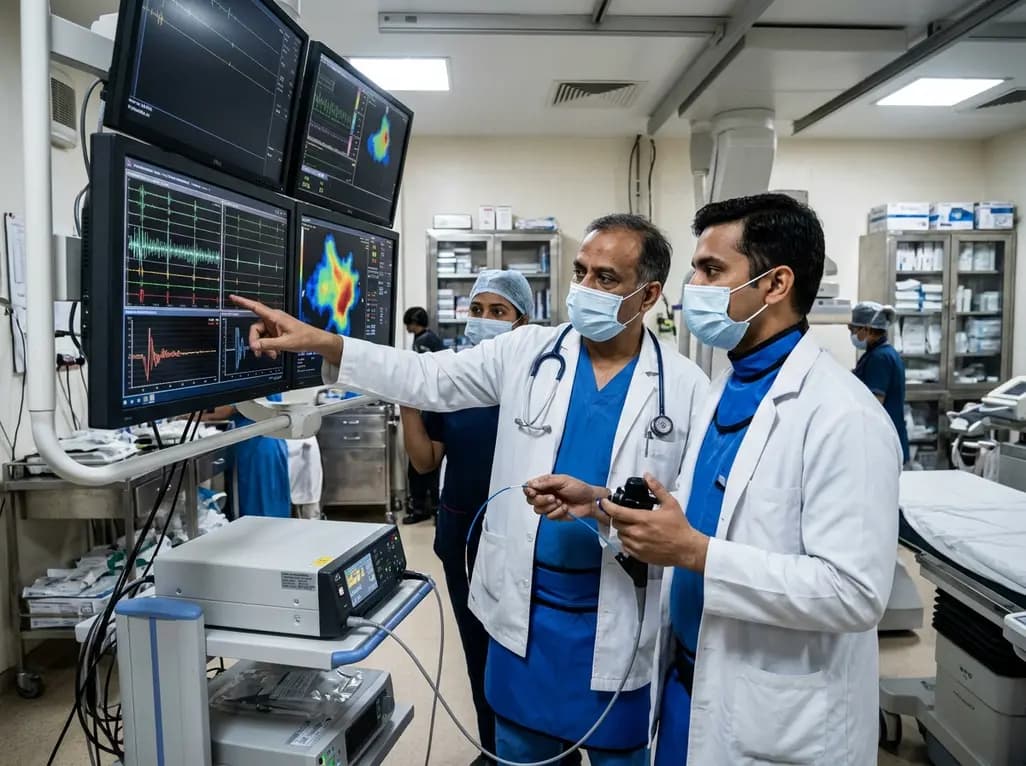
A comparative non-contact study reveals that high-power radiofrequency delivery with the QDOT MICRO catheter induces an artifactual contact force rise. Electrophysiologists must understand this power-dependent thermal and electrical phenomenon to avoid inadvertent catheter withdrawal and ineffective ablation.
Today

Healthium Medtech has transitioned its arthroscopy vertical into SIRONIX Orthopedics, aiming to capture key segments of the global joint care market. The strategic shift introduces dedicated portfolios in sports medicine, joint regeneration, surgical reconstruction, and digital operating technologies.
Today

Preclinical research demonstrates that BMI1 overexpression alleviates metabolic syndrome-related liver injury. By triggering ubiquitin-mediated METTL3 degradation, BMI1 prevents AHNAK m6A methylation and suppresses fibrogenic TGF-β/SMAD signaling, significantly improving hepatic steatosis and insulin resistance.
Today
