.webp&w=384&q=75)

Loading, please wait...
Loading, please wait...

Neurogenic bowel dysfunction (NBD) significantly impacts the quality of life for individuals following a spinal cord injury (SCI). Clinicians traditionally utilize conservative treatments (CT) as the first line of defense. However, transanal irrigation for NBD has recently emerged as a potentially superior alternative when introduced early during rehabilitation.
Researchers conducted a prospective, randomized study across four spinal units in Italy to compare early TAI initiation against standard conservative care. Initially, twenty-two patients were enrolled during their first hospitalization post-injury. The researchers monitored bowel function using Wexner scales and assessed quality of life via the EQ-5D-5L and Spinal Cord Independence Measure (SCIM) questionnaires.
Notably, the results favored the TAI group. The TAI cohort experienced a significant reduction in constipation. Specifically, Wexner scores dropped from 13.43 at baseline to 7.55 at four weeks. Furthermore, these patients maintained a lower score of 8.80 at the six-month mark. In contrast, patients receiving standard conservative treatments did not see comparable improvements. Additionally, the TAI group demonstrated a significant increase in total SCIM scores. This finding suggests better respiratory and sphincter management. Consequently, early TAI adoption appears to enhance patient independence and self-care abilities.
Moreover, while both groups reported general quality of life improvements, the TAI group showed specific enhancements in self-care activities. Therefore, starting TAI during the initial hospital stay may offer a more effective pathway for managing NBD. Ultimately, larger trials will help validate these preliminary findings and evaluate long-term outcomes.
Transanal irrigation for NBD helps effectively empty the bowel, which reduces chronic constipation and prevents fecal incontinence. Consequently, patients often experience greater independence and a better quality of life compared to those using only conservative methods like laxatives or manual evacuation.
Current insights suggest that starting TAI during the first hospitalization post-spinal cord injury is both feasible and beneficial. Early adoption allows patients to establish a predictable bowel routine sooner, which enhances their self-care capabilities during the transition back to home life.
Disclaimer: This content is for informational and educational purposes only. It does not constitute medical advice or establish a doctor-patient relationship. Always seek the advice of a qualified healthcare provider regarding any medical condition or treatment. Refer to the latest local and national guidelines for clinical practice.
References
Frasca G et al. Early transanal irrigation in spinal cord injury-related neurogenic bowel dysfunction: preliminary insights. Spinal Cord Ser Cases. 2026 Apr 20. doi: undefined. PMID: 42009662.
Christensen P, Bazzocchi G, Coggrave M, et al. A randomized, controlled trial of transanal irrigation versus conservative bowel management in spinal cord-injured patients. Gastroenterology. 2006;131(3):738-47.
Faaborg PM, Christensen P, Kvitsau B, et al. Long-term outcome and safety of transanal colonic irrigation for neurogenic bowel dysfunction. Spinal Cord. 2009;47(7):545-9.

Read summarized clinical updates, watch expert medical content, and earn CME certifications right from your smartphone.
Open your smartphone camera to scan and install.





A prospective study shows that starting transanal irrigation (TAI) early after spinal cord injury significantly reduces constipation and enhances independen...
6 months ago
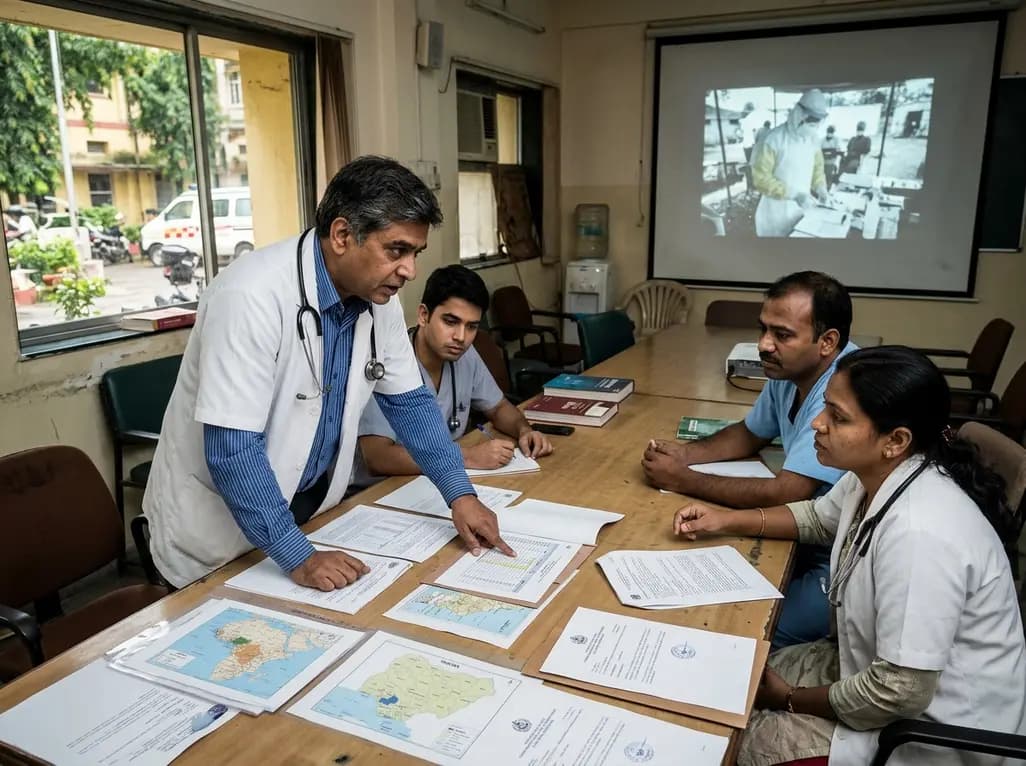
Following Nigeria's first recorded Ebola case linked to regional travel, the Africa CDC has convened an emergency ministerial summit. This alert underscores critical clinical priorities for healthcare professionals, including differentiating early viral infection from malaria, implementing barrier nursing, and triage.
Today

Leucine Rich Bio has introduced South Asia's first comprehensive vaginal microbiome test, BugSpeaks. By profiling microbial dysbiosis, pathogens, and antimicrobial resistance, this next-generation diagnostic platform provides clinicians with deeper insights into recurrent infections, fertility, and reproductive health.
Today

Review how tailored exercise programs benefit frail older patients with heart failure. Explore pathophysiological mechanisms, individualized training prescriptions, and strategies to overcome adherence barriers in clinical practice.
Today

This comparative study evaluates posterior labral tears with and without glenohumeral instability, highlighting distinct demographic patterns, MRI underestimation in stable shoulders, and successful arthroscopic repair outcomes.
Today

A clinical study demonstrates that early intervention with tocilizumab, either as monotherapy or bridged with corticosteroids, achieves significant proptosis reduction and resolves active inflammation in treatment-naive thyroid eye disease.
Today
