

Loading, please wait...
Loading, please wait...

Achieving timely and accurate identification of cognitive decline remains one of the greatest global challenges in modern geriatric medicine. Recent nationwide data from the Finnish National Memory Path study offer crucial insights into population-wide diagnostic trajectories and pre-diagnostic healthcare contacts. In particular, establishing an early dementia diagnosis allows clinicians to initiate multidisciplinary interventions before irreversible loss of autonomy occurs. Consequently, understanding how individuals interact with health systems before diagnosis provides valuable clinical clues. Healthcare practitioners worldwide, including those managing rapidly aging cohorts in diverse demographic landscapes, must recognize these opportunities.
Nationwide health registers provide an unprecedented view of real-world cognitive disease presentation across adult populations. In the Finnish cohort study, investigators analyzed data from tens of thousands of home-dwelling adults diagnosed with dementia across distinct calendar years. Specifically, 23,121 persons received a diagnosis in 2019, while 22,419 received one in 2021. These numbers corresponded to incidence rates of 520 and 501 per 100,000 in the mean population, respectively. Moreover, the highest frequency of newly confirmed diagnoses occurred in adults aged 75 to 84 years. This age distribution aligns closely with neurodegenerative patterns observed across various international settings. Therefore, physicians treating older adults must maintain heightened clinical vigilance during this critical decade of life. Furthermore, national registry analyses show remarkable diagnostic resilience despite external shocks like the pandemic. In addition, these population figures underscore the pervasive nature of neurocognitive disorders among community-dwelling individuals. Clinicians cannot afford to wait for severe functional deficits before initiating formal cognitive assessments. Instead, proactive surveillance helps identify memory complaints when conservative therapies and lifestyle modifications yield the highest therapeutic value.
Remarkably, the study revealed that 98% of individuals had actively utilized health and social services during the 12 months preceding diagnosis. Thus, almost every patient had repeated direct physical contact with healthcare professionals before specialists confirmed cognitive decline. Furthermore, outpatient primary care served as the most frequently visited setting among these individuals. Secondary outpatient consultations and emergency department visits followed closely behind in frequency. Patients frequently presented for unrelated somatic complaints, routine prescription renewals, or management of chronic multimorbidities like diabetes and hypertension. Consequently, these encounters represent missed opportunities for timely cognitive screening if clinicians evaluate only isolated physical ailments. In addition, subtle behavioral changes, missed follow-ups, or uncharacteristic non-adherence often signal insidious executive dysfunction. Therefore, healthcare providers must look beyond the immediate presenting complaint during routine consultations. Moreover, acknowledging that patients consistently seek medical care prior to identification confirms that cognitive impairment does not develop in complete isolation from medical systems. Medical teams simply need validated protocols to capture early cognitive warning signs during these frequent outpatient encounters.
Primary healthcare providers occupy the front line of defensive clinical medicine, positioning them uniquely to detect incipient memory loss. Because outpatient primary care encounters occur so frequently in the year before diagnosis, general practitioners serve as gatekeepers for timely intervention. However, brief appointment times and complex competing medical comorbidities frequently complicate thorough neurocognitive evaluation. Clinicians often focus primarily on glycemic control, blood pressure targets, or musculoskeletal pain while overlooking progressive memory deficits. To overcome this limitation, primary care practices must integrate brief, validated cognitive screening instruments into regular geriatric reviews. For example, clinicians can administer rapid tools such as the Mini-Cog, the Memory Alteration Test, or informant-based questionnaires in under five minutes. Additionally, nursing personnel and allied health staff can initiate screening when patients exhibit confusion regarding their prescription regimens. By establishing standardized cognitive screening protocols, primary care centers can refer patients for specialist neurocognitive assessment much earlier. Consequently, early therapeutic engagement helps preserve patient autonomy, reduces catastrophic caregiver burnout, and avoids crisis-driven secondary consultations.
Emergency departments and acute inpatient admissions represent another frequent healthcare venue utilized by individuals in the pre-diagnostic period. Notably, recurrent acute care presentations often arise from preventable medical complications directly precipitated by undetected cognitive impairment. For instance, progressive memory deficits frequently lead to severe medication non-compliance, unintentional drug overdoses, or overlooked systemic infections. Similarly, impaired visuospatial judgment and gait instability often result in mechanical falls and traumatic injuries requiring emergency intervention. When acute medical teams treat only the physical injury, they miss the underlying neurodegenerative pathology driving the event. Therefore, acute care clinicians must treat unexplained delirium, recurrent falls, or frequent unscheduled emergency visits as potential red flags for underlying dementia. Furthermore, secondary care specialists should establish streamlined referral pathways directly linking emergency departments with outpatient memory services. Implementing these rapid transitional care pathways ensures that vulnerable older adults receive timely comprehensive multidisciplinary evaluations. Ultimately, converting acute crisis presentations into structured diagnostic opportunities prevents unnecessary readmissions and enhances long-term patient safety.
Large-scale registry studies demonstrate that the clinical pathway toward dementia identification involves numerous touchpoints across both primary and secondary sectors. Consequently, clinical systems must break down communication silos to build integrated care pathways. Modern healthcare delivery requires seamless record sharing, allowing specialists and general practitioners to track cognitive changes longitudinally. In addition, clinicians must routinely interview family members and primary caregivers whenever older patients present with subtle behavioral alterations. Informant observations frequently reveal early functional decay long before formal psychometric tests show severe deficits. Moreover, timely identification enables early counseling regarding advance directives, financial planning, and driving safety. Clinicians can also proactively adjust pharmacotherapy, strictly avoiding anticholinergic or sedative medications that exacerbate cognitive deterioration. Similarly, patients benefit from structured brain-health interventions, including Mediterranean-style dietary guidance, aerobic exercise, and aggressive cardiovascular risk optimization. By adopting a proactive screening mindset across all clinical disciplines, healthcare professionals ensure that older adults receive empathetic, individualized, and timely clinical care throughout their cognitive journey.
Early identification provides critical clinical opportunities to slow symptom progression and preserve functional autonomy. It allows general practitioners to introduce lifestyle modifications, manage vascular risk factors, and optimize anti-dementia medications effectively. Furthermore, timely diagnosis grants patients and families sufficient time to plan legal affairs and care preferences. Clinicians can also identify reversible contributors, eliminate harmful anticholinergic drugs, and offer caregiver support resources before crisis presentations occur.
Frequent emergency department visits, unexplained medication errors, recurrent mechanical falls, and episodes of acute delirium strongly suggest underlying neurocognitive impairment. Additionally, uncharacteristic appointment non-adherence and repeated unscheduled hospitalizations for preventable complications serve as major warning signs. When clinicians encounter older patients exhibiting these patterns, they should initiate brief cognitive assessments rather than treating only the acute somatic problem before discharge.
Clinicians can incorporate rapid, validated cognitive tools like the Mini-Cog, clock drawing test, or six-item screener into routine health checks. Additionally, gathering collateral information from family members regarding subtle executive deficits or memory changes provides essential diagnostic context. Healthcare providers should also review medication lists for high-risk anticholinergic agents and verify that persistent memory complaints prompt dedicated secondary specialist referral.
Disclaimer: This content is for informational and educational purposes only and does not constitute medical advice, diagnosis, or treatment. Healthcare professionals should exercise their independent clinical judgment when managing individual patients. Refer to the latest local and national guidelines for clinical practice.
References
Pulkkinen P et al. National memory path study: Formation of register-based cohorts of persons diagnosed with dementia in Finland in 2019 and 2021. Scand J Public Health. 2026 Oct 25. doi: 10.1177/14034948261494819. PMID: 42927453.
Chen L, Reed C, Kempe J, et al. Health service use before and after dementia diagnosis: a retrospective matched case–control study. BMJ Open. 2022;12(11):e067363.
Lopes MA, Ferri CP. Early detection and diagnosis of dementia in primary care: challenges and opportunities. Int Psychogeriatr. 2023;35(7):351-360.

Read summarized clinical updates, watch expert medical content, and earn CME certifications right from your smartphone.
Open your smartphone camera to scan and install.





A nationwide Finnish study highlights dementia incidence and reveals that 98% of patients use health services in the year preceding diagnosis. These frequent outpatient and emergency contacts offer essential clinical windows for proactive cognitive assessment and early intervention in older adults.
Today
A landmark 12-year longitudinal study highlights significant reductions in opioid prescribing for nonspecific low back pain following clinical guidelines and prescription monitoring systems, emphasizing non-opioid multimodal pain care.
Today

A study in Ultrasound in Obstetrics & Gynecology shows that quantitative vascularization of the anterior fornix/cervix with transvaginal ultrasound reliably identifies placenta accreta spectrum and predicts severe intraoperative hemorrhage, offering vital objective risk stratification.
Today
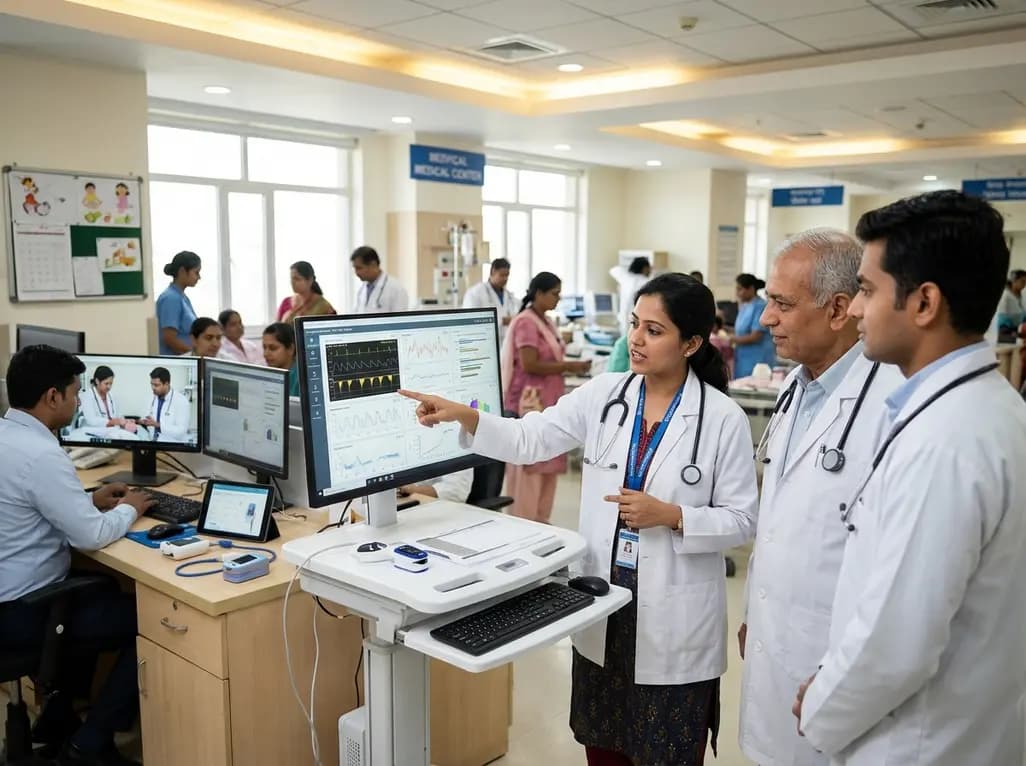
A landmark study details how an enterprise pediatric remote patient management model expanded from a single cardiology pilot to 16 diverse specialty programs by combining centralized digital operations with specialty clinical leadership.
Yesterday
A breakthrough study shows that 3D-planned corrective osteotomy successfully resolves distal radioulnar joint instability in pediatric diaphyseal forearm malunions. The precise osseous realignment eliminates chronic wrist pain and restores joint function without requiring secondary soft-tissue reconstruction.
Today

Protein O-GlcNAcylation couples cellular nutrient status to vital neuronal functions. This review explores how disrupted O-GlcNAc cycling drives both neurodevelopmental delays and neurodegenerative cascades, positioning metabolic post-translational modifications as therapeutic targets in clinical neurology.
Today
