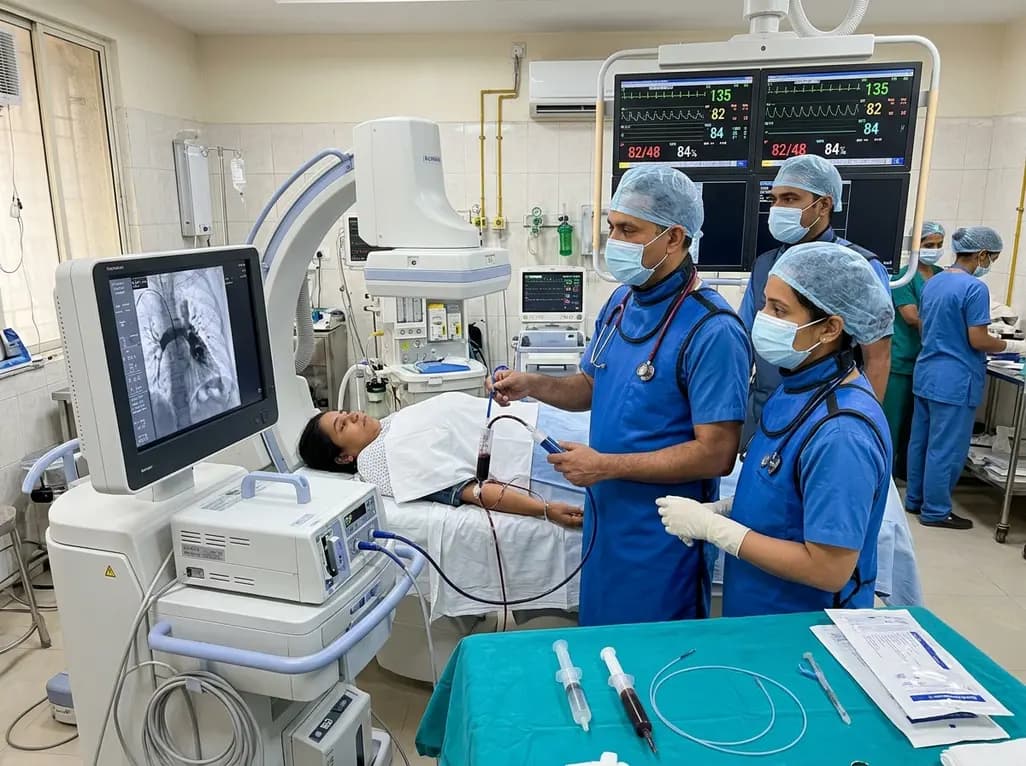
Achieving early cancer detection remains a cornerstone of effective clinical oncology. When clinicians detect malignancies at Stage I or II, localized surgical excision or targeted therapy provides high cure rates. However, late-stage diagnoses severely limit therapeutic options and compromise survival timelines. Consequently, understanding the balance between diagnostic benefits and potential screening harms is vital for patient management.
The Central Principle of Early Cancer Detection
Detecting occult tumors in asymptomatic individuals presents a complex clinical challenge. Because early-stage tumors develop without symptoms, screening protocols must operate proactively across asymptomatic populations. However, baseline cancer prevalence remains low in unselected cohorts. Consequently, clinicians must test hundreds of individuals to identify a single asymptomatic case.
Furthermore, no screening test offers complete diagnostic accuracy. Diagnostic tests inevitably produce false negatives by missing subtle malignancies, or generate false positives by flagging harmless artifacts. Expanding population screening increases early tumor detection, but it also generates additional false alarms. Modalities like screening mammography, colonoscopy, low-dose CT (LDCT), MRI, and blood tests each involve clear trade-offs. Clinicians must view negative results as meaningful reassurance rather than guaranteed absence of disease. Conversely, positive screening results require systematic confirmation, moving from follow-up imaging to tissue biopsy. Therefore, unnecessary invasive procedures can impose physical risks and psychological distress on healthy patients.
Evaluating Low-Dose CT for High-Risk Lung Screening
Lung cancer highlights how baseline population risk shapes screening utility. Stage-specific survival drops sharply from 74% at Stage I to only 5% at Stage IV. Annual low-dose CT (LDCT) detects small pulmonary nodules, but exposes individuals to ~1 millisievert of radiation per scan. In an unselected population over age 50, screening 2,000 people annually for ten years detects ~6 lung cancers. However, this cumulative radiation exposure induces ~1 additional radiation-related malignancy, creating an unfavorable overall risk-benefit balance.
In contrast, the trade-off shifts decisively for heavy smokers over age 50 with a 20 pack-year history. Because baseline cancer incidence is significantly higher in this cohort, annual LDCT detects ~100 true cancers for every 1 radiation-induced malignancy. Long-term clinical trials confirm a 20% or greater reduction in lung cancer mortality among screened heavy smokers. Consequently, guidelines strongly advocate annual LDCT for high-risk smokers, making routine screening imperative for this population.
Addressing Non-Smoker Lung Cancer Dynamics in India
A significant clinical dilemma arises when considering non-smokers. Indian clinical studies demonstrate that nearly 40% of lung cancer cases occur in non-smokers. Secondhand smoke, biomass fuel combustion, urban air pollution, and specific genetic mutations drive this disease burden. Because non-smokers fall outside standard high-risk screening criteria, routine LDCT is inappropriate due to cumulative radiation risks. Therefore, developing non-ionizing screening approaches is essential for non-heavy smokers.
Blood-based genomic tests offer a promising alternative for this population. These liquid biopsy assays analyze circulating cell-free DNA (cfDNA) in blood, identifying tumor-specific methylation patterns and genetic alterations. Published studies demonstrate specificity exceeding 98%, resulting in fewer than two false positives per 100 individuals tested. Crucially, blood tests avoid radiation exposure entirely. Assuming a conservative 50% sensitivity for early-stage lesions, genomic blood tests provide a favorable risk-benefit balance, offering a safe initial screening option for non-heavy smokers.
Role of Cell-Free DNA in Early Cancer Detection
Integrating genomic liquid biopsies into screening protocols creates an efficient multi-step pathway. For example, if 2,000 individuals over age 50 undergo annual cfDNA testing for ten years, fewer than 400 will test positive and require follow-up LDCT scans. Reserving diagnostic imaging for blood-positive cases significantly reduces population-wide radiation exposure while maintaining strong cancer detection rates. Consequently, this approach yields ~50–100 detected cancers per radiation-induced case.
Additionally, emerging multi-cancer early detection (MCED) platforms analyze circulating cfDNA to identify signals across dozens of cancer types simultaneously. Designed with high specificity to minimize unnecessary downstream workups, MCED tests aim to detect aggressive tumors before clinical symptoms appear. Clinical modeling indicates that layering MCED blood tests onto standard screening protocols could reduce Stage IV diagnoses by an additional 14%. As clinical evidence matures, MCED technologies promise to expand early detection capabilities across diverse tumor types.
Whole-Body MRI and Guideline-Recommended Screening Protocols
Whole-body magnetic resonance imaging (WB-MRI) offers a comprehensive, non-ionizing screening alternative. WB-MRI scans multiple organ systems simultaneously without radiation exposure. However, WB-MRI frequently identifies benign incidental findings in healthy individuals. These false-positive findings often trigger costly follow-up imaging, invasive biopsies, and elevated patient anxiety. Therefore, medical guidelines do not recommend routine WB-MRI for general population screening, reserving its use mainly for high-risk genetic predisposition syndromes.
Currently, clinicians should emphasize established, evidence-based screening guidelines. Recommended protocols include annual mammography for women over age 45, annual LDCT for heavy smokers over age 50, and colonoscopy every 3–10 years starting at age 45 for colorectal cancer. Additionally, cervical screening with Pap tests or HPV testing remains essential, alongside oral visual exams for tobacco users in India. Clinicians should ensure adherence to these proven recommendations while cautiously evaluating emerging screening innovations.
Frequently Asked Questions
Q1: Why is low-dose CT screening not recommended for everyone to detect lung cancer early?
Low-dose CT screening involves ionizing radiation exposure. In low-risk populations, the cumulative radiation risk and high rate of false positives outweigh the small benefit of finding rare early cancers. However, for heavy smokers with high baseline risk, LDCT offers a proven 20% reduction in lung cancer mortality, making screening highly beneficial for that specific group.
Q2: How do blood-based multi-cancer early detection (MCED) tests work in clinical practice?
Multi-cancer early detection blood tests evaluate circulating cell-free DNA fragments shed by tumor cells. By analyzing specific methylation patterns and genomic mutations, these tests detect signals across multiple cancer types. High specificity above 98% minimizes false positives. However, positive results require follow-up diagnostic imaging or tissue biopsy to confirm a definitive cancer diagnosis.
Q3: How should non-smoking individuals in India approach early cancer screening?
Non-smokers in India should follow guideline-recommended screenings for breast, cervical, colorectal, and oral cancers based on age and personal risk factors. While routine LDCT is not indicated for non-smokers due to radiation risks, individuals interested in expanded screening can consult oncologists to assess emerging blood-based genomic tests based on personal health profiles.
Disclaimer: This content is for informational and educational purposes only. It does not constitute medical advice or replace professional judgment. Refer to the latest local and national guidelines for clinical practice.
References
- Can We Detect Cancer Early? What Every Individual Should Know - ETHealthworld.
- Hubbell E, Clarke CA, Smedby KE, et al. Potential for Cure by Stage across the Cancer Spectrum in the United States. Cancer Epidemiol Biomarkers Prev. 2024;33(2):206-214.
- Johnson P, Round T, Warwick J, et al. NHS-Galleri: Primary Results from a Randomised Controlled Trial to Assess the Clinical Utility of a Multi-Cancer Early Detection (MCED) Test in Population Screening. J Clin Oncol. 2026;44(17_suppl):LBA100.
- Klein EA, Richards D, Cohn A, et al. Clinical Validation of a Targeted Methylation-Based Multi-Cancer Early Detection Test Using an Independent Validation Set. Ann Oncol. 2021;32(9):1167-1177.
- Krishnamurthy A, Vijayalakshmi R, Gadigi V, et al. The Relevance of 'Nonsmoking-Associated Lung Cancer' in India: A Single-Centre Experience. Indian J Cancer. 2012;49(1):82-88.
- National Lung Screening Trial Research Team, Aberle DR, Adams AM, et al. Reduced Lung-Cancer Mortality with Low-Dose Computed Tomographic Screening. N Engl J Med. 2011;365(5):395-409.
- Rampinelli C, De Marco P, Origgi D, et al. Exposure to Low Dose Computed Tomography for Lung Cancer Screening and Risk of Cancer: Secondary Analysis of Trial Data and Risk-Benefit Analysis. BMJ. 2017;356:j347.
.webp&w=384&q=75)