.webp&w=384&q=75)

Loading, please wait...
Loading, please wait...
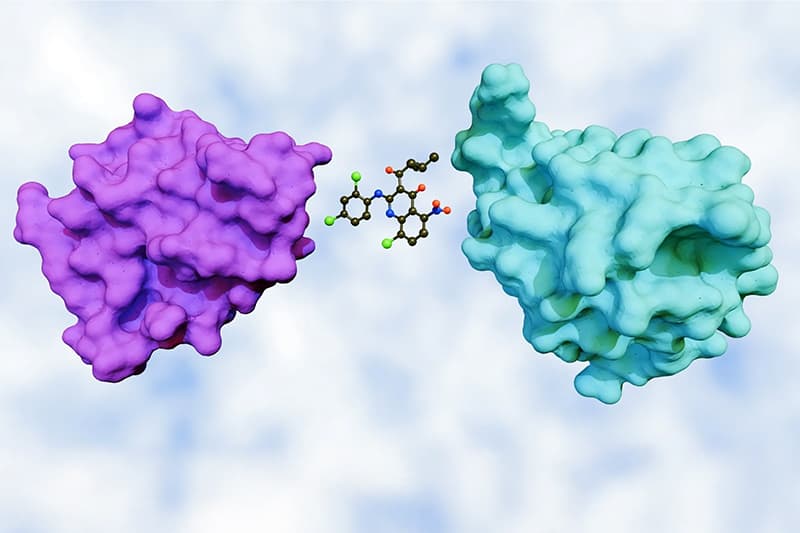
E7820 represents a significant advancement in targeted cancer therapy. Researchers initially developed this sulfonamide-type agent to inhibit angiogenesis by suppressing integrin α2 expression. However, subsequent discoveries repositioned E7820 as a potent molecular glue degrader. Specifically, the drug promotes the degradation of the splicing factor RBM39 through the DCAF15 E3 ligase complex. This mechanism provides a novel rationale for clinical evaluation in solid tumors where traditional inhibitors often fail.
The discovery of molecular glue degraders has transformed the landscape of oncology. Unlike traditional drugs that occupy a binding pocket, these agents induce proximity between a target protein and a ubiquitin ligase. Consequently, the cellular machinery degrades the disease-causing protein. In the case of E7820, targeting RBM39 leads to global RNA splicing defects. This process is particularly lethal to cancer cells that rely on specific splicing pathways for survival.
Furthermore, preclinical screening using patient-derived xenograft (PDX) models showed high activity in specific cancers. These include biliary tract and endometrial cancers, particularly those with homologous recombination repair (HRR) gene alterations like BRCA1, BRCA2, or ATM. Therefore, clinicians believe that E7820 might be highly effective when targeted at these specific molecular signatures.
The multicenter investigator-initiated phase I CIRCUS trial is currently underway in Japan. This study evaluates the safety, tolerability, and preliminary efficacy of E7820 in patients with unresectable solid tumors. Investigators previously established 100 mg/day as the maximum tolerated dose in early trials. Nevertheless, those studies observed no objective responses because they lacked biomarker-driven selection. By focusing on patients with HRR gene alterations, this trial seeks to demonstrate proof of concept for the drug.
Overall, this research highlights the importance of drug repositioning. Additionally, it offers a pathway for developing compounds that previously appeared intractable. If successful, the CIRCUS trial will provide a new treatment option for patients with difficult-to-treat solid malignancies.
E7820 acts by recruiting the splicing factor RBM39 to the DCAF15 E3 ubiquitin ligase. This interaction leads to the proteasomal degradation of RBM39, causing widespread splicing errors and cancer cell death.
The trial focuses on Japanese patients with unresectable solid tumors. Specifically, it explores efficacy in biliary tract cancer, endometrial cancer, and tumors harboring homologous recombination repair (HRR) gene mutations.
While E7820 was originally an anti-angiogenesis drug, its discovery as a molecular glue degrader provided a more powerful therapeutic rationale. Preclinical PDX models showed significant tumor shrinkage in biomarker-defined cohorts, justifying the current phase I trial.
Disclaimer: This content is for informational and educational purposes only and does not constitute medical advice or a professional relationship. Always seek the advice of a physician or other qualified health provider with any questions regarding a medical condition. Refer to the latest local and national guidelines for clinical practice.
References
1. Okada M et al. Study protocol for a phase I investigator-initiated clinical trial of E7820 in Japanese patients with unresectable solid tumours: CIRCUS trial (NCCH2303). Jpn J Clin Oncol. 2026 Mar 01. doi: undefined. PMID: 41764635.
2. Uehara T, et al. Selective degradation of splicing factor RBM39 by an antitumor sulfonamide and its role in cancer cell survival. Nat Commun. 2017;8:1582.
3. Eisai. Investigator-initiated clinical studies of E7820 launched following J-PDX confirmation of tumor shrinkage. News Release. 2024.
"
Read summarized clinical updates, watch expert medical content, and earn CME certifications right from your smartphone.
Open your smartphone camera to scan and install.





The CIRCUS trial evaluates E7820, a molecular glue degrader targeting RBM39, in Japanese patients with solid tumors including biliary and endometrial cancer...
7 months ago

Explore vital recurrent stroke predictors in lacunar stroke patients managed with intensive blood pressure lowering. This analysis examines trial findings from SPS3 to uncover residual vascular risks, metabolic factors, and targeted secondary prevention strategies for high-risk neurological patients.
Today

Odisha has established India's first state-level clinical protocol specifically tailored for pregnant women with sickle cell disease. Developed with NHM and UNICEF, the framework provides structured antenatal screening, crisis mitigation, standardized referral pathways, and specialized interdisciplinary care.
Today

India is advancing preventive healthcare by integrating genomics, artificial intelligence, and quantum technologies. With the SANGAM programme sequencing one million Indian genomes, clinicians can unlock personalized therapies, detect cardiometabolic risks early, and curb the burden of diabetes and heart disease.
Today

A randomized controlled trial demonstrates that an eight-week dual-task training intervention significantly improves static and dynamic postural control over standard balance exercises in individuals with chronic ankle instability, addressing critical neurocognitive deficits during athletic and daily activities.
Today

A retrospective cohort study of 7,716 ICU patients from the MIMIC-IV database demonstrates that Gradient Boosting Decision Trees significantly outperform traditional SOFA scores in predicting in-hospital mortality among patients with sepsis and diabetes, with SHAP analysis providing clinical interpretability.
Today
