

Loading, please wait...
Loading, please wait...

Modern neurosurgical practice relies heavily on historical technical traditions, yet many classic maneuvers lack empirical evidence. For decades, neurosurgeons routinely placed dural tenting sutures along the bone margins during cranial surgery. The primary objective involved eliminating epidural dead space and preventing postoperative extradural hematoma formation. However, modern neurosurgical centers now utilize advanced bipolar cautery, oxidized cellulose, and gelatin hemostatics. Consequently, several investigators have questioned whether routine hitching sutures remain necessary during elective procedures.
Historically, postoperative extradural hematomas presented devastating complications with high morbidity and mortality rates. During the early twentieth century, surgical pioneers introduced peripheral and central dural tacking stitches. These sutures physically anchored the dura mater to the overlying cranium or pericranium. By closing the potential epidural space, the stitches theoretically prevented blood pooling between the bone flap and the dura. Furthermore, surgeons believed this mechanical barrier stopped venous oozing from fragile dural vessels. As surgical practice evolved, this maneuver transformed into an unquestioned surgical dogma. Trainees learned to place multiple dural tenting sutures routinely, regardless of the patient's individual risk profile or intraoperative hemostatic quality. Consequently, generations of neurosurgeons considered the omission of tacking sutures an unacceptable surgical error. Nevertheless, high-level scientific evidence validating this widespread ritual remained virtually nonexistent for nearly a century. Meanwhile, cranial surgery advanced through operating microscopes, fine bipolar forceps, and modern neuroanesthesia. In addition, neurosurgeons gained access to modern flowable hemostatic matrices and thrombin sealants. Therefore, contemporary surgical teams require clear randomized evidence to justify prolonging operative duration with routine tenting maneuvers.
To rigorously evaluate this neurosurgical dogma, researchers conducted a prospective, multicenter, randomized controlled trial across multiple academic centers. The study employed an investigator-blinded and participant-blinded noninferiority design with balanced one-to-one allocation. Investigators specifically enrolled adult patients undergoing elective supratentorial craniotomies for various intracranial pathologies. The intervention arm completely omitted dural tenting sutures, whereas the control arm received standard prophylactic tenting with at least three sutures. Overall, the investigators successfully randomized 490 patients into the study cohorts. Specifically, 238 patients joined the non-tenting intervention group, while 252 patients underwent conventional dural tenting. The trial established a clear primary endpoint: the incidence of postoperative extradural hematoma requiring urgent surgical evacuation. Additionally, the investigators evaluated secondary endpoints to capture nuanced clinical and radiological differences. These secondary measures included 30-day all-cause mortality, unplanned 30-day hospital readmissions, and postoperative neurological deterioration. Furthermore, the protocol tracked cerebrospinal fluid leaks, severe postoperative headaches, computed tomography evidence of epidural collection thickness exceeding 3 millimeters, and midline shift exceeding 5 millimeters. Through this rigorous methodology, the study achieved robust statistical power to detect true clinical equivalence.
The randomized trial revealed compelling evidence supporting the noninferiority of omitting prophylactic sutures. In the intention-to-treat analysis, surgical reoperation for extradural hematoma occurred in 0.8% of intervention patients and 0.4% of control patients. Statistical testing confirmed clear noninferiority without significant difference between the two cohorts. Similarly, per-protocol and as-treated analyses showed nearly identical rates without clinical divergence. Secondary clinical outcomes also demonstrated remarkable parity across both trial arms. Specifically, postoperative 30-day mortality reached 0.8% in the non-tenting group compared to 1.2% in the control group. Unplanned 30-day hospital readmission occurred in 1.7% of intervention patients versus 4.4% of control patients. Furthermore, new neurological deficits or deterioration appeared in 19.7% of non-tenting patients and 15.5% of tenting patients. Cerebrospinal fluid leaks occurred in 1.3% of the intervention cohort compared to 4.4% of controls. Postoperative headache worsening occurred in 4.4% and 2.4% of patients, respectively. Radiological analyses likewise revealed no meaningful disparities. Substantial epidural collections over 3 millimeters appeared in 90.8% of intervention patients and 87.3% of control cases. Additionally, significant midline shifts over 5 millimeters occurred in 7.6% and 4.8% of patients. Ultimately, adverse events remained comparable between groups.
Omitting routine hitching sutures delivers substantial procedural advantages for operating teams. Placing multiple dural tacking stitches typically consumes valuable minutes during cranial opening and cranial closure. Surgeons must drill delicate peripheral anchor holes or pass curved needles through tough outer pericranium and dural leaflets. This repetitive step introduces potential procedural hazards. For example, needle passage can inadvertently puncture underlying cortical veins or tear vascularized dural venous sinuses. Such accidental punctures cause troublesome intraoperative hemorrhage and increase surgical frustration. Moreover, unnecessary suture placement prolongs total anesthesia duration. Prolonged operative times correlate directly with increased hospital costs, elevated infection rates, and delayed patient recovery. By safely eliminating prophylactic tenting, surgical teams streamline craniotomy workflow without compromising patient safety. Consequently, neurosurgeons can direct their primary attention toward meticulous tumor resection, precise microvascular dissection, and gentle cerebral protection. In high-volume neurosurgical centers, saving ten to fifteen minutes per cranial case enhances operating room turnover significantly. Furthermore, reducing surgical suture usage supports operating theater cost containment. Therefore, abandoning unnecessary technical steps aligns perfectly with contemporary principles of value-based healthcare and optimized surgical ergonomics.
Although the trial demonstrates the safety of omitting tenting in elective craniotomies, clinicians must apply these findings thoughtfully. The trial evaluated adult patients undergoing planned, elective supratentorial procedures where surgeons achieved satisfactory intracranial hemostasis. However, urgent cranial trauma, complex vascular lesions, and acute reoperations present fundamentally different surgical environments. In traumatic brain injury, parenchymal swelling, severe coagulopathy, and fractured skull edges markedly increase extradural hemorrhage risk. Similarly, pediatric craniotomies require special consideration because children possess thinner, highly vascular bone and more pliable dura. In addition, patients receiving antiplatelet or anticoagulant medications demand elevated vigilance during cranial closure. Under these precarious conditions, dural hitching sutures may still provide an essential mechanical safety net. Surgeons must therefore exercise clinical acumen rather than applying trial conclusions indiscriminately to every scenario. Furthermore, neurosurgical training programs must preserve technical proficiency in dural hitching techniques. Residents must master tacking maneuvers so they can deploy them effectively during complex reconstructive surgeries or extensive craniectomies. Consequently, dural tacking should evolve from a mandatory ritual into a selective, tailored surgical intervention.
Implementing evidence-based surgical changes requires systematic updates to departmental operating protocols. Traditionally, surgical checklists and institutional training manuals mandated perimeter tenting for all cranial openings. Today, department chairs and surgical committees can confidently revise these institutional guidelines for elective supratentorial cases. Instead of placing mechanical stitches reflexively, surgeons should prioritize rigorous bipolar coagulation of dural bleeding points. Moreover, surgeons should generously apply modern topical hemostatics, including absorbable gelatin sponges and microfibrillar collagen along bone edges. Ensuring complete hemostasis before bone flap replacement provides far superior protection against hematoma expansion compared to simple mechanical suspension. Additionally, neurosurgical teams should optimize postoperative blood pressure control during extubation and early recovery. Preventing acute hypertensive spikes directly minimizes the hydrostatic pressure driving postoperative epidural bleeding. Multidisciplinary neuro-intensive care monitoring remains crucial for detecting any unexpected neurological shifts promptly. Ultimately, this landmark trial provides definitive evidence that modern cranial surgery has outgrown century-old empirical rituals. By retiring routine dural tenting in elective craniotomy, surgical departments enhance operating room efficiency, reduce foreign material implantation, and maintain uncompromised patient safety.
The randomized clinical trial concluded that omitting prophylactic dural tenting sutures in elective supratentorial craniotomies is noninferior to routine placement. The risk of postoperative extradural hematoma requiring reoperation remained exceedingly low in both groups. Therefore, surgical teams can safely abandon routine dural suspension without increasing reoperation rates or clinical complications.
No, patients managed without dural tenting sutures experienced comparable adverse event rates. Investigators observed no statistically significant differences in 30-day mortality, hospital readmissions, neurological deterioration, or cerebrospinal fluid leaks. Furthermore, radiological evaluations demonstrated equivalent incidences of epidural fluid collections and midline brain shift between the study cohorts.
Surgeons should still consider dural tenting in high-risk or emergent scenarios. Specifically, traumatic cranial fractures, revision craniotomies, pediatric procedures, and patients with pre-existing coagulopathy carry heightened risks for epidural bleeding. Under these challenging circumstances, selective tenting sutures may provide helpful mechanical support alongside meticulous bipolar cauterization and topical hemostatic agents.
Disclaimer: This content is for informational and educational purposes only and does not constitute medical advice, diagnosis, or treatment. Healthcare professionals should exercise their independent clinical judgment when making treatment decisions. Refer to the latest local and national guidelines for clinical practice.
References

Read summarized clinical updates, watch expert medical content, and earn CME certifications right from your smartphone.
Open your smartphone camera to scan and install.





A multicenter randomized clinical trial demonstrates that omitting prophylactic dural tenting sutures during elective supratentorial craniotomies is noninferior to routine placement, showing no increase in postoperative extradural hematomas or adverse clinical outcomes.
Today

An observational study from the NIH All of Us Research Program reveals that adding a multi-ancestry polygenic risk score to machine learning models provides only modest improvements in predicting adult weight gain, underscoring the enduring significance of routine clinical and lifestyle factors.
Today

A study in JAMIA Open shows lightweight open-source reasoning LLMs achieve up to 95% sensitivity and accelerate evidence synthesis screening by nearly twentyfold, presenting a cost-effective, scalable AI solution for biomedical research and systematic reviews.
Today
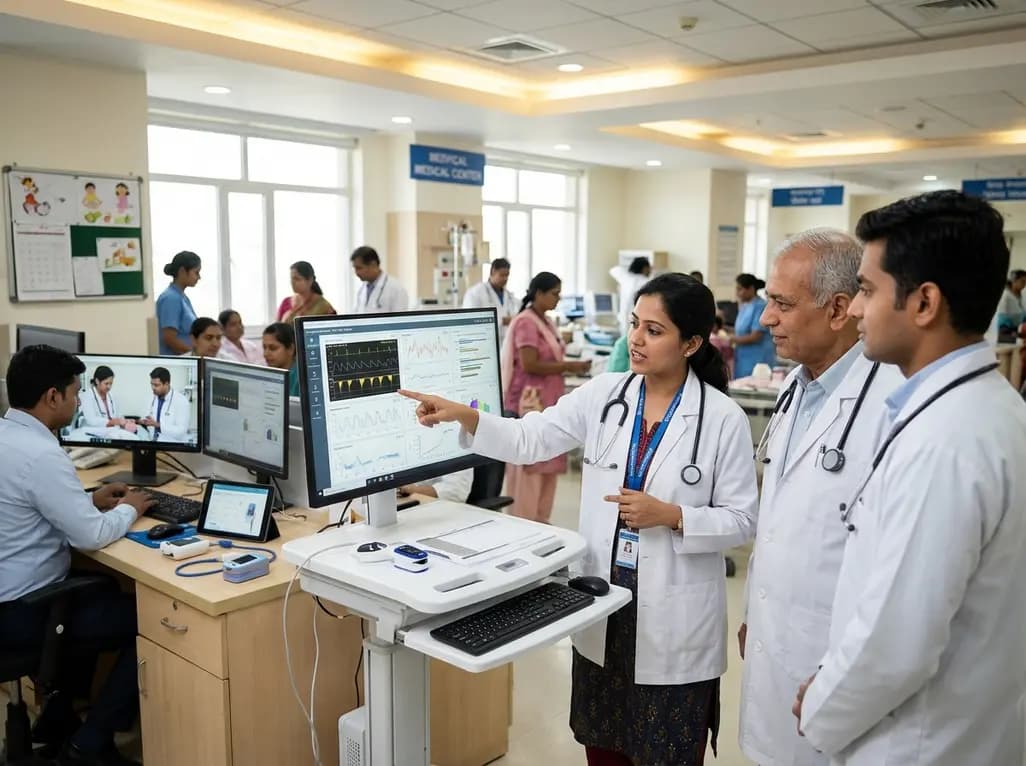
A landmark study details how an enterprise pediatric remote patient management model expanded from a single cardiology pilot to 16 diverse specialty programs by combining centralized digital operations with specialty clinical leadership.
Yesterday

A comparative review of tension band wiring and intramedullary screw fixation in thumb metacarpophalangeal arthrodesis, evaluating union rates, hardware complications, and clinical outcomes.
Yesterday

A breakthrough ultrathin multimodal sensor decouples physical hemodynamic monitoring from disposable electrochemical calibration, achieving long-term wearable glucose prediction with 81.36% accuracy and a 9.12% MARD. This offers a robust, drift-free solution for outpatient metabolic surveillance.
Yesterday
