.webp&w=384&q=75)

Loading, please wait...
Loading, please wait...

A recent clinical report details the successful application of a Dual-valve TEER procedure in a 77-year-old male patient. Specifically, this individual suffered from non-ischemic cardiomyopathy accompanied by severe tricuspid regurgitation and moderate mitral regurgitation. For instance, clinicians chose to perform a simultaneous transcatheter edge-to-edge repair on both the mitral and tricuspid valves. As a result, following the intervention, the patient demonstrated significant symptomatic improvement and a marked reduction in regurgitation severity. In addition, this case underscores the viability of simultaneous dual-valve interventions for patients who face high surgical risks.
Treating polyvalvular disease in elderly patients often requires innovative approaches because traditional surgery carries substantial mortality risks. Consequently, the Dual-valve TEER procedure has emerged as a promising alternative for those with prohibitive risks. Research data suggest that simultaneous repair is feasible and achieves high procedural success rates, often exceeding 80%. Furthermore, most patients report an immediate enhancement in their quality of life. Additionally, addressing both valves in one session minimizes the duration of hospitalization. Therefore, this strategy is becoming increasingly relevant in modern interventional cardiology.
Recent studies highlight that simultaneous repair of both valves effectively promotes right heart reverse remodeling. Moreover, this combined approach significantly improves New York Heart Association (NYHA) functional classes. In fact, many high-risk patients experience sustained relief from congestive symptoms. However, clinicians must carefully evaluate each patient via a multidisciplinary heart team to ensure appropriate candidacy. Thus, while the Dual-valve TEER procedure shows great promise, thorough pre-procedural imaging remains essential for success.
The ideal candidate is typically a high-risk patient with symptomatic, severe mitral and tricuspid regurgitation who is not a candidate for traditional open-heart surgery.
Simultaneous repair reduces the total number of procedures and anesthesia sessions. Moreover, it addresses both left and right-sided heart failure symptoms concurrently, leading to better functional outcomes.
Disclaimer: This content is for informational and educational purposes only. It does not constitute medical advice or a substitute for professional clinical judgment. Refer to the latest local and national guidelines for clinical practice.
References
Khan O et al. Concomitant Transcatheter Edge-to-Edge Repair for Mitral and Tricuspid Regurgitation for Polyvalvular Disease. Catheter Cardiovasc Interv. 2026 Mar 30. doi: 10.1002/ccd.70590. PMID: 41913083.
Hausleiter J et al. Simultaneous transcatheter edge-to-edge repair for severe mitral and tricuspid regurgitation is feasible, safe, and associated with good clinical outcome. PLOS One. 2026 Feb 10. doi: 10.1371/journal.pone.0281234.
Vahanian A et al. 2021 ESC/EACTS Guidelines for the management of valvular heart disease. Eur Heart J. 2022 Feb 12;43(7):561-632. doi: 10.1093/eurheartj/ehab395.

Read summarized clinical updates, watch expert medical content, and earn CME certifications right from your smartphone.
Open your smartphone camera to scan and install.





A case study on a 77-year-old male reveals that the simultaneous dual-valve TEER procedure is a safe and effective option for high-risk polyvalvular disease...
6 months ago

Following regulatory scrutiny from FSSAI regarding promotional representations and lean muscle preservation claims, Dr. Reddy's Laboratories and Nestlé Health Science are currently reviewing the branding and marketing strategy for their joint nutritional supplement Celevida GLP+.
Today

Demanding exhaustive hormonal profiling can inadvertently discourage clinical studies involving females. Methodological standards must align with the specific scientific question to expand, not restrict, equitable evidence for women.
Today

The Directorate General of Health Services directs Indian states to halt the hazardous reuse and reprocessing of single-use medical devices. Discover regulatory implications under the Drugs and Cosmetics Act, critical infection risks, legal liabilities, and operational changes required across clinical specialties.
Today
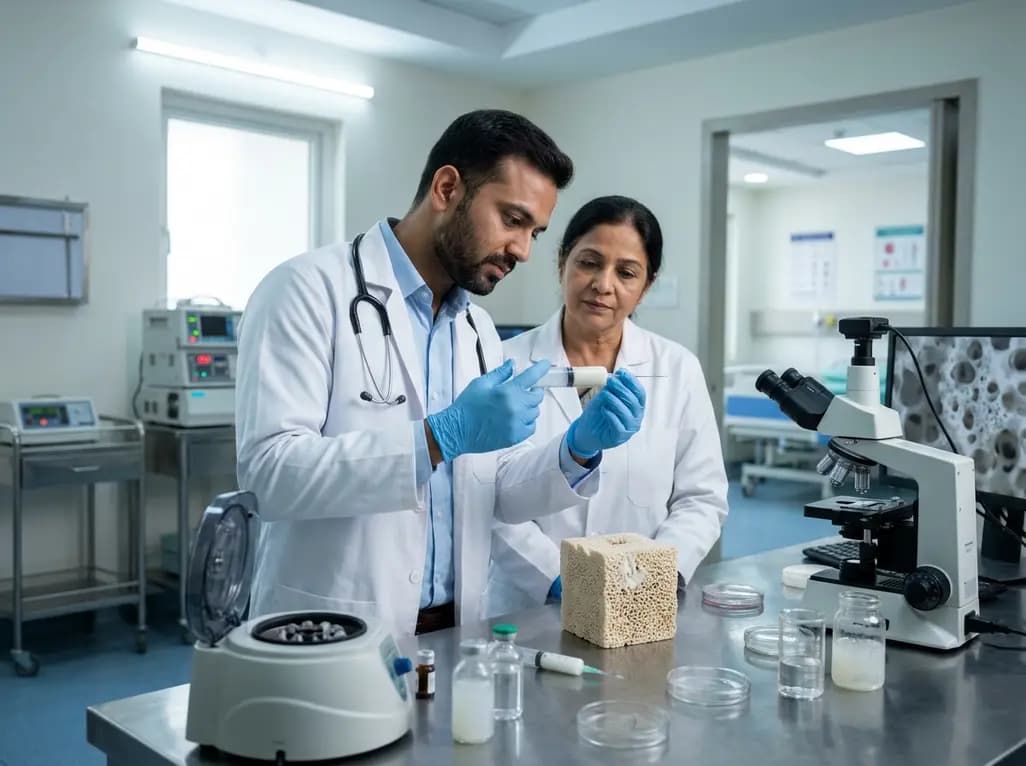
A novel calcium polyphosphate coacervate enables injectable bone implants with in situ hierarchical porosity via phase separation and gas foaming, significantly enhancing cell proliferation, energy metabolism, and osteogenic differentiation for minimally invasive bone defect repair.
Today

India is advancing preventive healthcare by integrating genomics, artificial intelligence, and quantum technologies. With the SANGAM programme sequencing one million Indian genomes, clinicians can unlock personalized therapies, detect cardiometabolic risks early, and curb the burden of diabetes and heart disease.
Today
