.webp&w=384&q=75)

Loading, please wait...
Loading, please wait...

Indonesia remains a high-burden country for drug-resistant tuberculosis incidence, contributing significantly to global caseloads. Furthermore, a recent nationwide study analyzed annual notification data from 2017 to 2022 to identify geographic hotspots and risk factors. By utilizing Bayesian spatiotemporal regression models, researchers aimed to support targeted surveillance efforts. Consequently, understanding these patterns is crucial for clinicians and policymakers working to eliminate tuberculosis in high-burden regions like India and Indonesia.
The study highlights that drug-resistant tuberculosis incidence predominantly affects individuals between 25 and 54 years of age. This demographic aligns with the active working-age population. Furthermore, the analysis reveals that hotspots are primarily concentrated in highly urbanized regions. These areas include the Jabodetabek megacity, Greater Surabaya, and specific districts in South Sumatra. Consequently, urban density and mobility likely facilitate the transmission of resistant strains within these communities.
Interestingly, researchers identified a strong protective association between first-line treatment success rates and drug-resistant tuberculosis incidence. Specifically, an incidence rate ratio (IRR) of 0.508 suggests that effective management of drug-sensitive cases significantly reduces the risk of resistance. In contrast, several socioeconomic factors showed positive associations with higher disease rates. For instance, populations living below the poverty line experienced higher incidence. Additionally, higher municipal human development index scores surprisingly correlated with increased risk, likely reflecting the complexities of urban living and healthcare-seeking behaviors in dense cities.
Addressing the socioeconomic drivers of tuberculosis remains a critical priority for health systems globally. Improving access to sanitation and providing safeguards for patients affected by poverty can enhance control efforts. Moreover, public health policies should emphasize workplace-based support to improve treatment adherence among the working-age population. Establishing a multisectoral surveillance program will likely prove essential for long-term elimination goals. Therefore, clinicians must prioritize early diagnosis and stringent adherence to first-line protocols to prevent the further spread of drug resistance.
Hotspots are mainly located in urban areas, particularly the Jabodetabek megacity, Greater Surabaya, and districts in South Sumatra. Urbanization and high population density appear to be significant factors in these concentrations.
Poverty is a major driver, showing a positive association with disease incidence. Interestingly, a higher human development index at the municipal level also correlates with higher rates, possibly due to urban transmission dynamics and better case reporting in developed areas.
High success rates in first-line tuberculosis treatment act as a strong protective factor. Improving these rates is one of the most effective ways to lower the incidence of drug-resistant cases by preventing the acquisition of resistance during therapy.
Disclaimer: This content is for informational and educational purposes only. It does not constitute medical advice or professional services. Readers should consult with qualified healthcare professionals for diagnosis and treatment. Refer to the latest local and national guidelines for clinical practice.
References

Read summarized clinical updates, watch expert medical content, and earn CME certifications right from your smartphone.
Open your smartphone camera to scan and install.





Recent study maps DR-TB hotspots in urban Indonesia, finding high poverty and low first-line success rates drive drug-resistant tuberculosis incidence....
8 months ago
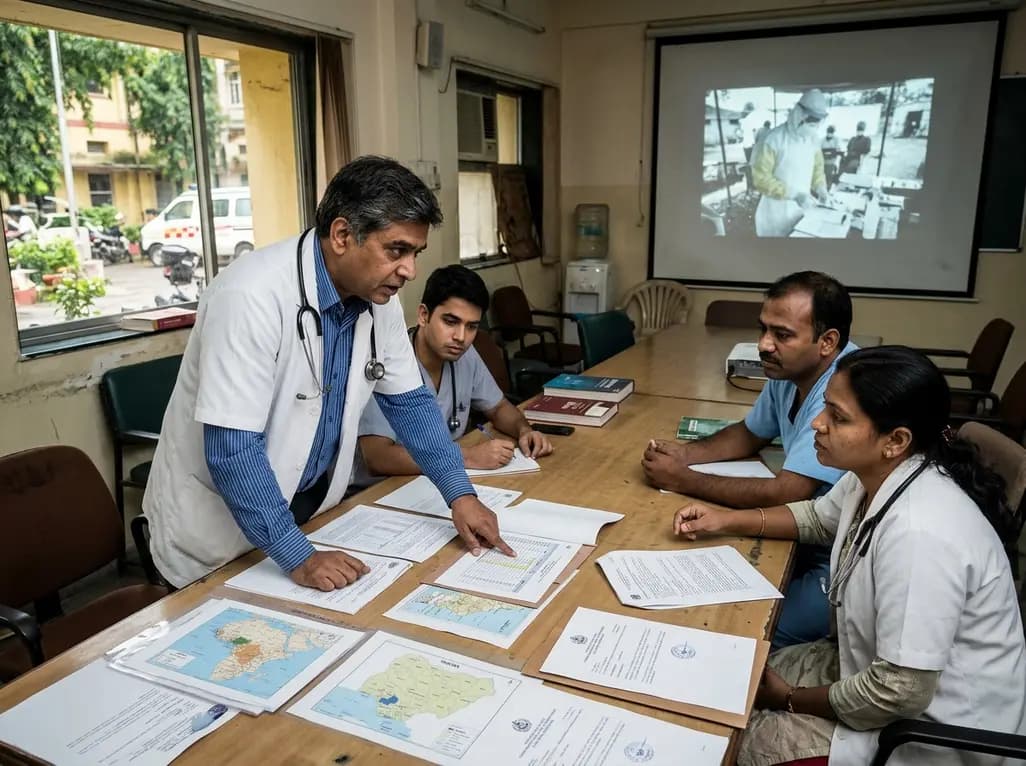
Following Nigeria's first recorded Ebola case linked to regional travel, the Africa CDC has convened an emergency ministerial summit. This alert underscores critical clinical priorities for healthcare professionals, including differentiating early viral infection from malaria, implementing barrier nursing, and triage.
Today

Leucine Rich Bio has introduced South Asia's first comprehensive vaginal microbiome test, BugSpeaks. By profiling microbial dysbiosis, pathogens, and antimicrobial resistance, this next-generation diagnostic platform provides clinicians with deeper insights into recurrent infections, fertility, and reproductive health.
Today

Review how tailored exercise programs benefit frail older patients with heart failure. Explore pathophysiological mechanisms, individualized training prescriptions, and strategies to overcome adherence barriers in clinical practice.
Today

This comparative study evaluates posterior labral tears with and without glenohumeral instability, highlighting distinct demographic patterns, MRI underestimation in stable shoulders, and successful arthroscopic repair outcomes.
Today

A clinical study demonstrates that early intervention with tocilizumab, either as monotherapy or bridged with corticosteroids, achieves significant proptosis reduction and resolves active inflammation in treatment-naive thyroid eye disease.
Today
