

Loading, please wait...
Loading, please wait...

When patients face a diagnosis of an intracranial neoplasm, identifying the right surgical specialist represents a crucial clinical juncture. Understanding the key drivers of neurosurgeon selection helps clinical teams improve communication, streamline surgical referrals, and deliver patient-centered oncological care. In contemporary surgical oncology, patients increasingly consult digital resources, medical directories, and specialist networks to guide their healthcare decisions. However, empirical data detailing what factors surgical candidates actually prioritize remain limited. A specialized study examined these decision-making parameters among operative brain tumor patients. The findings illuminate how individuals weigh technical qualifications against institutional prestige and interpersonal bedside skills. Furthermore, the data provide actionable insights for clinicians striving to build transparent, equitable surgical practices in modern healthcare environments.
In this prospective survey study, researchers evaluated operative intracranial tumor patients to identify the primary factors guiding their surgical choices. Fifty patients completed the comprehensive questionnaire, representing diverse intracranial pathologies including meningiomas, glioblastomas, schwannomas, and pituitary adenomas. The investigators asked participants to rank thirteen standardized parameters on a five-point Likert scale.
Surgeon caseload and procedure-specific operative experience emerged as the most critical determinants for prospective candidates. Patients placed the greatest weight on whether a surgeon frequently performed that exact intracranial procedure. Consequently, technical proficiency and specialized procedural volume overshadowed broad surgical experience. Institutional reputation closely followed procedural volume in importance, with overall hospital ranking earning the second-highest score. In addition, total years of clinical experience and interpersonal bedside manner ranked as essential considerations. Patients emphasized that compassionate communication and clear dialogue significantly enhanced their trust. In contrast, superficial factors such as social media visibility, surgeon age, and casual word of mouth received the lowest rankings. Therefore, individuals confronting high-stakes neurosurgical interventions systematically favor verified clinical competence over digital marketing.
Although procedural volume consistently led overall preferences, subgroup regression analyses revealed meaningful demographic variations among respondents. For instance, non-Caucasian individuals placed significantly higher reliance on personal recommendations and word-of-mouth guidance than Caucasian patients. Conversely, patients who were undergoing a secondary or repeat craniotomy relied substantially less on informal word of mouth. These repeat surgical candidates instead prioritized institutional track records and verifiable subspecialty expertise.
Furthermore, attitudes toward academic pedigree exhibited notable socioeconomic divides. Older individuals, ethnic minorities, non-Caucasian participants, and married respondents were significantly less inclined to prioritize the prestige of the surgeon's medical school. Instead, these cohorts focused directly on immediate surgical competence, communicative clarity, and empathetic interactions during clinical consultations. Consequently, academic branding alone does not guarantee patient confidence across diverse populations. These nuanced trends highlight how cultural background, prior surgical history, and age shape individual decision-making frameworks. Clinicians must therefore recognize that uniform outreach cannot address the diverse expectations of all surgical candidates. Recognizing these variations allows surgical teams to communicate more effectively with varied cultural communities.
These empirical insights provide critical guidance for referring physicians, primary care doctors, and neurologists who counsel patients requiring tumor resection. In clinical practice, patients confronted with an intracranial mass frequently experience acute psychological distress. As a result, they look to their primary clinicians to help them decipher complex medical credentials. When making specialty referrals, physicians should proactively discuss the surgeon’s subspecialty volume and procedure-specific track record. Rather than simply directing patients toward generic hospital networks, clinicians should highlight relevant disease-specific caseloads.
Additionally, multidisciplinary tumor boards play an indispensable role in streamlining this navigation process. Because patients value institutional capability and coordinated care, comprehensive cancer centers should transparently communicate their collaborative multidisciplinary approach. Primary teams should reassure patients by explaining how neurosurgeons work alongside neuro-oncologists, radiation oncologists, and specialized intensive care units. Moreover, referring clinicians should prepare patients for consultations by encouraging them to inquire directly about case volumes and anticipated postoperative recovery. This proactive guidance empowers individuals to enter consultations feeling informed, supported, and confident in their ultimate surgical decisions.
To optimize patient satisfaction and informed consent, neurosurgical departments must improve institutional transparency regarding operative volumes and clinical outcomes. Surgical candidates increasingly demand tangible evidence of procedural expertise rather than vague assertions of competence. Therefore, surgical centers should provide clear, accessible summaries of procedure-specific metrics, complication benchmarks, and specialized technologies. Transparent disclosure builds profound trust between surgical candidates and neuro-oncology teams before any invasive intervention occurs.
Furthermore, surgeons must cultivate exceptional interpersonal communication skills during preliminary preoperative consultations. Even though technical skill remains paramount, patients consistently identify surgeon empathy, active listening, and thoughtful explanations as major decision drivers. Surgical candidates want to feel heard, understood, and treated as partners in their clinical journey. When surgeons explain intricate anatomical risks in accessible language, patients report diminished preoperative anxiety and higher satisfaction. Consequently, neurosurgical training programs should place greater structural emphasis on patient-centered communication and bedside engagement. Surgeons who combine high operative precision with genuine relational empathy establish stronger therapeutic alliances. Ultimately, this comprehensive communication strategy demystifies complex intracranial procedures and enhances patient compliance throughout recovery.
The observed variations among demographic subgroups carry profound implications for healthcare equity and patient outreach. Because certain underserved minority groups rely heavily on community networks and word-of-mouth recommendations, academic medical centers must actively build grassroots connections. Academic institutions cannot assume that passive reputation or metropolitan prestige will naturally attract all patient demographics. Instead, specialized neuro-oncology programs must establish educational partnerships with community health centers, local clinics, and advocacy groups.
Moreover, clinicians must dismantle structural communication barriers that hinder equitable healthcare access. When institutions fail to offer culturally competent communication, marginalized patients may delay seeking essential surgical consultations. Providing multilingual educational materials and culturally sensitive patient navigators ensures that complex surgical information reaches vulnerable communities effectively. Additionally, clinical teams must respect diverse family support structures, particularly for married or elderly individuals who make collaborative medical decisions. By actively engaging extended family members and addressing individual community concerns, tertiary centers can bridge existing healthcare disparities. Ensuring that every patient possesses clear access to high-volume intracranial specialists represents a fundamental pillar of modern neurosurgical care.
As healthcare systems evolve, evaluating patient preferences will remain essential for designing responsive, high-quality surgical oncology programs. Future investigations should incorporate multi-center cohorts across diverse geographical and socioeconomic environments to validate these single-center observations. Furthermore, incorporating qualitative interviews alongside quantitative metrics will help researchers understand the psychological motivations behind patient choices. Understanding these deeper motivations allows healthcare systems to adapt their service models to changing patient expectations.
In addition, digital healthcare delivery and telemedicine platforms present exciting opportunities to expand patient access to surgical consultations. Through virtual evaluations, patients residing in rural or medically underserved regions can readily consult subspecialized neurosurgeons without logistical hardship. Telehealth visits offer an ideal platform for surgeons to discuss caseload experience, review advanced imaging, and answer family questions in a relaxed setting. Consequently, remote consultations can democratize access to high-volume cranial specialists, regardless of geographic distance. As surgical practice embraces value-based healthcare, aligning clinical transparency with patient values will elevate both surgical outcomes and patient satisfaction.
Operative intracranial tumor patients prioritize surgeon caseload and procedure-specific experience above all other factors. Patients place the greatest value on how frequently a neurosurgeon performs their specific tumor resection. Consequently, documented procedural repetition and clinical proficiency serve as the primary determinants of patient confidence during surgical decision-making.
Overall hospital reputation and ranking represent the second most influential factor for operative patients. Surgical candidates recognize that complex cranial interventions require sophisticated intensive care units, neuro-anesthesia teams, and cutting-edge intraoperative imaging technologies. Therefore, patients view high institutional rankings as a dependable surrogate for comprehensive perioperative infrastructure and safety.
Demographic factors such as age, cultural background, and prior surgical history strongly shape health literacy and personal trust networks. For instance, minority populations often rely more on community word-of-mouth recommendations, while older patients deem academic prestige less relevant. Thus, socioeconomic backgrounds distinctly influence how individuals evaluate clinical qualifications.
Disclaimer: This content is for informational and educational purposes only. It is not intended to be a substitute for professional medical advice, diagnosis, or treatment. Always seek the advice of your physician or other qualified health provider with any questions you may have regarding a medical condition. Never disregard professional medical advice or delay in seeking it because of something you have read on this website. Refer to the latest local and national guidelines for clinical practice.
References

Read summarized clinical updates, watch expert medical content, and earn CME certifications right from your smartphone.
Open your smartphone camera to scan and install.





A clinical survey of intracranial tumor patients reveals that surgeon caseload, procedure-specific experience, and hospital reputation are the top drivers in neurosurgeon selection, far outweighing social media and surgeon age. Demographic factors significantly shape how patients evaluate credentials and word of mouth.
Today

Ambient digital scribes promise effortless medical documentation, but a critical sociotechnical commentary reveals that AI alters rather than eliminates charting work. Discover how shifting cognitive burdens, oversight risks, and workflow redesign impact clinical safety and healthcare practice.
Today

A new comparative study demonstrates that intraoperative imprint cytology achieves 96.6% diagnostic accuracy in ovarian tumours, outperforming frozen section in sensitivity for borderline lesions and offering an accessible, rapid alternative for resource-constrained surgical centres.
Today

Thoracic aortic aneurysm lacks etiologic medical therapy. A new study reveals that targeting specific αV integrins with Cilengitide attenuates TGF-β and mechanotransduction pathways, effectively limiting pro-fibrotic remodeling and aortic bulb dilation in both syndromic and sporadic disease models.
Today
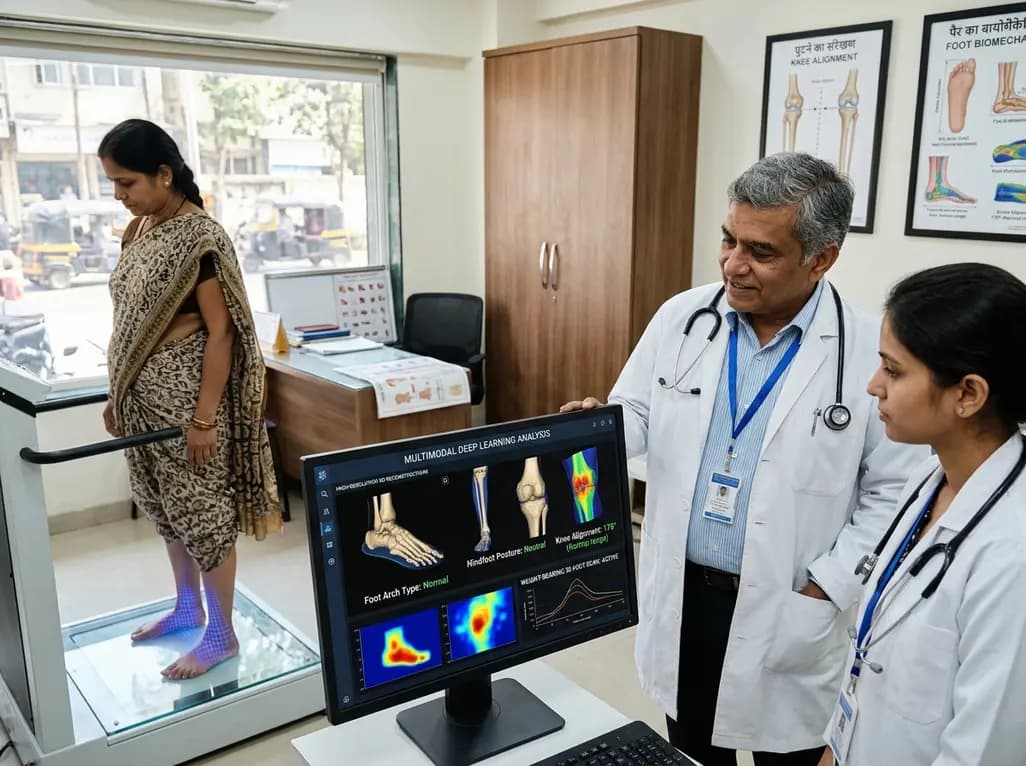
A multimodal deep learning framework utilizing weight-bearing 3D foot scans accurately screens lower-limb alignment, including arch type, hindfoot posture, and knee alignment, offering an accessible, radiation-free alternative to radiography for early biomechanical triage.
Today

A real-world retrospective study demonstrates that combining intravitreal ranibizumab with focal/grid macular laser significantly improves visual acuity and central macular thickness compared to laser monotherapy in patients with center-involved diabetic macular edema.
Today
