.webp&w=384&q=75)

Loading, please wait...
Loading, please wait...

Modern pharmacology faces high costs and long development cycles. Consequently, researchers are turning to a drug repositioning web server like DRHIN to find new uses for approved medications. This integrated platform utilizes deep learning to analyze complex biological networks. Specifically, it combines transcriptomics, proteomics, and microbiome data into heterogeneous information networks. By doing so, it clarifies the molecular mechanisms that drive drug effectiveness across different diseases.
DRHIN stands out because it incorporates 19 state-of-the-art graph representation algorithms. These tools allow scientists to compare and evaluate network data with high precision. Furthermore, the platform offers a code-free portal. This accessibility enables clinicians to perform predictive tasks without needing deep programming knowledge. In addition, high-performance computing ensures that the system processes million-scale networks quickly. Clinicians can use these insights to repurpose existing drugs for new indications or identify potential therapies for specific diseases.
Repurposing existing drugs reduces the safety risks associated with new chemical entities. Moreover, it significantly lowers the financial burden of drug development. Therefore, tools like DRHIN empower the global medical community to deliver safer treatments faster. Similarly, the platform makes analyses reproducible and accessible for researchers worldwide. In conclusion, DRHIN provides a robust framework for identifying potential therapies in real-world scenarios.
DRHIN acts as a specialized drug repositioning web server that analyzes biological data to find new therapeutic indications for existing, approved drugs.
The platform integrates transcriptomics, proteomics, and microbiome data across eight biological entities and 19 association types to build comprehensive networks.
No, DRHIN provides a code-free portal, making complex deep learning analyses accessible to medical professionals and researchers without programming expertise.
Disclaimer: This content is for informational and educational purposes only. It does not constitute medical advice or a substitute for professional healthcare consultation. Refer to the latest local and national guidelines for clinical practice.
References

Read summarized clinical updates, watch expert medical content, and earn CME certifications right from your smartphone.
Open your smartphone camera to scan and install.





DRHIN uses deep learning and heterogeneous information networks to repurpose existing drugs, offering a cost-effective path for new disease treatments....
6 months ago
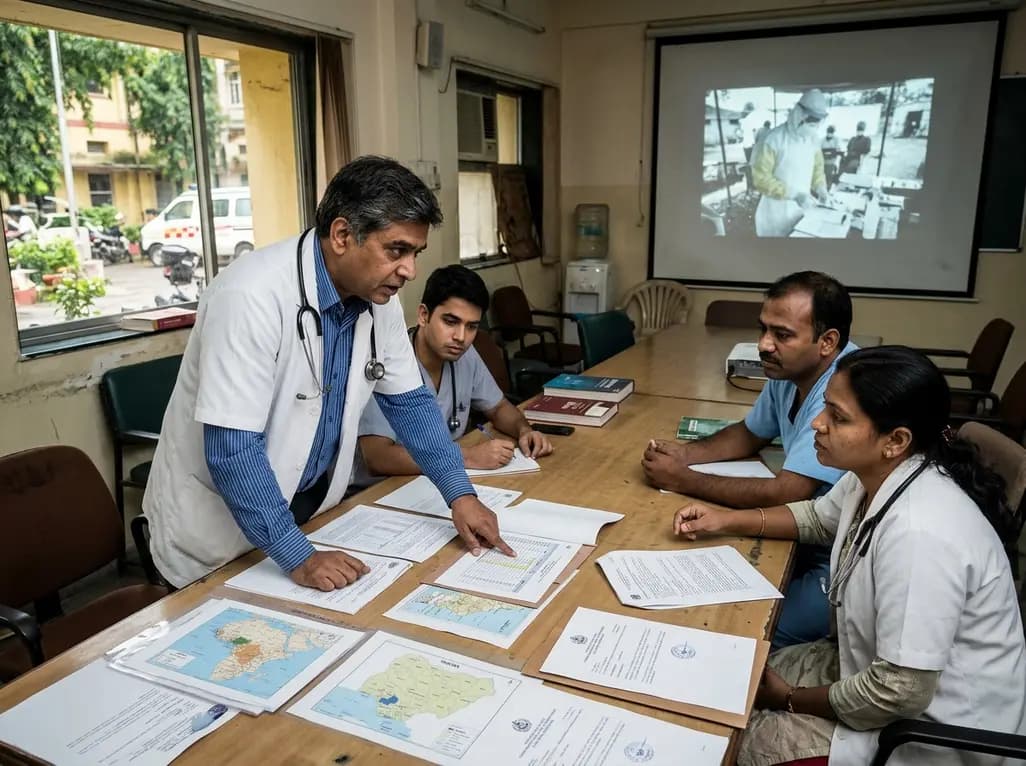
Following Nigeria's first recorded Ebola case linked to regional travel, the Africa CDC has convened an emergency ministerial summit. This alert underscores critical clinical priorities for healthcare professionals, including differentiating early viral infection from malaria, implementing barrier nursing, and triage.
Today

Leucine Rich Bio has introduced South Asia's first comprehensive vaginal microbiome test, BugSpeaks. By profiling microbial dysbiosis, pathogens, and antimicrobial resistance, this next-generation diagnostic platform provides clinicians with deeper insights into recurrent infections, fertility, and reproductive health.
Today

Review how tailored exercise programs benefit frail older patients with heart failure. Explore pathophysiological mechanisms, individualized training prescriptions, and strategies to overcome adherence barriers in clinical practice.
Today

This comparative study evaluates posterior labral tears with and without glenohumeral instability, highlighting distinct demographic patterns, MRI underestimation in stable shoulders, and successful arthroscopic repair outcomes.
Today

A clinical study demonstrates that early intervention with tocilizumab, either as monotherapy or bridged with corticosteroids, achieves significant proptosis reduction and resolves active inflammation in treatment-naive thyroid eye disease.
Today
