.webp&w=384&q=75)

Loading, please wait...
Loading, please wait...

Recent clinical trial results highlight a significant advancement in the management of advanced soft tissue sarcoma (STS). Researchers investigated the efficacy of combining standard-of-care doxorubicin with durvalumab, a PD-L1 immune checkpoint inhibitor. This doxorubicin and durvalumab sarcoma study focused on anthracycline-naïve patients with metastatic or recurrent disease. Consequently, the findings provide a potential new pathway for improving patient outcomes in a challenging oncological setting.
The Phase II portion of the trial evaluated 41 patients to determine the objective response rate (ORR). Specifically, the combination therapy achieved an ORR of 31.7%, with one patient reaching a complete response and twelve others showing partial responses. Furthermore, the median progression-free survival (PFS) reached 7.6 months. The median overall survival was also impressive at 23.8 months. These results suggest that adding immunotherapy to traditional chemotherapy might enhance the durability of the treatment response.
Safety is a paramount concern when combining cytotoxic drugs with immunotherapy. In this study, the phase IB portion established a recommended dose of 75 mg/m2 for doxorubicin. Common grade 3-4 adverse events included neutropenia, thrombocytopenia, and anemia. However, researchers noted that the toxicity profile remained acceptable and manageable within standard clinical protocols. Moreover, correlative analyses identified high PD-1 expression and the absence of RTK-RAS pathway alterations as key predictors for better survival.
The trial reported a median progression-free survival of 7.6 months and a median overall survival of 23.8 months for patients treated with the combination.
The absence of genetic alterations in the RTK-RAS pathway and high levels of PD-1 expression were identified as independent predictors for longer progression-free survival.
The most frequent grade 3-4 adverse events reported were hematological, specifically neutropenia, thrombocytopenia, and anemia.
Disclaimer: This content is for informational and educational purposes only. It is not intended as medical advice or a substitute for professional healthcare. Refer to the latest local and national guidelines for clinical practice.
References
Yun KH et al. Phase IB/II Trial with Correlative Analyses of Doxorubicin plus Durvalumab Combination in Patients with Advanced Soft Tissue Sarcoma. Clin Cancer Res. 2026 Feb 06. doi: 10.1158/1078-0432.CCR-25-2633. PMID: 41649866.
National Comprehensive Cancer Network (NCCN). Clinical Practice Guidelines in Oncology: Soft Tissue Sarcoma. Version 1.2025.
"
Read summarized clinical updates, watch expert medical content, and earn CME certifications right from your smartphone.
Open your smartphone camera to scan and install.





A Phase IB/II trial demonstrates that doxorubicin plus durvalumab offers a 31.7% ORR and manageable safety profile in patients with advanced soft tissue sar...
8 months ago
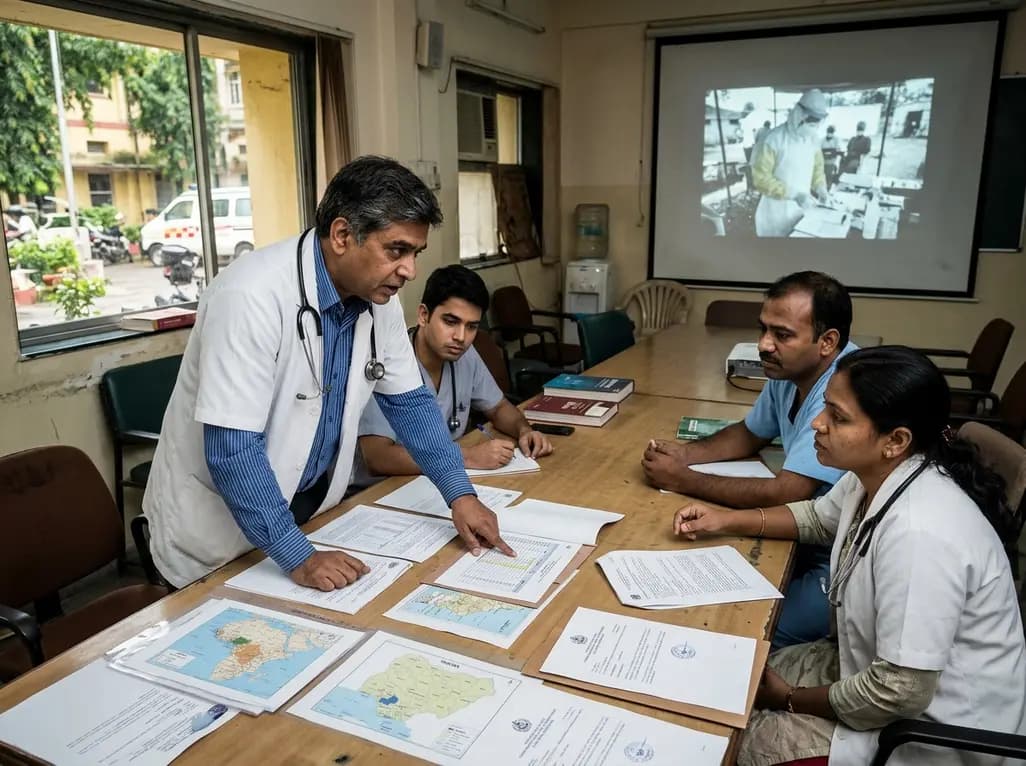
Following Nigeria's first recorded Ebola case linked to regional travel, the Africa CDC has convened an emergency ministerial summit. This alert underscores critical clinical priorities for healthcare professionals, including differentiating early viral infection from malaria, implementing barrier nursing, and triage.
Today

Leucine Rich Bio has introduced South Asia's first comprehensive vaginal microbiome test, BugSpeaks. By profiling microbial dysbiosis, pathogens, and antimicrobial resistance, this next-generation diagnostic platform provides clinicians with deeper insights into recurrent infections, fertility, and reproductive health.
Today

Review how tailored exercise programs benefit frail older patients with heart failure. Explore pathophysiological mechanisms, individualized training prescriptions, and strategies to overcome adherence barriers in clinical practice.
Today

This comparative study evaluates posterior labral tears with and without glenohumeral instability, highlighting distinct demographic patterns, MRI underestimation in stable shoulders, and successful arthroscopic repair outcomes.
Today

A clinical study demonstrates that early intervention with tocilizumab, either as monotherapy or bridged with corticosteroids, achieves significant proptosis reduction and resolves active inflammation in treatment-naive thyroid eye disease.
Today
