

Loading, please wait...
Loading, please wait...

The STRATEGY trial assessed whether adding intravenous tirofiban to aspirin could reduce early neurological deterioration (END) or recurrent stroke in patients with branch atheromatous disease-related acute ischemic stroke. This multicentre, double-blind randomized trial was conducted across 38 hospitals in China and enrolled 970 patients, with 486 assigned to tirofiban plus aspirin and 484 to placebo plus aspirin. Tirofiban was administered as a 30-minute loading infusion followed by a 24-hour maintenance infusion; all patients received aspirin. The primary efficacy outcome was END within seven days or a new stroke within 90 days, while the primary safety outcome was moderate or severe bleeding. The primary efficacy outcome occurred in 79 patients (17.1%) in the tirofiban group and 89 (19.6%) in the placebo group; the difference was not statistically significant (hazard ratio, 0.88; 95% CI, 0.65–1.19; P = 0.39). Moderate or severe bleeding occurred in one patient (0.2%) receiving tirofiban and none receiving placebo (P > 0.99). Conclusion: Adding intravenous tirofiban to aspirin did not significantly reduce early neurological deterioration or new stroke in this patient population, although moderate or severe bleeding was uncommon in both groups. The findings do not support routine use of this regimen for all patients with branch atheromatous disease-related stroke.

Read summarized clinical updates, watch expert medical content, and earn CME certifications right from your smartphone.
Open your smartphone camera to scan and install.





The STRATEGY trial assessed whether adding intravenous tirofiban to aspirin could reduce early neurological deterioration (END) or recurrent stroke in patients with branch atheromatous disease-related acute ischemic stroke. This multicentre, double-blind randomized trial was conducted across 38 hospitals in China and enrolled 970 patients, with 486 assigned to tirofiban plus aspirin and 484 to placebo plus aspirin. Tirofiban was administered as a 30-minute loading infusion followed by a 24-hour maintenance infusion; all patients received aspirin. The primary efficacy outcome was END within seven days or a new stroke within 90 days, while the primary safety outcome was moderate or severe bleeding. The primary efficacy outcome occurred in 79 patients (17.1%) in the tirofiban group and 89 (19.6%) in the placebo group; the difference was not statistically significant (hazard ratio, 0.88; 95% CI, 0.65–1.19; P = 0.39). Moderate or severe bleeding occurred in one patient (0.2%) receiving tirofiban and none receiving placebo (P > 0.99). Conclusion: Adding intravenous tirofiban to aspirin did not significantly reduce early neurological deterioration or new stroke in this patient population, although moderate or severe bleeding was uncommon in both groups. The findings do not support routine use of this regimen for all patients with branch atheromatous disease-related stroke.
Today

An observational study from the NIH All of Us Research Program reveals that adding a multi-ancestry polygenic risk score to machine learning models provides only modest improvements in predicting adult weight gain, underscoring the enduring significance of routine clinical and lifestyle factors.
Today

A study in JAMIA Open shows lightweight open-source reasoning LLMs achieve up to 95% sensitivity and accelerate evidence synthesis screening by nearly twentyfold, presenting a cost-effective, scalable AI solution for biomedical research and systematic reviews.
Today
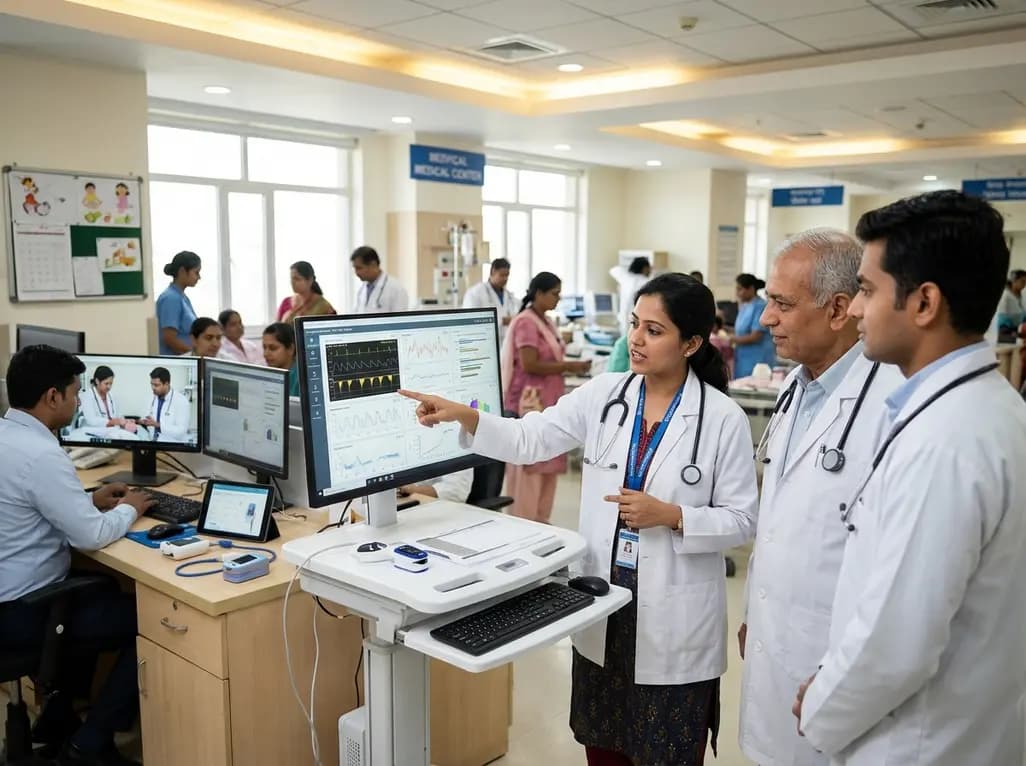
A landmark study details how an enterprise pediatric remote patient management model expanded from a single cardiology pilot to 16 diverse specialty programs by combining centralized digital operations with specialty clinical leadership.
Today

A comparative review of tension band wiring and intramedullary screw fixation in thumb metacarpophalangeal arthrodesis, evaluating union rates, hardware complications, and clinical outcomes.
Yesterday
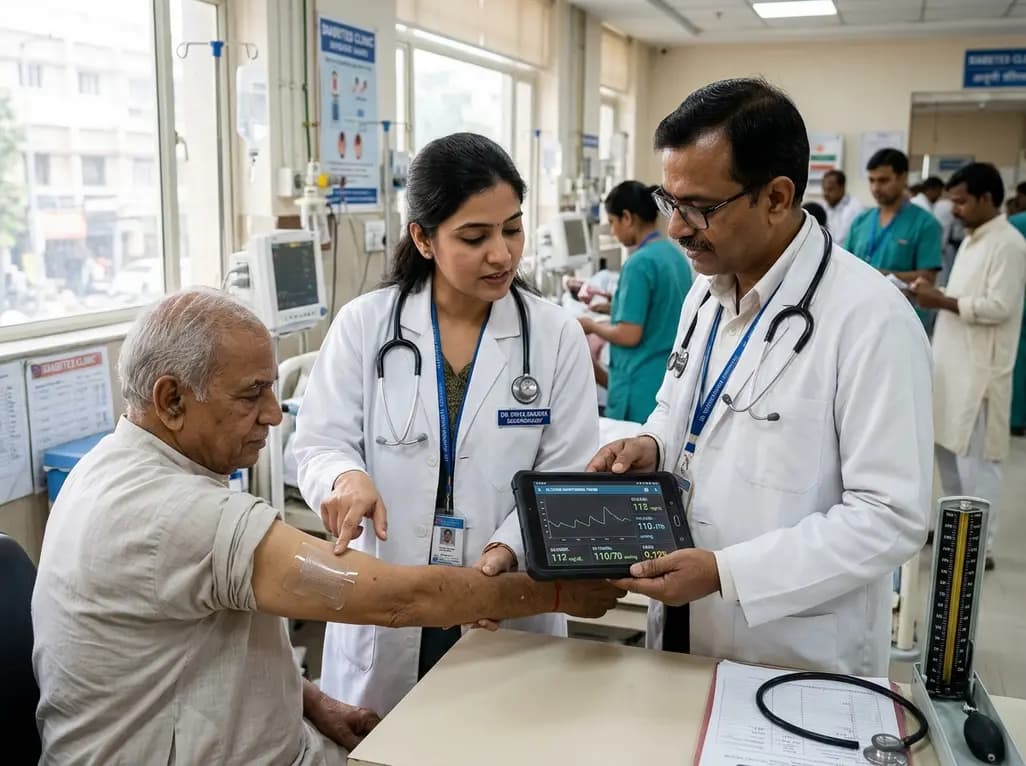
A breakthrough ultrathin multimodal sensor decouples physical hemodynamic monitoring from disposable electrochemical calibration, achieving long-term wearable glucose prediction with 81.36% accuracy and a 9.12% MARD. This offers a robust, drift-free solution for outpatient metabolic surveillance.
Yesterday
