.webp&w=384&q=75)

Loading, please wait...
Loading, please wait...

Clinicians managing long-term HIV care face the ongoing challenge of monitoring accelerated biological aging. Recently, a breakthrough study published in Clinical Epigenetics demonstrated that DNAmTL in HIV patients offers a more accurate assessment of cellular aging than traditional methods. While telomere length (TL) has long served as a proxy for aging, the standard quantitative PCR (qPCR) technique often lacks the precision needed for complex clinical profiles. Consequently, researchers investigated whether DNA methylation-based estimators could provide more reliable insights into the health status of people living with HIV (PWH).
Researchers conducted a cross-sectional study comparing DNAmTL and qPCR-based telomere length (qPCR-TL) across two distinct cohorts. These included 160 treatment-naïve individuals and 143 individuals who achieved long-term viral suppression through antiretroviral therapy (ART). By using the Infinium MethylationEPIC array, the team derived DNAmTL profiles and evaluated their agreement with standardized qPCR assays. Furthermore, they used multivariable linear regression to assess associations with various demographic and clinical factors.
The results revealed that DNAmTL and qPCR-TL were only moderately correlated, suggesting they capture different biological information. Specifically, DNAmTL in HIV patients showed significantly stronger correlations with chronological age and crucial immune markers like the CD4/8 ratio. Notably, the DNA-based estimator effectively reflected the impact of CMV serostatus and socioeconomic factors, whereas qPCR-TL failed to show significant associations with these clinical variables. Moreover, DNAmTL consistently outperformed the traditional method in identifying subtle clinical variations among both ART-naïve and treated individuals.
Therefore, this research suggests that DNAmTL is a superior biomarker for epigenetic aging research in the context of HIV. It provides a more comprehensive picture of cumulative biological stress and chronic immune activation. Although qPCR remains a common tool in many laboratories, the transition toward methylation-based estimators could enhance our ability to predict long-term clinical outcomes. Ultimately, integrating such precise biomarkers into clinical practice may help identify patients at higher risk for age-related comorbidities. Thus, DNAmTL represents a significant advancement in monitoring the health of PWH.
DNAmTL is a biomarker that estimates telomere length using DNA methylation patterns at 140 specific CpG sites. It provides a more robust and reproducible measure of biological age than direct physical measurements like qPCR.
In people with HIV, DNAmTL more accurately reflects the cumulative impact of chronic inflammation and socioeconomic factors on cellular health. It shows stronger associations with clinical markers such as the CD4/CD8 ratio compared to traditional methods.
Disclaimer: This content is for informational and educational purposes only. It does not constitute professional medical advice, diagnosis, or treatment. Always seek the advice of your physician or other qualified healthcare provider with any questions you may have regarding a medical condition. Refer to the latest local and national guidelines for clinical practice.
References

Read summarized clinical updates, watch expert medical content, and earn CME certifications right from your smartphone.
Open your smartphone camera to scan and install.





A comparative study finds that DNA methylation-based telomere length (DNAmTL) outperforms traditional qPCR in reflecting the clinical health of people with ...
5 months ago

An observational study from the NIH All of Us Research Program reveals that adding a multi-ancestry polygenic risk score to machine learning models provides only modest improvements in predicting adult weight gain, underscoring the enduring significance of routine clinical and lifestyle factors.
Today

A study in JAMIA Open shows lightweight open-source reasoning LLMs achieve up to 95% sensitivity and accelerate evidence synthesis screening by nearly twentyfold, presenting a cost-effective, scalable AI solution for biomedical research and systematic reviews.
Today
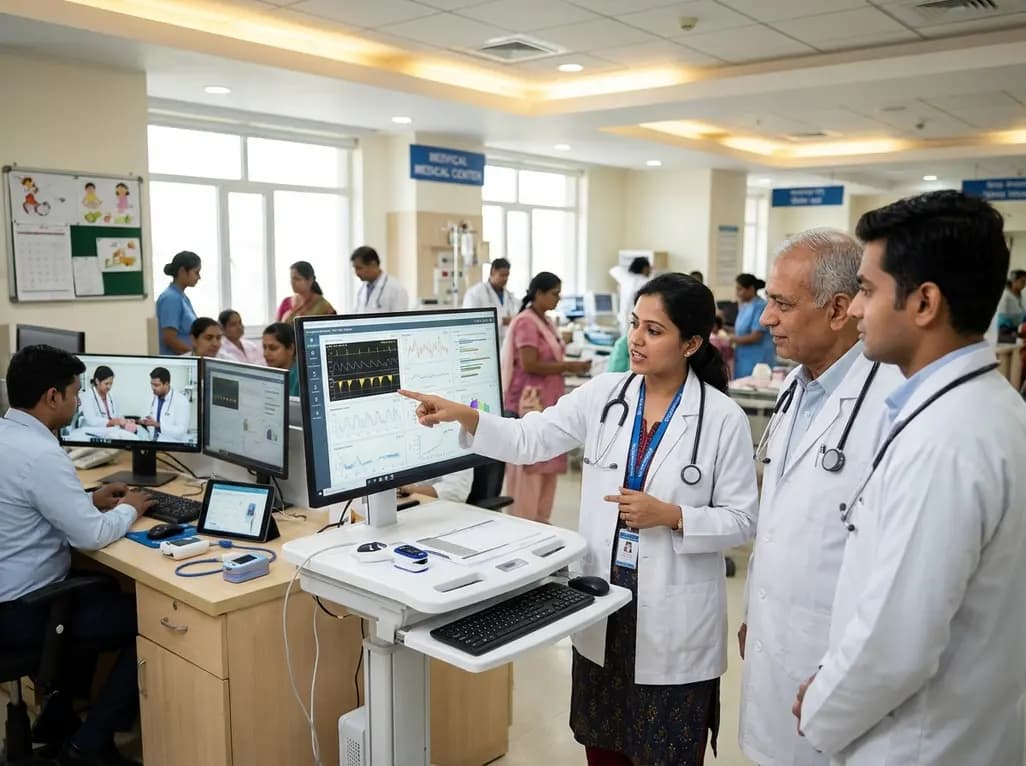
A landmark study details how an enterprise pediatric remote patient management model expanded from a single cardiology pilot to 16 diverse specialty programs by combining centralized digital operations with specialty clinical leadership.
Today

A comparative review of tension band wiring and intramedullary screw fixation in thumb metacarpophalangeal arthrodesis, evaluating union rates, hardware complications, and clinical outcomes.
Yesterday

A breakthrough ultrathin multimodal sensor decouples physical hemodynamic monitoring from disposable electrochemical calibration, achieving long-term wearable glucose prediction with 81.36% accuracy and a 9.12% MARD. This offers a robust, drift-free solution for outpatient metabolic surveillance.
Yesterday
