.webp&w=384&q=75)

Loading, please wait...
Loading, please wait...
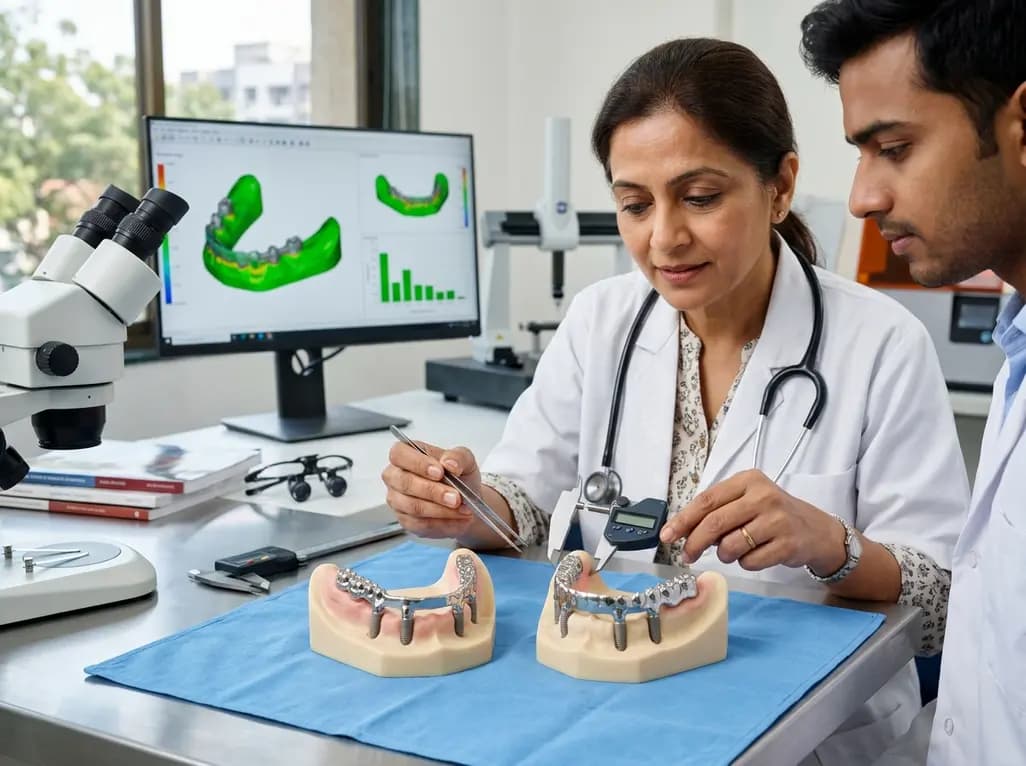
Mandibular implant-retained overdentures represent a highly predictable treatment modality for restoring edentulous patients. These prostheses offer improved stability, enhanced masticatory efficiency, and greater patient satisfaction compared to conventional removable dentures. Overdenture retention often relies on custom-made metallic bar attachments that splint implants together across the arch. Traditionally, clinicians and laboratory technicians fabricated these substructures using the lost-wax casting technique with cobalt-chromium alloys. However, manual steps in traditional casting can introduce dimensional errors and surface irregularities. Consequently, digital dentistry has introduced additive manufacturing methods to streamline production and enhance dimensional consistency. Direct metal laser sintering allows the creation of metallic structures directly from computer-aided design files. Therefore, evaluating DMLS cobalt chromium bars against traditionally cast counterparts is essential for understanding their clinical viability. Recent research compares the manufacturing accuracy and geometric discrepancy of both fabrication techniques. Understanding these parameters helps prosthodontists select the most reliable workflow for long-term clinical success. As digital workflows become more widespread across India, establishing the precision of additive manufacturing provides valuable reassurance. This detailed comparative review analyzes how direct laser sintering matches up against conventional casting in modern implant prosthodontics.
Additive manufacturing technology has transformed dental laboratory operations by reducing human-dependent variability and manual labor. In conventional lost-wax casting, technicians must create a wax or resin pattern, invest it in heat-resistant material, and cast molten alloy. Each step introduces potential dimensional distortion due to thermal expansion and material shrinkage. In contrast, direct metal laser sintering utilizes a high-powered laser to selectively fuse thin layers of metal powder. The automated process follows a computer-aided design model to construct DMLS cobalt chromium bars with high density. Furthermore, this direct approach eliminates intermediate investment steps, thereby minimizing cumulative processing errors. Dentists frequently inquire whether additive manufacturing can equal or surpass the precision of conventional casting. Direct laser sintering offers uniform material homogeneity and reduces internal porosity that often affects cast structures. Additionally, digital archiving allows technicians to remanufacture precise replicas whenever necessary without repeating physical impressions. Modern dental laboratories across India are increasingly adopting laser sintering equipment to improve workflow speed and turnaround time. Therefore, comparing the physical fidelity of laser-sintered bars with cast bars provides clinical confidence when adopting digital fabrication methods.
To assess manufacturing accuracy, investigators established an in-vitro experimental model representing a completely edentulous lower jaw. Researchers fabricated twelve bar joint attachments for two-implant-retained mandibular overdentures using identical reference stereolithography designs. They split the sample size evenly into two experimental cohorts of six bars each. The first cohort utilized an indirect technique where 3D-printed resin patterns underwent conventional investment casting using cobalt-chromium alloy. The second cohort utilized direct metal laser sintering to print metal bars directly from the design file. Subsequently, investigators scanned all finished metal bar specimens using high-precision optical laboratory scanners. They then superimposed the digitized scan data onto the original reference design file using advanced 3D inspection software. This superimposition method permitted detailed quantification of overall manufacturing accuracy, external geometric discrepancies, and internal fitting discrepancies. Moreover, volumetric comparison algorithms enabled non-destructive evaluation across all surfaces of the metallic structures. Statistical analyses evaluated whether mean geometric deviations differed significantly between the additive and cast groups. Such methodology provides an objective framework for evaluating dental fabrication workflows under controlled laboratory conditions.
The quantitative results demonstrated remarkable consistency between direct laser sintering and traditional casting techniques. Statistical analysis revealed no significant difference in overall manufacture accuracy or geometric discrepancy between the two groups. Specifically, the conventional cast group demonstrated a mean accuracy discrepancy of 0.1128 millimeters with a standard deviation of 0.006. In comparison, the DMLS cohort demonstrated a mean accuracy discrepancy of 0.1206 millimeters with a standard deviation of 0.01. Furthermore, evaluation of internal fitting discrepancy yielded equally comparable outcomes between both manufacturing methods. The cast group exhibited a mean internal discrepancy of 0.1659 millimeters, whereas the DMLS group exhibited a mean internal discrepancy of 0.1678 millimeters. Statistical testing confirmed that these minute dimensional variations were not statistically significant. Consequently, both fabrication techniques achieved a high degree of fidelity relative to the original virtual master design. These findings indicate that direct laser sintering produces cobalt-chromium overdenture bars with geometric accuracy equal to carefully executed conventional casting. Therefore, clinicians can confidently expect similar structural fit when transitioning from cast frameworks to laser-sintered alternatives in routine practice.
Achieving precise passive fit is crucial for the long-term success of implant-retained prostheses. Misfit between implant abutments and the metallic superstructure can introduce micro-gaps, leading to bacterial colonization and peri-implant inflammation. Furthermore, mechanical strain caused by non-passive seating can cause screw loosening, component fatigue, or implant loss. Because the study demonstrated equivalent accuracy for DMLS cobalt chromium bars, clinicians can expect excellent passive seating in clinical applications. Eliminating manual wax-up and casting procedures reduces technical sensitivity and minimizes human error in the laboratory. Additionally, laser sintering shortens turnaround time, enabling faster delivery of definitive prostheses to patients. From an economic standpoint, digital workflows streamline resource utilization and lower material waste in dental laboratories across India. Clinicians can maintain high standards of patient care while benefiting from predictable and reproducible laboratory outcomes. Moreover, DMLS frameworks maintain superior mechanical strength and corrosion resistance, which are vital for enduring intraoral forces over many years. Consequently, direct metal laser sintering represents a scientifically validated alternative to conventional casting for fabricating mandibular overdenture bars.
The integration of digital technology into prosthodontics continues to reshape clinical decision-making and laboratory manufacturing. While traditional casting remains a reliable method when performed by skilled technicians, it requires significant manual labor and time. Conversely, digital workflows utilizing computer-aided design and DMLS technology offer automated reproducibility and seamless quality control. Dental practitioners can now send digital intraoral scans directly to manufacturing facilities, eliminating traditional shipping delays. Furthermore, software-driven quality inspection ensures that every fabricated bar meets strict dimensional tolerances before delivery. As additive manufacturing technology becomes more accessible throughout India, prosthodontists can offer high-precision restorations more efficiently. The comparative research confirms that switching to direct laser sintering does not compromise geometric accuracy or internal fit. Thus, clinicians can embrace digital additive manufacturing without sacrificing physical standards required for successful implant therapy. Future advancements in metal powders and laser scanning precision will likely enhance clinical outcomes even further. Incorporating DMLS into everyday prosthodontic workflows represents a progressive step toward modernizing patient care and optimizing treatment efficacy.
Direct metal laser sintering simplifies laboratory production by constructing cobalt-chromium bars directly from computer design files without manual wax-up or casting. This automated process eliminates cumulative errors from investment expansion and metal shrinkage, yielding consistent dimensional accuracy. Furthermore, laser sintering reduces production time and material waste while delivering high mechanical strength and excellent passive fit. Consequently, clinicians receive reproducible, high-quality prostheses that enhance patient comfort and treatment reliability.
Scientific evaluations show no statistically significant difference in manufacturing accuracy or geometric discrepancy between direct metal laser sintering and traditional investment casting. Both methods achieve precise dimensional fidelity, with mean accuracy discrepancies around 0.11 to 0.12 millimeters and internal fit discrepancies around 0.16 millimeters. Therefore, laser-sintered cobalt-chromium bars provide a clinically equivalent level of accuracy, ensuring proper seating and long-term stability on mandibular implants.
Passive fit prevents damaging mechanical stress from being transferred to the underlying dental implants and surrounding jawbone. Non-passive seating creates micro-gaps that facilitate bacterial accumulation, leading to peri-implantitis and bone loss. Additionally, localized strain can trigger abutment screw loosening or component fracture over time. Achieving precise passive fit through accurate fabrication methods like DMLS minimizes these biological and mechanical complications, promoting long-term implant success.
Disclaimer: This content is for informational and educational purposes only and does not constitute medical advice. Refer to the latest local and national guidelines for clinical practice.
References

Read summarized clinical updates, watch expert medical content, and earn CME certifications right from your smartphone.
Open your smartphone camera to scan and install.





This in-vitro comparative study evaluates the manufacturing accuracy and geometric discrepancy of direct laser sintering (DMLS) versus conventional casting for cobalt-chromium bars in mandibular implant-retained overdentures, demonstrating equivalent precision and fit between both techniques.
3 months ago

An observational study from the NIH All of Us Research Program reveals that adding a multi-ancestry polygenic risk score to machine learning models provides only modest improvements in predicting adult weight gain, underscoring the enduring significance of routine clinical and lifestyle factors.
Today

A study in JAMIA Open shows lightweight open-source reasoning LLMs achieve up to 95% sensitivity and accelerate evidence synthesis screening by nearly twentyfold, presenting a cost-effective, scalable AI solution for biomedical research and systematic reviews.
Today
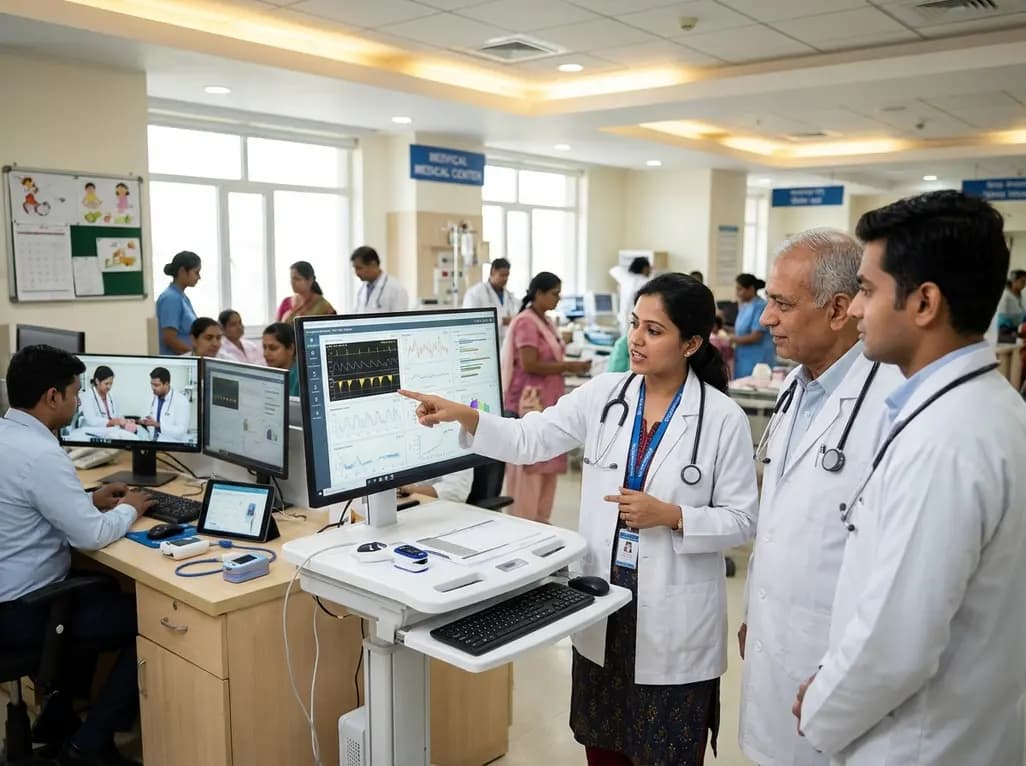
A landmark study details how an enterprise pediatric remote patient management model expanded from a single cardiology pilot to 16 diverse specialty programs by combining centralized digital operations with specialty clinical leadership.
Yesterday
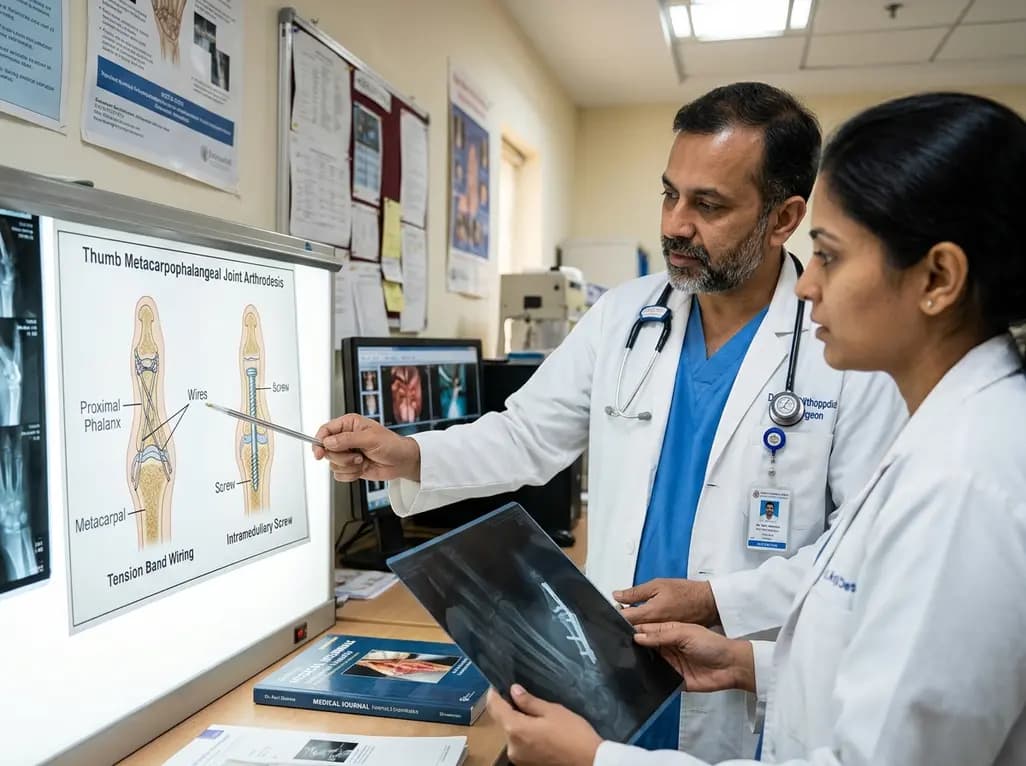
A comparative review of tension band wiring and intramedullary screw fixation in thumb metacarpophalangeal arthrodesis, evaluating union rates, hardware complications, and clinical outcomes.
Yesterday

A breakthrough ultrathin multimodal sensor decouples physical hemodynamic monitoring from disposable electrochemical calibration, achieving long-term wearable glucose prediction with 81.36% accuracy and a 9.12% MARD. This offers a robust, drift-free solution for outpatient metabolic surveillance.
Yesterday
