.webp&w=384&q=75)

Loading, please wait...
Loading, please wait...

Modern medical diagnostics are currently making significant strides toward personalized care. A groundbreaking study reveals how a disease trajectory blood test can predict patient outcomes from just one sample. Researchers at Imperial College London recently developed the VeloCD method for this purpose. This tool analyzes RNA markers to determine if a patient will recover or deteriorate soon. Consequently, doctors can see if an infection is ramping up or winding down without repeated tests.
This innovative approach helps in identifying the specific cause of a fever. For instance, it distinguishes between bacterial and viral origins very efficiently. Furthermore, it accurately assessed children with acute fevers across nine European countries. Specifically, it predicted transitions in healthy adults exposed to flu or COVID-19 pathogens. By predicting the course of illness early, clinicians can provide more targeted treatments. Therefore, the right patient receives the right care at the most optimal time.
Moreover, the test requires only a single time-point sample to yield results. This efficiency reduces the need for repeated measurements over several days significantly. As a result, healthcare staff can triage patients much faster than traditional methods allow. Additionally, the test predicted treatment responses in inflammatory bowel disease after just one dose. Furthermore, the study appeared in the journal Nature Communications recently. However, the team notes that further validation is still necessary before widespread clinical use.
Q1: What is the VeloCD method?
The VeloCD method is a computational approach that analyzes whole-blood RNA to anticipate future clinical states from a single time-point sample.
Q2: Can the test help with COVID-19 and flu?
Yes, the study showed that blood samples collected as early as Day 2 after exposure could accurately predict infection before PCR confirmation.
Q3: Who led the development of this technology?
Researchers from the UK\'s Imperial College London led the study and developed the VeloCD method as a proof-of-concept diagnostic tool.
Disclaimer: This content is for informational and educational purposes only. It does not constitute medical advice or replace professional judgment. Refer to the latest local and national guidelines for clinical practice.
References

Read summarized clinical updates, watch expert medical content, and earn CME certifications right from your smartphone.
Open your smartphone camera to scan and install.





Imperial College London researchers develop VeloCD, a blood test predicting illness trajectory and treatment response using RNA velocity from one sample....
5 months ago
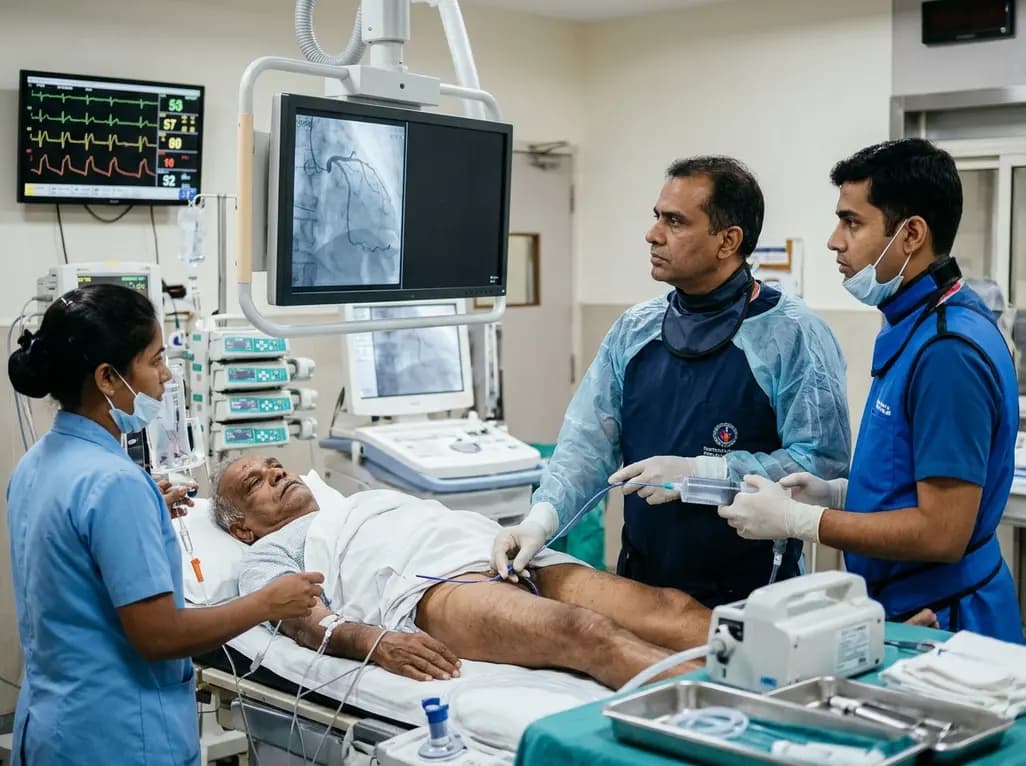
An elderly man with partially repaired Tetralogy of Fallot presented with STEMI caused by coronary embolism rather than atherosclerosis. Successful treatment with sustained mechanical aspiration thrombectomy underscores the vital need for high clinical vigilance in adult congenital heart disease.
Today

Demanding exhaustive hormonal profiling can inadvertently discourage clinical studies involving females. Methodological standards must align with the specific scientific question to expand, not restrict, equitable evidence for women.
Today

A recent study demonstrates that spinal oxygen sensors do not require mitochondrial electron transport to trigger sympathetic excitation during acute hypoxia, revealing new insights into how mitochondrial oxidative stress modulates autonomic tone in cardiovascular and neurological diseases.
Today

A comparative review of tension band wiring and intramedullary screw fixation in thumb metacarpophalangeal arthrodesis, evaluating union rates, hardware complications, and clinical outcomes.
Today

Following regulatory scrutiny from FSSAI regarding promotional representations and lean muscle preservation claims, Dr. Reddy's Laboratories and Nestlé Health Science are currently reviewing the branding and marketing strategy for their joint nutritional supplement Celevida GLP+.
Today
