.webp&w=384&q=75)

Loading, please wait...
Loading, please wait...
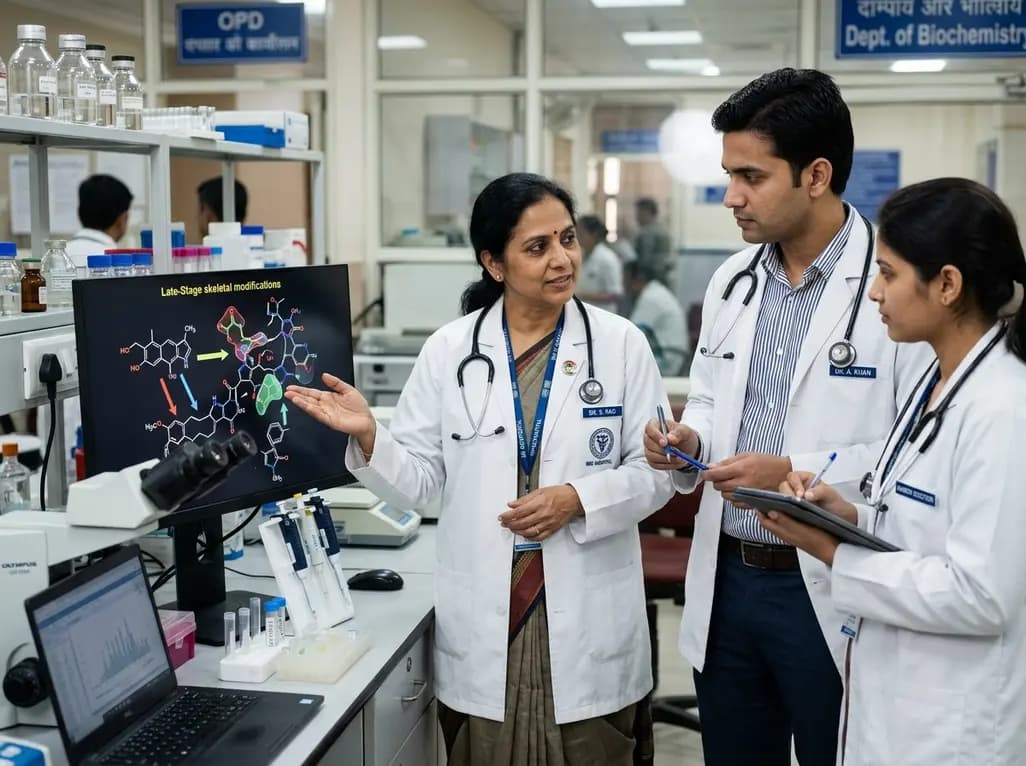
Pharmaceutical research requires the rapid synthesis and structural optimization of bioactive lead molecules. Historically, modifying core chemical scaffolds demanded laborious de novo synthesis from simple starting materials. Today, direct molecular editing offers an innovative paradigm shift by enabling precise, late-stage modifications directly on complex molecular architectures. Consequently, medicinal chemists can alter core structures and peripheral functional groups without rebuilding frameworks from scratch. This transformative approach significantly accelerates structure-activity relationship studies and enhances lead optimization efficiency. Furthermore, direct molecular editing allows researchers to explore uncharted chemical space previously inaccessible via conventional methods. As a result, scientists can fine-tune pharmacological potency, metabolic stability, and pharmacokinetic profiles with remarkable precision. By applying selective transformations directly to natural products and approved drugs, researchers streamline drug development. Therefore, this technological leap creates robust opportunities for addressing challenging therapeutic targets across contemporary medicine.
Skeletal editing represents a central pillar of modern molecular design, focusing on altering a molecule's core ring framework. Specifically, this methodology enables single-atom insertion, single-atom deletion, and precise atom-swapping reactions within heterocyclic and carbocyclic rings. In traditional medicinal chemistry, replacing a carbon atom with a nitrogen atom inside an aromatic ring required developing an entirely new multi-step synthetic pathway. In contrast, modern skeletal editing achieves this fundamental change in one or two chemical steps. For example, photo-mediated and transition-metal-catalyzed methods now facilitate selective cleavage of strong carbon-carbon and carbon-heteroatom bonds. Additionally, these reactions enable ring expansion and contraction on complex natural products, generating diverse structural analogues. Consequently, medicinal chemists can alter ring strain, dipole moments, and hydrogen-bonding capacities with unprecedented speed. Therefore, these molecular surgical tools provide direct access to unique bioactive isomers and novel pharmacophores.
While skeletal editing modifies core rings, peripheral editing concentrates on selective functionalization of peripheral bonds across complex scaffolds. In particular, late-stage functionalization focuses on carbon-hydrogen activation, selective halogenation, and direct oxygenation or nitrogenation of mature drug candidates. Because natural products often feature dense arrays of sensitive functional groups, achieving high chemo-selectivity and regio-selectivity remains paramount. Fortunately, modern catalytic platforms utilize steric hindrance and electronic disparities to target specific C–H bonds without disturbing labile motifs. For instance, photoredox catalysis and electrochemistry empower chemists to introduce bioactive fluorine atoms or methyl groups at late stages. Furthermore, the strategic addition of functional handles facilitates rapid bioconjugation and library generation. As a result, research teams can synthesize dozens of structurally distinct derivatives from a single batch of complex starting material. This capability substantially accelerates the discovery of leads with superior solubility, reduced toxicity, and improved affinity.
Complementing purely chemical methods, biomimetic molecular editing harnesses natural catalytic machinery to perform challenging transformations on complex scaffolds. In nature, specialized biosynthetic enzymes execute exquisitely selective oxidations and skeletal rearrangements under mild physiological conditions. Consequently, researchers now adapt engineered enzymes, including cytochrome P450 monooxygenases and non-heme iron catalysts, for late-stage diversification. These biocatalytic systems achieve site-selective hydroxylation on unactivated aliphatic carbons that standard synthetic reagents cannot reach. Moreover, combining chemoenzymatic cascades with synthetic editing tools offers unparalleled flexibility in natural product remodeling. For example, enzyme-guided oxidation can introduce a reactive carbonyl handle, which subsequently undergoes chemical ring expansion or atom replacement. Additionally, directed evolution allows scientists to tailor enzyme active sites for non-native drug scaffolds, maximizing substrate scope and selectivity. Therefore, nature-inspired editing merges biological precision with synthetic versatility, expanding the frontier of lead optimization.
The practical application of molecular editing extends far beyond academic synthesis, directly impacting clinical translation and pharmacokinetic optimization. In drug discovery campaigns, small structural modifications frequently dictate whether a molecule succeeds or fails in clinical development. For instance, inserting a single nitrogen atom into a hydrophobic scaffold often improves aqueous solubility while maintaining target binding affinity. Similarly, late-stage deuteration or fluorination can block vulnerable metabolic soft spots, thereby prolonging plasma half-life and reducing dosing frequency. Furthermore, molecular editing streamlines the synthesis of active metabolites and isotopic standards required for rigorous preclinical pharmacology evaluations. Consequently, pharmaceutical development teams can address critical absorption, distribution, metabolism, and excretion liabilities early in development. Moreover, avoiding lengthy de novo syntheses dramatically shortens the timeline between initial hit identification and lead candidate nomination. Ultimately, these efficiencies lower development costs and accelerate the delivery of life-saving therapeutics.
The rapid evolution of direct molecular editing continues to unlock new paradigms in synthetic and medicinal chemistry. Looking ahead, integrating artificial intelligence and computational reaction modeling promises to enhance reaction predictability across structurally diverse scaffolds. Machine learning algorithms can accurately predict site selectivity, thereby guiding chemists toward the most viable editing routes for complex substrates. Furthermore, automated flow chemistry platforms are beginning to incorporate late-stage editing protocols, enabling high-throughput library synthesis. However, significant challenges remain, including the need for greater functional group tolerance and scalable reaction conditions for industrial manufacturing. Additionally, expanding atom-swapping transformations on fully saturated alicyclic rings represents a vital frontier for ongoing research. As synthetic methodologies, automated platforms, and biocatalytic tools converge, molecular editing will become an indispensable standard in drug discovery. Consequently, these advancements will continue to expand chemical diversity and empower researchers to tackle undruggable biological targets.
Skeletal editing directly alters the core ring framework of a molecule through atom deletion, insertion, or swapping. In contrast, peripheral editing modifies the surrounding bonds and functional groups, typically through selective C–H activation or late-stage functionalization. Both complementary approaches allow medicinal chemists to rapidly diversify complex scaffolds, optimize pharmacokinetics, and explore novel chemical space without requiring de novo synthesis from simple starting materials.
Late-stage functionalization allows researchers to introduce diverse chemical modifications directly onto mature, complex lead compounds in a single step. Consequently, scientists bypass the time-consuming process of designing and executing separate multi-step syntheses for every single structural analogue. This streamlined capability substantially accelerates structure-activity relationship profiling, allowing discovery teams to evaluate dozens of optimized drug candidates in parallel while conserving substantial time and laboratory resources.
Biomimetic approaches utilize engineered enzymes and biosynthetic principles to achieve unparalleled chemo-selectivity and regio-selectivity under mild reaction conditions. These biological catalysts can selectively target unactivated aliphatic bonds in fragile natural products without damaging surrounding sensitive functional groups. Furthermore, combining biocatalysis with chemical editing strategies creates versatile chemoenzymatic cascades that produce complex, drug-like analogues that are extraordinarily difficult to synthesize using traditional organic chemistry alone.
Disclaimer: This content is for informational and educational purposes only and is not intended to serve as medical advice, diagnosis, or treatment. It does not replace clinical judgment or official clinical guidelines. Healthcare professionals should independently verify all information before applying it in practice. The authors and publishers assume no liability for actions taken based on this content. Refer to the latest local and national guidelines for clinical practice.
References
Cheng S et al. Direct Molecular Editing of Complex Molecules for Drug Discovery. Angew Chem Int Ed Engl. 2026 Aug 23. doi: 10.1002/anie.3399600. PMID: 42633684.
Levin MD et al. Skeletal editing in drug discovery and medicinal chemistry. Nat Rev Chem. 2024;8(4):245-262.
Börgel J, Ritter T. Late-stage functionalization: a new paradigm for drug discovery. Chem. 2020;6(8):1877-1887.

Read summarized clinical updates, watch expert medical content, and earn CME certifications right from your smartphone.
Open your smartphone camera to scan and install.





Direct molecular editing transforms drug discovery by enabling late-stage skeletal and peripheral modifications of complex lead compounds, drastically accelerating preclinical optimization and expanding novel chemical space.
last month
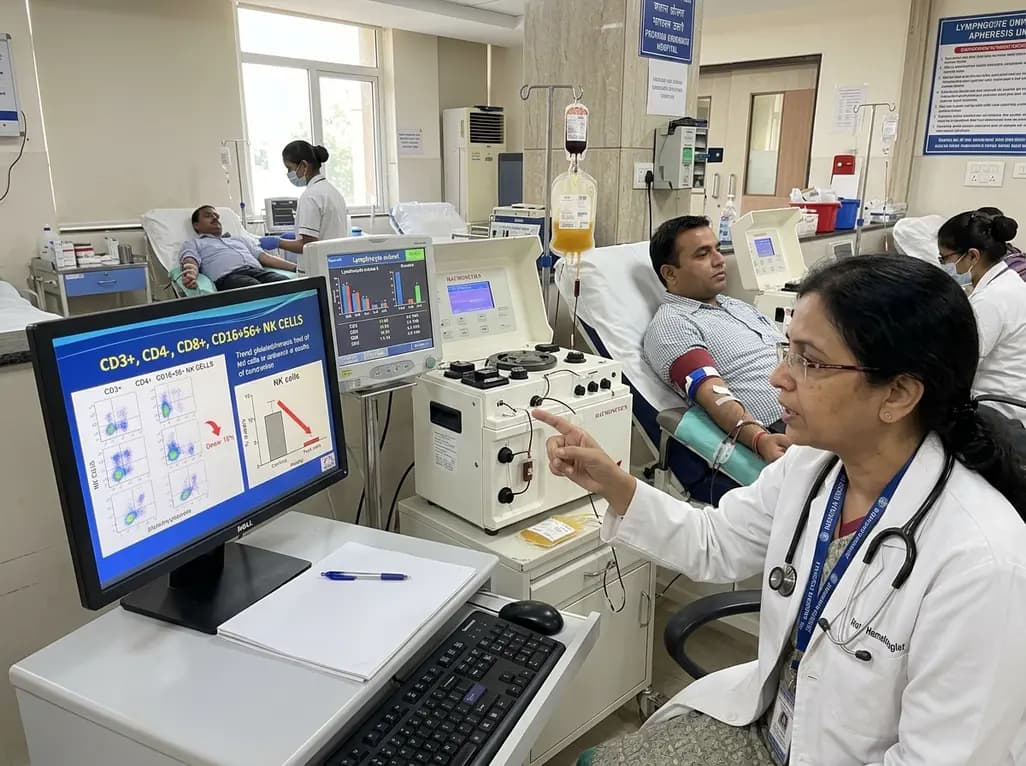
A landmark study assesses how frequent plateletpheresis alters peripheral immune profiles. Regular donors demonstrate notable reductions in circulating natural killer cells, emphasizing the critical need for routine lymphocyte subset surveillance in long-term blood donor safety programs.
Today

Fetal foramen ovale restriction typically emerges in the third trimester with right heart enlargement. Evidence demonstrates it does not independently mandate cesarean delivery, and over 93% of postnatal cardiac findings resolve spontaneously within one year, supporting conservative obstetric management.
Today

The latest WHO Global Health Estimates highlight India's life expectancy reaching 71 years alongside a healthy lifespan of 60.6 years. While longevity rebounds post-pandemic, non-communicable conditions now account for three-quarters of top mortalities, underscoring urgent clinical shifts in routine primary care.
Today

New biomechanical research reveals that foot-strike angle significantly influences knee energy absorption during cutting tasks in female soccer players. Understanding these kinematic patterns offers clinicians valuable pathways for targeted ACL injury prevention and athletic retraining.
Today

A comprehensive review analyzes periconceptional GLP-1 receptor agonist exposure, revealing reassuring data on congenital anomalies and adverse perinatal outcomes while emphasizing the need for cautious patient counseling.
Today
