.webp&w=384&q=75)

Loading, please wait...
Loading, please wait...

Managing Type 2 Diabetes (T2DM) effectively requires accessible and personalized educational tools. Therefore, researchers conducted a randomized control trial to evaluate digital diabetes self-care solutions. This study investigated how digital modalities impact health knowledge and daily behavioral outcomes. Furthermore, the researchers compared two distinct programs, vMMWD and TBES, along with their combined effects. This trial involved 188 adults from Texas to determine the most effective delivery method for diabetes education.
The results were highly encouraging for both patients and clinicians. Specifically, all three digital intervention modalities led to significant improvements in diabetes-related knowledge. Participants also reported better eating habits and increased self-efficacy. Moreover, the study observed a notable reduction in diabetes-related distress. Thus, the data suggests that these technological tools provide meaningful support for long-term health management.
Researchers used generalized estimating equations (GEE) to analyze the data rigorously. Consequently, they accounted for multiple factors simultaneously to ensure accuracy. The findings highlight that digital interventions are not just convenient but also clinically effective. However, the degree of improvement varied slightly between the individual and combined programs. Interestingly, every modality successfully empowered participants to take more control over their health routines.
Additionally, the ubiquity of digital content makes these solutions highly scalable. Instead of relying solely on in-person visits, patients can access vital information remotely. This flexibility is essential for adults who face geographical or scheduling barriers. Therefore, healthcare providers should consider integrating personalized digital tools into their standard clinical practice. By doing so, they can better support patients in achieving their behavioral goals.
Digital tools provide interactive and personalized education that increases a patient's understanding of their condition. This results in improved self-efficacy and more consistent healthy behaviors.
Yes, the study showed that participants using digital education programs experienced significant reductions in diabetes-related distress, which helps improve overall mental well-being and adherence.
The RCT found that both individual and combined digital programs lead to significant gains in knowledge and behavior. The choice often depends on the specific needs and preferences of the patient.
Disclaimer: This content is for informational and educational purposes only and does not constitute medical advice or a professional relationship between you and any healthcare provider. The information provided is based on a specific study and may not apply to every individual or clinical situation. Always seek the advice of your physician or other qualified health provider with any questions you may have regarding a medical condition. Refer to the latest local and national guidelines for clinical practice.
References
Ory M et al. Personalized Digital Health Solutions to Increasing Diabetes-Related Knowledge and Behavioral Outcomes: Results from an RCT . JMIR Diabetes. 2026 Apr 07. doi: 10.2196/87364. PMID: 41949910.
American Diabetes Association. 7. Diabetes Technology: Standards of Care in Diabetes—2024. Diabetes Care. 2024;47(Supplement_1):S126-S144.
World Health Organization. Global Strategy on Digital Health 2020-2025. Geneva: World Health Organization; 2021.

Read summarized clinical updates, watch expert medical content, and earn CME certifications right from your smartphone.
Open your smartphone camera to scan and install.





A randomized control trial reveals that personalized digital health solutions significantly enhance diabetes knowledge and behavioral outcomes in T2DM patie...
6 months ago
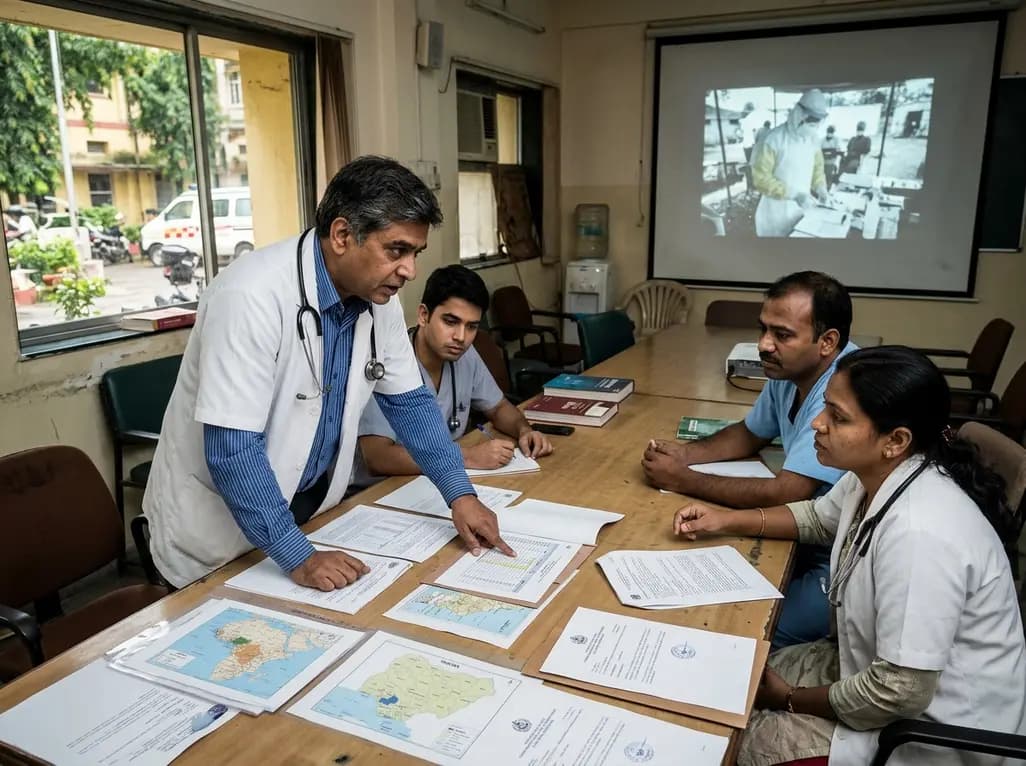
Following Nigeria's first recorded Ebola case linked to regional travel, the Africa CDC has convened an emergency ministerial summit. This alert underscores critical clinical priorities for healthcare professionals, including differentiating early viral infection from malaria, implementing barrier nursing, and triage.
Today

Leucine Rich Bio has introduced South Asia's first comprehensive vaginal microbiome test, BugSpeaks. By profiling microbial dysbiosis, pathogens, and antimicrobial resistance, this next-generation diagnostic platform provides clinicians with deeper insights into recurrent infections, fertility, and reproductive health.
Today

Review how tailored exercise programs benefit frail older patients with heart failure. Explore pathophysiological mechanisms, individualized training prescriptions, and strategies to overcome adherence barriers in clinical practice.
Today

This comparative study evaluates posterior labral tears with and without glenohumeral instability, highlighting distinct demographic patterns, MRI underestimation in stable shoulders, and successful arthroscopic repair outcomes.
Today

A clinical study demonstrates that early intervention with tocilizumab, either as monotherapy or bridged with corticosteroids, achieves significant proptosis reduction and resolves active inflammation in treatment-naive thyroid eye disease.
Today
