

Loading, please wait...
Loading, please wait...

Early identification of autism spectrum disorder (ASD) fundamentally alters a child's developmental trajectory. Timely behavioral interventions optimize language acquisition, social reciprocity, and adaptive functioning. However, prolonged waitlists and specialist shortages delay definitive evaluations. Families frequently wait six to twelve months to consult a developmental pediatrician. Consequently, vulnerable children miss critical neurodevelopmental windows before therapeutic interventions begin. In countries like India, the shortage of trained developmental specialists is acute. To address this crisis, modern healthcare systems are exploring digital health innovations. Adopting an FDA-authorized digital autism diagnostic tool provides an objective pathway to scale diagnostic capacity in routine practice. These software platforms help clinicians differentiate neurodevelopmental delays rapidly without sacrificing diagnostic accuracy. Furthermore, early objective screening empowers pediatricians to prioritize therapeutic referrals promptly. Therefore, integrating validated digital technologies into outpatient pediatric settings represents an essential shift toward accessible, equitable neurodevelopmental care.
Canvas Dx is a software-as-a-medical-device platform designed to assist healthcare professionals in evaluating developmental delays. The technology specifically targets children aged 18 to 72 months presenting with developmental concerns. In this quality improvement study, researchers integrated the tool directly into a specialty developmental pediatrics clinic workflow. Clinicians consecutively prescribed the digital assessment to 28 children as part of standard care. The diagnostic process utilizes three independent sources of behavioral information. First, caregivers complete a structured questionnaire regarding developmental milestones on a secure mobile application. Additionally, caregivers record and upload two brief video clips capturing the child’s spontaneous behaviors during play. Trained analysts subsequently review these videos using standardized behavioral rubrics. Finally, treating clinicians enter clinical observations into a specialized portal during the examination visit. An advanced machine-learning algorithm synthesizes these inputs into a final diagnostic determination. As a result, the tool delivers a structured output that clinicians evaluate alongside their clinical observations.
The prospective quality improvement cohort included 28 pediatric patients with a mean age of 52.2 months. Specialists established a confirmed clinical diagnosis of autism spectrum disorder in 67.9% of participants. Importantly, the digital tool produced determinate results in 22 children, achieving a 78.6% determinacy rate. Among children who received determinate outputs, the device exhibited robust diagnostic agreement with developmental specialists. Specifically, the sensitivity reached 94.1%, correctly identifying 16 out of 17 confirmed autism cases. The specificity stood at 80%, with a corresponding positive predictive value of 94.1%. Furthermore, the negative predictive value was 80% when compared directly against expert clinical diagnoses. However, investigators noted wide confidence intervals around specificity and negative predictive value due to the small sample size. Indeterminate results occurred in six children with highly complex or ambiguous developmental presentations. Consequently, these findings highlight that while the tool reliably identifies classic presentations, complex cases still require multidisciplinary evaluations.
Successful implementation of clinical digital tools depends heavily upon user experience and practical workflow feasibility. Post-study surveys and qualitative interviews captured extensive feedback from treating clinicians and families. Caregivers reported outstanding satisfaction with the mobile assessment protocol. Specifically, parents appreciated the flexibility of capturing video recordings in familiar home environments where children act naturally. Moreover, completing milestone surveys remotely gave caregivers an active voice in the clinical assessment. Clinicians also reported meaningful operational benefits during their evaluation sessions. Developmental pediatricians noted that reviewing pre-collected algorithmic data provided structured behavioral insights prior to in-person visits. Consequently, clinicians experienced reduced administrative burdens and greater efficiency during diagnostic consultations. Additionally, providers felt that the objective data strengthened parent-physician communication when delivering challenging developmental diagnoses. Nonetheless, clinicians highlighted the necessity of comprehensive staff training to assist parents with video uploads. In summary, providers and families endorsed the software as an intuitive, time-saving addition to outpatient clinical practice.
Specialist waitlists create substantial barriers to care, especially across developing healthcare ecosystems in India and South Asia. In resource-limited communities, pediatric neurologists and developmental experts remain heavily concentrated in metropolitan tertiary hubs. Therefore, general pediatricians and family physicians manage the primary burden of early childhood screening. Integrating a validated digital autism diagnostic tool into tier-two and rural clinics could transform diagnostic triaging. Clinicians can rapidly confirm clear presentations and immediately initiate targeted early speech and behavioral therapy. Meanwhile, providers can seamlessly fast-track indeterminate or diagnostically complex cases to tertiary pediatric neurology centers. However, clinicians must remember that algorithmic tools complement rather than replace experienced clinical judgment. Software outputs cannot account for subtle socio-cultural variations or atypical syndromic features without specialist oversight. Furthermore, healthcare organizations must ensure equitable digital access, including vernacular language support for caregivers. Ultimately, ongoing multicenter trials will further validate these artificial intelligence platforms across diverse populations. Digital tools will play a vital role in closing diagnostic gaps and democratizing neurodevelopmental care worldwide.
While the preliminary findings appear promising, several critical methodological limitations warrant careful consideration. Most notably, the study evaluated a modest sample size of only 28 children. This restricted cohort size yielded wide confidence intervals, particularly for specificity and negative predictive value estimates. Consequently, these numerical metrics should be viewed as preliminary descriptive indicators rather than definitive performance statistics. Furthermore, the single-center design within a specialty clinic may introduce referral selection bias. Specialist clinics naturally encounter higher autism prevalence rates compared to community-based pediatric practices. In addition, six participants received indeterminate outputs, reflecting the complex boundaries of neurodevelopmental conditions. Future research must evaluate device performance across larger, heterogeneous populations within diverse community settings. Investigators should also assess longitudinal outcomes to determine whether digital evaluations accelerate functional developmental gains. Additionally, economic assessments must explore the cost-effectiveness of implementing prescription software in diverse healthcare systems. Ultimately, rigorous prospective trials will clarify how digital diagnostic technologies best support pediatric clinicians in delivering timely, equitable care.
Canvas Dx functions as a software medical device combining three independent data inputs to assess neurodevelopmental risk. First, parents complete a structured mobile questionnaire regarding developmental milestones. Next, trained analysts score short video clips depicting the child during home play. Finally, treating clinicians submit a standardized behavioral assessment. A validated machine-learning algorithm processes these inputs together. Consequently, the device produces an objective, determinate diagnostic output to aid clinical decision-making.
The device is authorized for young children aged 18 to 72 months who show recognized signs of developmental delay. Healthcare providers or concerned caregivers can initiate the evaluation when developmental concerns arise. However, clinicians must exclude children with profound visual or hearing impairments, active seizure disorders, or major genetic conditions such as Rett syndrome. Therefore, physicians should carefully verify inclusion criteria before prescribing the tool during routine outpatient assessments.
Digital diagnostic aids cannot replace comprehensive clinical evaluations conducted by pediatric specialists. Instead, these devices serve as supportive diagnostic aids that complement physician judgment. Clinicians must synthesize the algorithm output with thorough developmental histories and direct patient observations. Furthermore, when the device produces an indeterminate finding or encounters complex neurodevelopmental phenotypes, specialist referrals remain necessary. Therefore, the technology enhances and streamlines existing specialist workflows rather than eliminating clinical oversight.
Disclaimer: This content is for informational and educational purposes only... Refer to the latest local and national guidelines for clinical practice.
References

Read summarized clinical updates, watch expert medical content, and earn CME certifications right from your smartphone.
Open your smartphone camera to scan and install.





A quality improvement study evaluates Canvas Dx, an FDA-authorized digital autism diagnostic tool integrated into outpatient developmental pediatrics, demonstrating high diagnostic agreement, workflow feasibility, and positive caregiver experience.
Today
A retrospective study of 6,113 adults shows that combining GLP-1 receptor agonists with digital health apps nearly doubles the odds of achieving significant weight loss. Frequent progress logging serves as a primary behavioral driver of long-term metabolic success.
Today

Sexual dysfunction affects a high proportion of reproductive-age females with multiple sclerosis. This comprehensive review highlights multi-tier etiologies, proactive clinical screening tools, preconception counseling considerations, and integrated therapeutic options across multidisciplinary care pathways.
Today
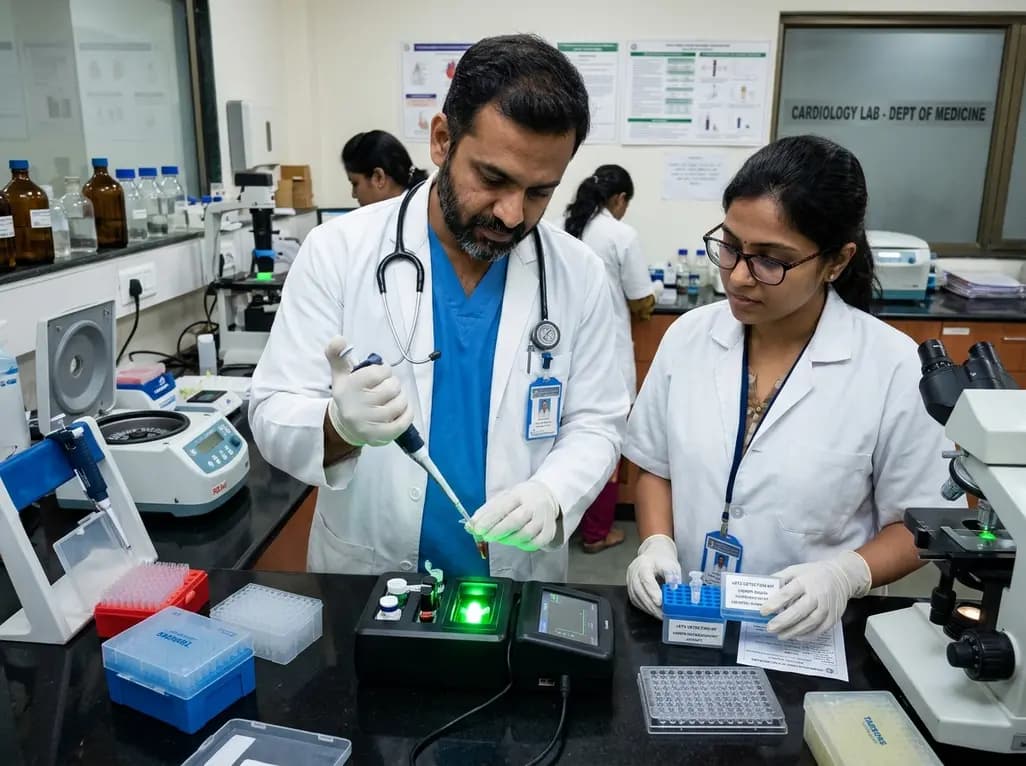
Researchers have engineered an innovative CRISPR-Cas12a fluorescent diagnostic kit for clinical sST2 detection. By combining nanotechnology with enzymatic trans-cleavage, this platform enables rapid, ultrasensitive heart failure diagnosis and risk stratification, outperforming conventional laboratory ELISA methods.
Today

Non-union fractures occur in 2-5% of cases, causing significant disability and cost. Conservative modalities such as LIPUS, PEMF, and focused ESWT offer non-surgical healing options for defects up to 5-10 mm when adequate mechanical stability exists without infection.
Today

India is poised to transform chronic disease management through wearable health technology. Discover how continuous remote monitoring and predictive algorithms empower clinicians to detect early cardiovascular signals, personalize metabolic interventions, and deliver equitable preventive care across populations.
Yesterday
