.webp&w=384&q=75)

Loading, please wait...
Loading, please wait...

Actually, effective dementia research design frequently requires deep insights from those with lived experience. However, in light of this, researchers often overlook these vital perspectives. Consequently, Community Engagement Studios (CES) provide a robust solution. Initially, for example, the process involves inviting stakeholders as "Community Experts" to consultative meetings. Furthermore, during these sessions, researchers present their interview guides clearly. Subsequently, as a result, participants offer direct feedback to improve the study implementation. For instance, specifically, recruitment trust is vital for success.
Therefore, because of this feedback, communication between teams and participants must remain clear. Moreover, in addition, autonomy is essential for persons living with dementia. Because language matters, therefore, researchers must consider the role of interpreters. Similarly, in contrast, culturally sensitive design improves overall engagement. Specifically, notably, Spanish-speaking groups provide unique insights into clinical barriers. Thus, consequently, the CES model is highly effective. In addition, overall, it enhances study relevance significantly. Finally, in conclusion, this approach fosters long-term community trust. Additionally, for this reason, it leads to better recruitment outcomes. Overall, essentially, stakeholder involvement remains key for medical progress.
A Community Engagement Studio is a consultative meeting where community members with lived experience, known as Community Experts, provide feedback to researchers. This collaboration helps improve the design and implementation of clinical studies.
Involving patients helps identify practical barriers to recruitment and retention. For example, patients may provide insights on study autonomy and the quality of communication with clinicians that academic teams might overlook.
Yes, the CES toolkit provides streamlined guidance for organizing these meetings. Even with small groups, the qualitative feedback received can lead to significant improvements in study relevance and participant trust.
Disclaimer: This content is for informational and educational purposes only. It is not a substitute for professional medical advice, diagnosis, or treatment. Always seek the advice of your physician or other qualified health provider with any questions you may have regarding a medical condition. Refer to the latest local and national guidelines for clinical practice.
References

Read summarized clinical updates, watch expert medical content, and earn CME certifications right from your smartphone.
Open your smartphone camera to scan and install.





Community Engagement Studios (CES) empower dementia patients and care partners to improve research design, recruitment trust, and clinical communication....
6 months ago

Wearable electrochemical biosensors transform athlete health management by enabling real-time, non-invasive sweat biomarker tracking for hydration, metabolic fatigue, and heat injury prevention.
Today

A multicentre RCT in China shows that the PAICS AI system significantly boosts sonographer sensitivity in detecting fetal intracranial malformations by 8.7% without compromising specificity, offering promising diagnostic support for prenatal neurosonography.
Today

A recent study highlights the utility of two-dimensional speckle tracking echocardiography in assessing right atrial mechanics in OSAHS. Progressive reductions in reservoir and conduit strain, coupled with elevated contraction strain, signal early right heart remodeling correlated with apnea severity.
Today
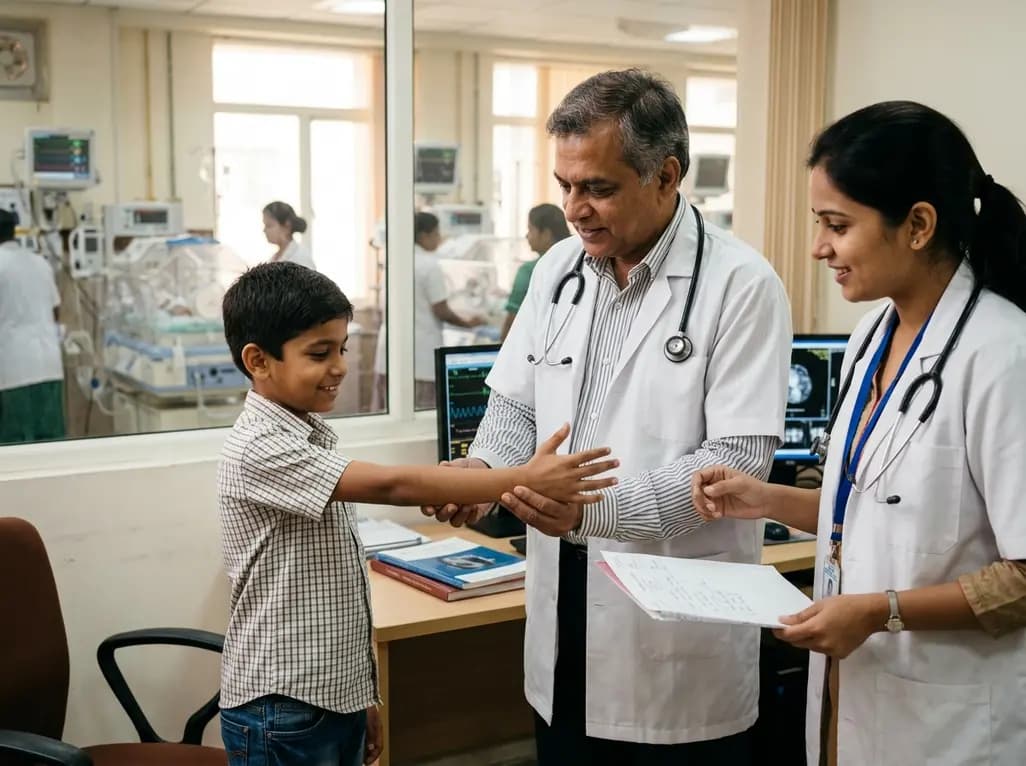
A premature neonate developed upper limb compartment syndrome after uterine rupture extruded the arm through a scar defect. Conservative management with continuous monitoring yielded complete functional recovery and normal limb growth at 10-year follow-up, highlighting non-operative safety in selected cases.
Yesterday

A propensity-matched study shows ultrasound-guided pulsed radiofrequency of the lumbar sympathetic ganglion is non-inferior to fluoroscopy for painful diabetic neuropathy, reducing needle passes, procedure time, and radiation exposure while achieving equal pain relief.
Today
