.webp&w=384&q=75)

Loading, please wait...
Loading, please wait...
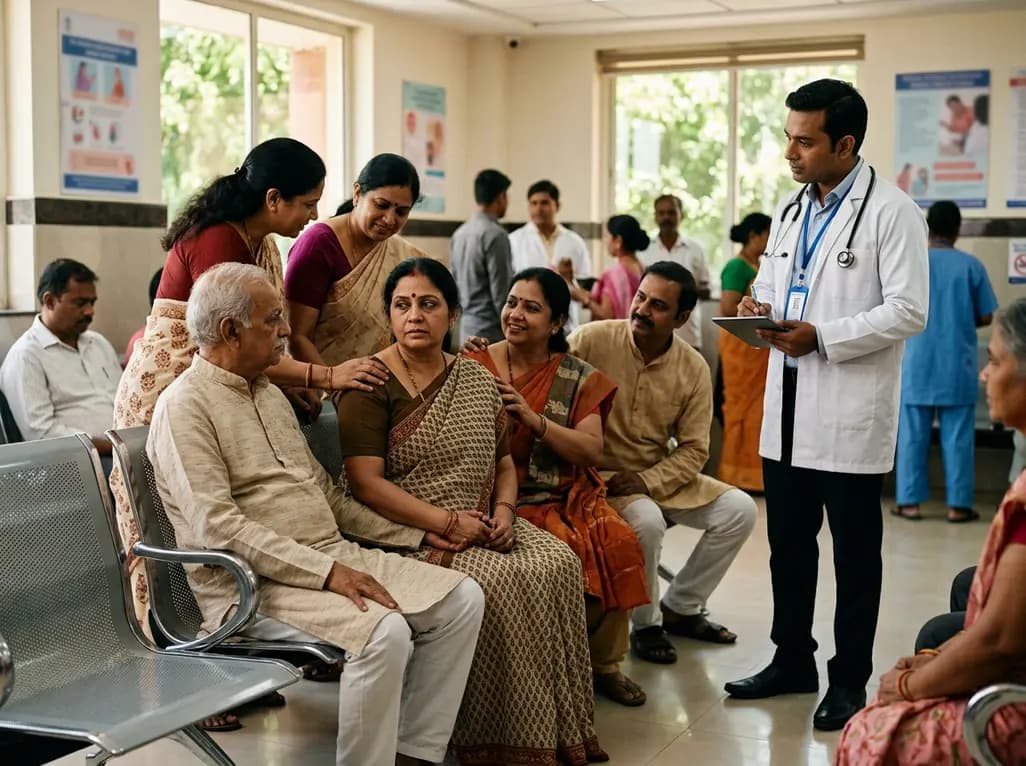
Family caregivers of people with dementia (PwD) represent the silent backbone of the healthcare system, particularly in countries like India where institutional care is often limited. These individuals face relentless caregiving demands and sustained emotional stress. Over time, such pressure significantly increases the risk of chronic health problems and psychiatric comorbidities. Recent research, including a multicentric study by Fernández-Calvo et al., has focused on identifying psychological resources that can safeguard the dementia caregiver quality of life. Specifically, clinicians must understand how internal traits like resilience and external factors like perceived social support (PSS) interact to modulate health outcomes. Because the prevalence of dementia in India is rising rapidly, addressing the well-being of these "invisible patients" has become a clinical priority for geriatricians and general practitioners alike. By recognizing the protective pathways of these resources, healthcare providers can offer more tailored interventions that go beyond managing the patient to supporting the family unit as a whole.
India currently faces a significant public health challenge, with over 8.8 million elderly citizens living with dementia. Most of these individuals reside in community settings, where family members provide the vast majority of daily care. Consequently, the caregiving burden—measured effectively by tools like the Zarit Burden Interview—is often exceptionally high. This burden is not just a psychological state; it is a complex construct involving physical exhaustion, financial strain, and social isolation. Studies conducted across various Indian states suggest that many caregivers operate under moderate to severe stress without formal training or adequate support systems. Furthermore, the cultural expectation of filial piety in India often prevents caregivers from seeking help until they reach a point of total exhaustion. Therefore, identifying the predictors of physical and psychological health is vital. When the caregiver’s health fails, the quality of care for the person with dementia inevitably declines, creating a vicious cycle of adverse health events for both the patient and the provider.
Resilience is defined as the capacity to adapt positively to unforeseen circumstances or chronic adversity. The study findings highlight that resilience serves as a robust predictor of both physical and psychological dementia caregiver quality of life. Unlike many other psychological traits, resilience operates through dual pathways. First, it has a direct positive effect on health-related quality of life, acting as a psychological buffer that allows individuals to maintain a sense of purpose and stability. Second, resilience acts indirectly by reducing the perceived caregiving burden. Notably, the impact of resilience is most pronounced in individuals who report low to moderate levels of social support. This suggests that for isolated caregivers, their internal resilience becomes the primary defense against the deleterious effects of chronic stress. In the clinical setting, assessing resilience using the Connor-Davidson Resilience Scale can help identify which family members are at the highest risk of burnout. Strengthening this trait through cognitive-behavioral strategies may significantly improve long-term caregiving outcomes.
Perceived social support (PSS) refers to a caregiver's subjective assessment of the assistance available from their social network, including friends, family, and community groups. While resilience has direct effects on health, PSS functions differently. The latest multicentric research indicates that PSS primarily predicts the psychological domain of quality of life rather than the physical one. Moreover, the relationship between social support and quality of life is almost entirely mediated by the reduction of burden. In other words, social support works best when it directly alleviates the daily stressors of caregiving, such as providing respite care or emotional validation. For Indian clinicians, this finding underscores the importance of encouraging families to build structured support networks. When a caregiver feels that they have a reliable safety net, their perception of the caregiving burden diminishes, which subsequently preserves their psychological well-being. Therefore, interventions should not only focus on the individual's mental health but also on the surrounding social architecture.
Understanding the directional pathways between these variables is essential for designing effective clinical interventions. Mediation analysis reveals that caregiving burden is the critical pivot point through which resilience and social support exert their influence. Interestingly, the indirect effect of resilience on quality of life is conditional on the level of social support available. When social support is high, the relative benefit of individual resilience is less critical because the external environment provides sufficient buffering. However, when social support is low, resilience becomes the determining factor for maintaining health. This moderated mediation model offers a sophisticated view of caregiver psychology. It suggests that healthcare professionals should prioritize resilience-building for those who are socially isolated. Additionally, since PSS shows a complete mediation effect on both domains, simply providing more social resources can effectively neutralize high levels of caregiving burden. This nuanced understanding allows for the stratification of caregivers based on their unique resource profiles and needs.
To improve the dementia caregiver quality of life, healthcare providers should adopt a multi-pronged approach during clinical consultations. First, implement brief screening tools to assess the caregiver’s level of burden and perceived support. Second, clinicians should offer psychoeducation that validates the caregiver’s stress while teaching specific coping mechanisms. For instance, problem-solving therapy and mindfulness-based stress reduction have shown promise in enhancing resilience. Third, physicians can play a crucial role in connecting families with local support organizations, such as the Alzheimer’s and Related Disorders Society of India (ARDSI). Encouraging the use of respite care services can directly lower the physical burden, while support groups can enhance perceived social support. Finally, always include the caregiver in the long-term management plan. By treating the caregiver-patient dyad as a single unit of care, doctors can ensure a more sustainable and compassionate treatment environment for the person living with dementia.
Resilience protects caregivers by providing a psychological buffer that allows them to adapt to the progressive nature of dementia. It operates through two pathways: directly enhancing physical and psychological health and indirectly reducing the perceived weight of the caregiving burden. Highly resilient individuals often employ more adaptive coping strategies, such as positive reframing and problem-solving, which help maintain their quality of life despite the inherent stressors of long-term care.
Social support is considered a complete mediator because its positive impact on a caregiver’s quality of life is primarily realized through the reduction of caregiving burden. When a caregiver receives emotional reassurance or practical help from others, their subjective feeling of being overwhelmed decreases. This reduction in burden is the actual mechanism that leads to improved psychological health, rather than the social support having a mystical, direct effect on the individual’s physical state.
Yes, resilience is not a fixed trait and can be strengthened through structured psychological interventions. Techniques such as cognitive-behavioral therapy (CBT), resilience education, and stress management training have been shown to increase adaptive capacity. These interventions teach caregivers how to manage neuropsychiatric symptoms of the patient, set realistic goals, and engage in self-care. Clinicians should recommend these programs to help caregivers develop the internal resources necessary to sustain their health over several years.
Disclaimer: This content is for informational and educational purposes only and does not constitute professional medical advice, diagnosis, or treatment. Always seek the advice of your physician or other qualified health provider with any questions you may have regarding a medical condition. Refer to the latest local and national guidelines for clinical practice.
References
Fernández-Calvo B et al. Resilience and Perceived Social Support as Predictors of Physical and Psychological Quality of Life: A Multicentric Study in Dementia Caregivers. J Psychol. 2026 Jul 07. doi: 10.1080/00223980.2026.2695164. PMID: 42413119.
Shaji KS, Pallikkathayil J, Subba Rao J. Dementia India Report 2010: prevalence, impact, costs and services for dementia. Alzheimer’s and Related Disorders Society of India. 2010.
Zarit SH, Reever KE, Bach-Peterson J. Relatives of the impaired elderly: correlates of feelings of burden. Gerontologist. 1980;20(6):649-55.

Read summarized clinical updates, watch expert medical content, and earn CME certifications right from your smartphone.
Open your smartphone camera to scan and install.





A new multicentric study identifies resilience and social support as critical predictors of physical and psychological quality of life for dementia caregivers. The findings highlight how resilience directly benefits health while social support primarily works by reducing the overall caregiving burden.
3 months ago

Novel diimide and hydrazone scaffolds, particularly compound #C4, synergistically reactivate latent HIV-1 when combined with JQ1 or PKC activators. Demonstrating donor-matched proviral transcription ex vivo and non-canonical signaling, these findings advance shock and kill strategies toward reservoir eradication.
Today

A cross-sectional study reveals that maternal RSV vaccination coverage reached only 43.7% in Argentina, with maternal vaccine knowledge being the sole independent predictor of uptake. Clinicians play a crucial role in eliminating informational and structural barriers to optimize infant health.
Today

Review how tailored exercise programs benefit frail older patients with heart failure. Explore pathophysiological mechanisms, individualized training prescriptions, and strategies to overcome adherence barriers in clinical practice.
Yesterday

This comparative study evaluates posterior labral tears with and without glenohumeral instability, highlighting distinct demographic patterns, MRI underestimation in stable shoulders, and successful arthroscopic repair outcomes.
Yesterday

A clinical study demonstrates that early intervention with tocilizumab, either as monotherapy or bridged with corticosteroids, achieves significant proptosis reduction and resolves active inflammation in treatment-naive thyroid eye disease.
Today
