.webp&w=384&q=75)

Loading, please wait...
Loading, please wait...
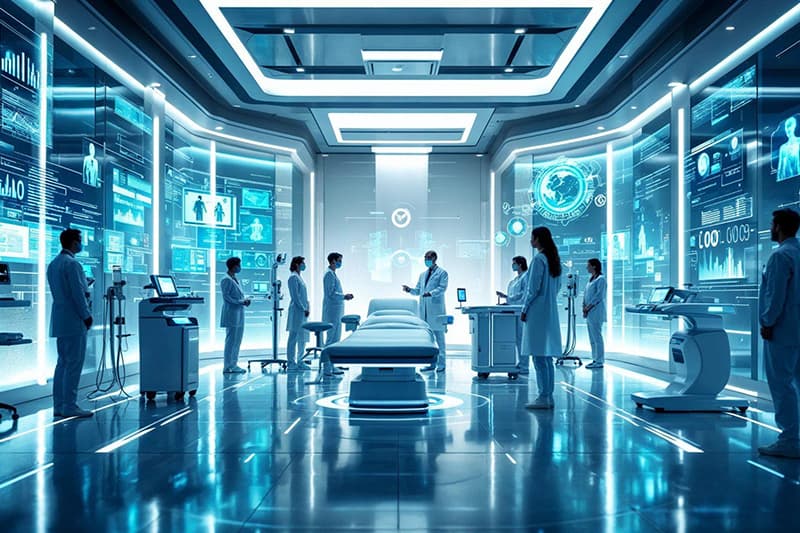
The Delhi government recently announced a significant Delhi hospitals integration plan to create a centralized, autonomous medical institute. This initiative aims to merge three major public healthcare facilities into a single \"super medical hub\" modeled after the All India Institute of Medical Sciences (AIIMS). Chief Minister Rekha Gupta chaired the meeting where officials discussed streamlining services to enhance efficiency and patient outcomes. Consequently, the government intends to modernize the public healthcare system through more scientific resource management.
By merging Guru Teg Bahadur (GTB) Hospital, the Delhi State Cancer Institute (DSCI), and Rajiv Gandhi Super Speciality Hospital (RGSSH), the government seeks better resource management. Currently, patient loads remain unevenly distributed across the capital's facilities. For example, RGSSH operates only 250 out of its 650 beds. Conversely, GTB Hospital handles patient volumes well beyond its 1,400-bed capacity. Therefore, this integration will balance these loads and ensure that infrastructure does not stay idle. Additionally, the move will allow for the better deployment of doctors and specialists across the unified network.
Each hospital within the hub will focus on specific clinical domains to provide organized care. Consequently, RGSSH will serve as the center for cardiology, pulmonology, gastroenterology, and nephrology. Meanwhile, DSCI will consolidate all cancer care services, including radiation and surgical oncology. GTB Hospital will maintain its strengths in orthopaedics, internal medicine, and neurosurgery. Furthermore, this restructuring allows specialists and equipment, such as linear accelerators and bone banks, to be used more effectively. This systematic approach ensures that patients receive appropriate specialist treatment without unnecessary delays.
The plan includes developing the Institute of Human Behaviour and Allied Sciences (IHBAS) into a national-level mental health center. Furthermore, seventy-five acres of the IHBAS campus will transition to the new integrated institute for future growth. Officials intend to build hostels, advanced laboratories, and lecture theatres on this land. This expansion will significantly strengthen medical education and training within the national capital. As a result, the project will replace dilapidated structures with modern healthcare infrastructure to support long-term clinical needs.
Q1: Which hospitals are being merged into the Delhi super medical hub?
The integration includes Guru Teg Bahadur Hospital, the Delhi State Cancer Institute, and Rajiv Gandhi Super Speciality Hospital.
Q2: What is the primary goal of this hospital merger?
The merger aims to create an autonomous institute that ensures scientific utilization of resources, balances patient loads, and provides advanced, organized treatment.
Q3: How will medical education be affected by this integration?
The government plans to build advanced laboratories, hostels, and lecture theatres on 75 acres of land to boost medical training and academic research.
Disclaimer: This content is for informational and educational purposes only. It does not constitute medical advice or replace professional judgment. Refer to the latest local and national guidelines for clinical practice.
References

Read summarized clinical updates, watch expert medical content, and earn CME certifications right from your smartphone.
Open your smartphone camera to scan and install.





Delhi to merge GTB Hospital, DSCI, and RGSSH into an autonomous super medical hub for improved resource utilization and advanced patient care infrastructure...
7 months ago
Following Nigeria's first recorded Ebola case linked to regional travel, the Africa CDC has convened an emergency ministerial summit. This alert underscores critical clinical priorities for healthcare professionals, including differentiating early viral infection from malaria, implementing barrier nursing, and triage.
Today

Leucine Rich Bio has introduced South Asia's first comprehensive vaginal microbiome test, BugSpeaks. By profiling microbial dysbiosis, pathogens, and antimicrobial resistance, this next-generation diagnostic platform provides clinicians with deeper insights into recurrent infections, fertility, and reproductive health.
Today

Review how tailored exercise programs benefit frail older patients with heart failure. Explore pathophysiological mechanisms, individualized training prescriptions, and strategies to overcome adherence barriers in clinical practice.
Today

This comparative study evaluates posterior labral tears with and without glenohumeral instability, highlighting distinct demographic patterns, MRI underestimation in stable shoulders, and successful arthroscopic repair outcomes.
Today

A clinical study demonstrates that early intervention with tocilizumab, either as monotherapy or bridged with corticosteroids, achieves significant proptosis reduction and resolves active inflammation in treatment-naive thyroid eye disease.
Today
